German Christian Democrats slump to historic lows in regional elections
Germany faces severe political turbulence as Chancellor Friedrich Merz's Christian Democrats suffer historic losses in regional elections amid a far-right surge.

- Core Development: Germany faces severe political turbulence as Chancellor Friedrich Merz's Christian Democrats suffer historic losses in regional elections amid a far-right surge.
- Beat Context: Categorized under NHS with independent corroboration.
- Reporting Depth: 3 minute analytical read synthesized from verified newsroom sources.
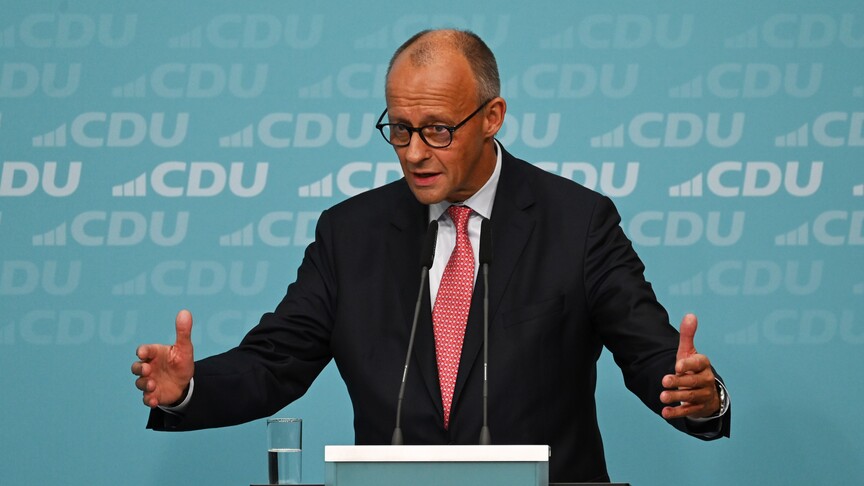
German politics entered a period of severe turbulence following a devastating round of regional elections that saw traditional conservative power structures collapse and far-right forces surge, shaking the foundations of the country's political establishment. Chancellor Friedrich Merz faced intense scrutiny after his Christian Democratic Union suffered historic losses, prompting urgent debates over the future stability of Europe's largest economy as broader geopolitical and regional pressures mount.
The regional contests produced profound political shifts across multiple areas. In Mecklenburg-Vorpommern, projections highlighted by public broadcaster ARD placed the anti-immigrant Alternative für Deutschland at 37.3%
, closely followed by the center-left Social Democrats at 35.5%
. Chancellor Merz’s Christian Democrats slumped to 5.3%
according to early projections, which later dipped to 4.9%
in final estimates, pushing the conservative party out of the state parliament entirely and marking its worst electoral result since the founding of the Federal Republic of Germany. According to reporting by Protothema, this represents a dramatic fall from the 13.3%
secured in the region in 2021
.
Media additions
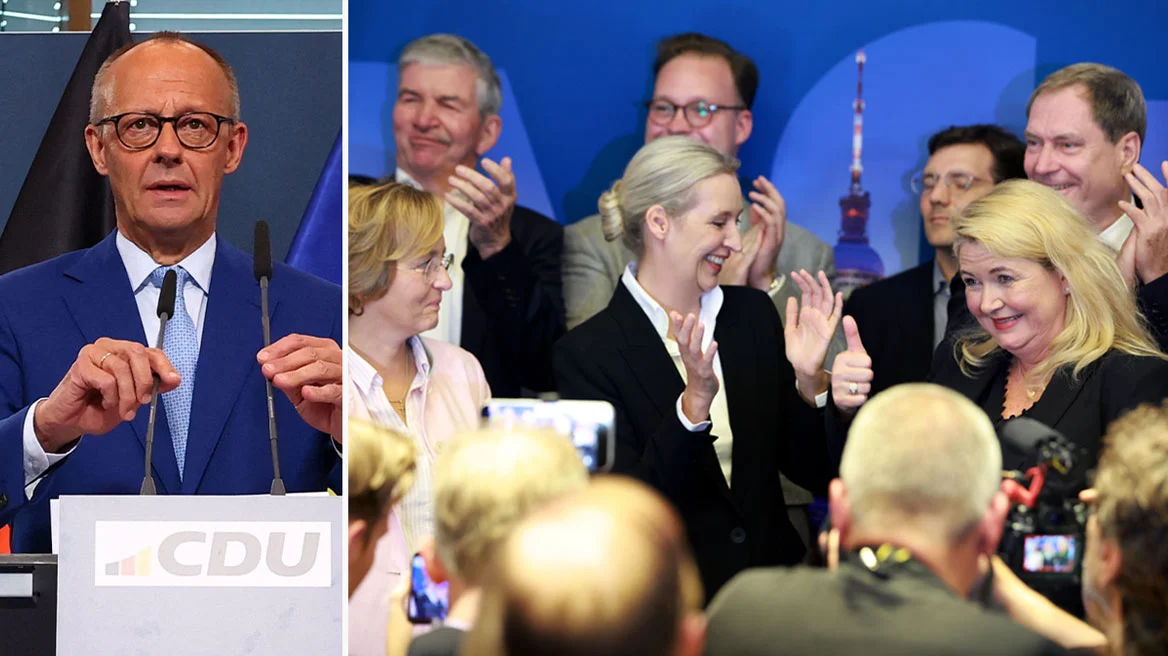

Simultaneously, the political landscape in Berlin transformed dramatically. The Left emerged as the strongest party in the capital for the first time with approximately 24.8%
of the vote, while the Christian Democrats followed with 20%
—a drop from the 28.2%
recorded in 2023
. The Alternative für Deutschland claimed third place in Berlin with nearly 16%
, up from 9.1%
previously. Turnout reached roughly 75%
, compared to 62.9%
in the previous Berlin vote, demonstrating high voter engagement rather than apathy.
| State / Region | Alternative für Deutschland | Social Democrats | Christian Democrats | The Left / Others |
|---|---|---|---|---|
| Mecklenburg-Vorpommern (ARD) | 37.3% | 35.5% | 4.9% – 5.3% | 7.5% |
| Berlin Parliament | ~16% | 12% | 20% | 24.8% (The Left) |
Despite the severe electoral setback, Chancellor Merz pushed back against speculation regarding his immediate departure, appearing at party headquarters in Berlin to declare his intention to remain as party chairman and chancellor. As reported by Anadolu Agency, Merz stated that navigating the current economic and political challenges requires backbone, steadfastness, and patience
. Analysts note that his survival in office owes less to ballot-box endorsement and more to the temporary absence of a unified internal challenger within the conservative ranks and explicit backing from multiple state premiers.
The domestic political shockwave compounds wider international anxieties. According to reporting detailed by Inews and India Today, European governments are increasing civil preparedness and reviewing infrastructure safeguards amid heightened warnings of Russian hybrid threats, cyberattacks, and potential airspace violations. French President Emmanuel Macron and Polish Prime Minister Donald Tusk both warned that alliance members must remain vigilant against probing actions designed to test collective defense mechanisms.
Domestically, the German government has also faced difficult diplomatic adjustments, including the closure of its longstanding consulate general in Saint Petersburg after decades of operations. Concurrently, public health and civil protection frameworks are undergoing reviews to bolster national resilience, reflecting the intersecting pressures of economic stagnation, energy cost volatility, and shifting geopolitical alignments across Europe.
Political analysts and party strategists are now looking toward the next major electoral hurdles. While no immediate government collapse is guaranteed, the broader trajectory indicates sustained momentum for populist and anti-establishment movements. Observers will closely monitor upcoming state-level campaigns and regional polling trends ahead of future legislative calendars, testing whether the governing coalition's reform agenda can restore public confidence before subsequent elections take place.
How significant is this development?
Contribute your assessment to the aggregated reader sentiment ledger.
Frequently Asked Questions
Key questions answered in this reportWhat is the key development in: German Christian Democrats slump to historic lows in regional elections?
Germany faces severe political turbulence as Chancellor Friedrich Merz's Christian Democrats suffer historic losses in regional elections amid a far-right surge.
Why is this NHS development significant for the UK?
This report covers critical events in our NHS beat. Independent reporting monitors related UK statements, regulatory shifts, and public responses as further verified details emerge.
How was this reporting corroborated and verified?
Newsarchy UK compiles and cross-references reporting from primary reporting from inews.co.uk and cross-checked wire reports. All coverage adheres to published editorial standards.
When was this report published?
This briefing was published on September 21, 2026 and is permanently cataloged in the Newsarchy UK NHS archives.