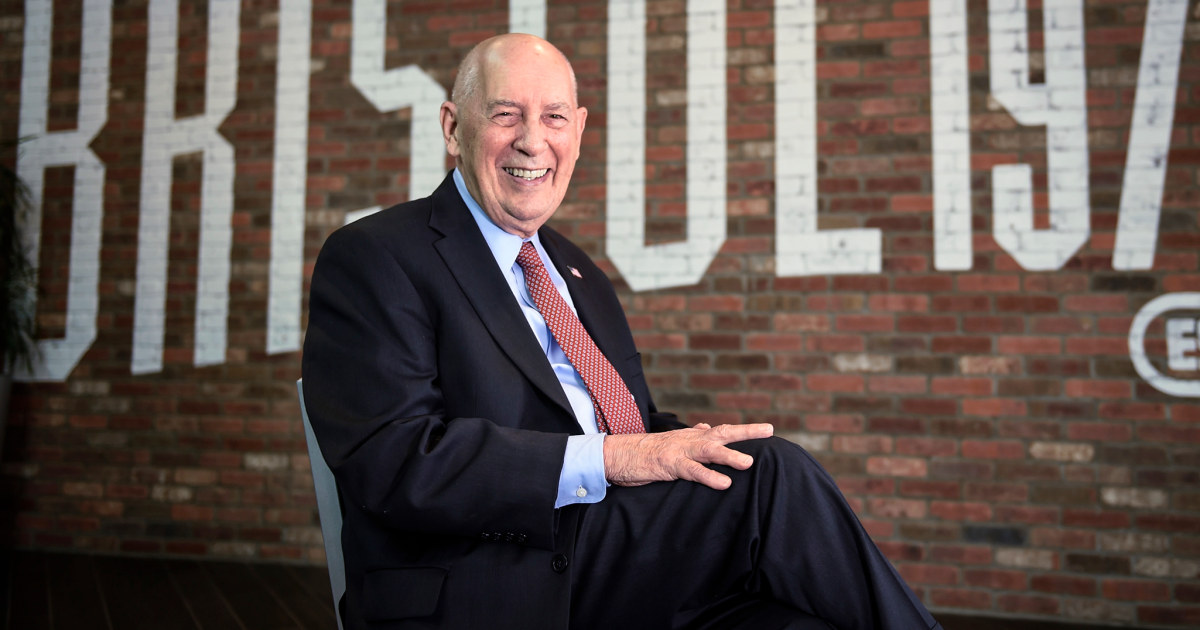
Bill Rasmussen, ESPN co‑founder, dies at 93 from Parkinson’s disease
Bill Rasmussen, who turned a credit-card advance into a 24-hour sports network and co-founded ESPN, has died at his Florida home from Parkinson's disease.
- Core Development: Bill Rasmussen, who turned a credit-card advance into a 24-hour sports network and co-founded ESPN, has died at his Florida home from Parkinson's disease.
- Beat Context: Categorized under Culture with independent corroboration.
- Reporting Depth: 4 minute analytical read synthesized from verified newsroom sources.
Bill Rasmussen, the former communications director of the World Hockey Association’s New England Whalers who turned a $9 000 credit‑card advance into a satellite‑fed sports network, died on Tuesday at his Florida home from the effects of Parkinson’s disease.
Early career and the spark of an idea
Born in Chicago, Rasmussen earned an economics degree from DePauw University in Indiana and later an MBA from Rutgers University. After serving in the United States Air Force, he entered broadcasting, first at WTTT radio in Amherst, Massachusetts, then as sports director and news director at WWLP in Springfield. In 1974 he was hired as public relations director for the WHA’s New England Whalers in Hartford. The entire front office was dismissed in 1978, and Rasmussen, newly unemployed, began brainstorming a 24‑hour sports channel with his son, Scott.
Media additions


Rasmussen and his son secured a $9 000 credit‑card advance and, with the help of a satellite‑transponder purchase, sketched a model that would bypass regional cable constraints. Their original pitch was modest – a Connecticut‑focused cable channel – but an off‑hand suggestion to buy satellite time shifted the concept to a national audience.
"When someone tells you you can’t do something, you want to prove them wrong."
Bill Rasmussen, via The Globe and Mail
Bob Ley, one of ESPN’s first anchors, later recalled the financial gamble: “There was a whole lot of chutzpah and a whole lot of vision, and they’re maxed out on their credit cards. It’s the American dream,” Ley said.
Launching ESPN
On 7 September 1979, ESPN went on the air from a half‑finished Bristol, Connecticut studio, employing roughly 80 staffers. George Grande opened the inaugural broadcast of “SportsCenter” and introduced the first live event – a slow‑pitch softball game between the Kentucky Bourbons and the Milwaukee Schlitz.
"In those days, we didn’t know if we’d last four weeks, four years, let alone 40‑some, but we knew it was special."
George Grande, former ESPN anchor, via NBC News
The same day that the network secured a rights deal with the NCAA, Getty Oil provided a controlling equity stake. The partnership gave ESPN the capital to acquire additional satellite time and to acquire its first marquee property – coverage of the early rounds of the 1980 NCAA men’s basketball tournament, a move that demonstrated the viability of round‑the‑clock sports programming.
Early turbulence and separation
Within a year, Getty Oil owned 85 per cent of ESPN and forced the Rasmussens out. The network’s ownership changed again when Texaco, which had purchased Getty, sold its interest to ABC in 1984.
By 2026, ESPN employs more than 5 900 employees worldwide, runs eight U.S. Television networks, and manages a direct‑to‑consumer streaming service alongside a suite of radio, podcast, and digital platforms under the Disney umbrella.
Reconciliation and recognition
Rasmussen and ESPN were estranged until 1999, when executives invited him to the 20th‑anniversary celebration. He subsequently toured the country for the 40th anniversary in 2019, delivering speeches at both Walt Disney Company and ESPN events.
"Bill was our George Washington and a good friend."
Chris Berman, via The Globe and Mail
Chris Berman, who joined the network three weeks after its launch, praised Rasmussen’s optimism: “He wasn’t a glass half‑full guy; his glass was always overflowing with optimism. He greeted everyone with a smile.”
ESPN chairman Jimmy Pitaro issued a statement on Rasmussen’s passing: “Bill was a remarkable man — a visionary and an innovator who conceived the idea of a network entirely devoted to sports… none of us would be here today if it wasn’t for Bill’s passion and all the hard work and entrepreneurial spirit he put into building ESPN in the late 1970s.”
Rasmussen was inducted into the Sports Broadcasting Hall of Fame in 2025, a formal acknowledgment of his foundational role.
Later projects and personal life
After leaving ESPN, Rasmussen consulted for sports‑rights holders, remained active in start‑up ventures, and became a frequent guest on business and sports radio shows. He authored two books – “Sports Junkies Rejoice! The Birth of ESPN” and “ESPN: One Giant Leap for Fankind” (2023) – and partnered with Tenero Productions on the documentary “Sports Heaven: The Birth of ESPN,” released in 2026.
He announced his Parkinson’s diagnosis publicly in 2019, though the disease had been identified in 2014. ESPN historian Mike Soltys confirmed the cause of death as the effects of Parkinson’s disease.
Rasmussen was predeceased by his wife of 56 years, Lois, in 2011. He is survived by two sons, Scott Rasmussen and his wife Laura, and Glenn Rasmussen; his daughter Lynn Van Hollebeke and her husband Louie; seven grandchildren; and two great‑grandchildren.
What comes next for ESPN
With Disney, Hearst and the NFL remaining as minority investors, ESPN continues to expand its streaming footprint while preserving the 24‑hour sports ethos that Rasmussen championed.
How significant is this development?
Contribute your assessment to the aggregated reader sentiment ledger.
Frequently Asked Questions
Key questions answered in this reportWhat is the key development in: Bill Rasmussen, ESPN co‑founder, dies at 93 from Parkinson’s disease?
Bill Rasmussen, who turned a credit-card advance into a 24-hour sports network and co-founded ESPN, has died at his Florida home from Parkinson's disease.
Why is this Culture development significant for the UK?
This report covers critical events in our Culture beat. Independent reporting monitors related UK statements, regulatory shifts, and public responses as further verified details emerge.
How was this reporting corroborated and verified?
Newsarchy UK compiles and cross-references reporting from primary reporting from nbcnews.com and cross-checked wire reports. All coverage adheres to published editorial standards.
When was this report published?
This briefing was published on August 18, 2026 and is permanently cataloged in the Newsarchy UK Culture archives.
1720848500-0/Eminem-and-his-daugher-Hallie-(1)1720848500-0-640x480.webp)