Israel destroys Hezbollah tunnel network in Lebanon, triggering 4.1 quake
Israel used over 1,100 tons of explosives to dismantle a major underground tunnel network in southern Lebanon, triggering a 4.1-magnitude earthquake.

- Core Development: Israel used over 1,100 tons of explosives to dismantle a major underground tunnel network in southern Lebanon, triggering a 4.1-magnitude earthquake.
- Beat Context: Categorized under World with independent corroboration.
- Reporting Depth: 4 minute analytical read synthesized from verified newsroom sources.
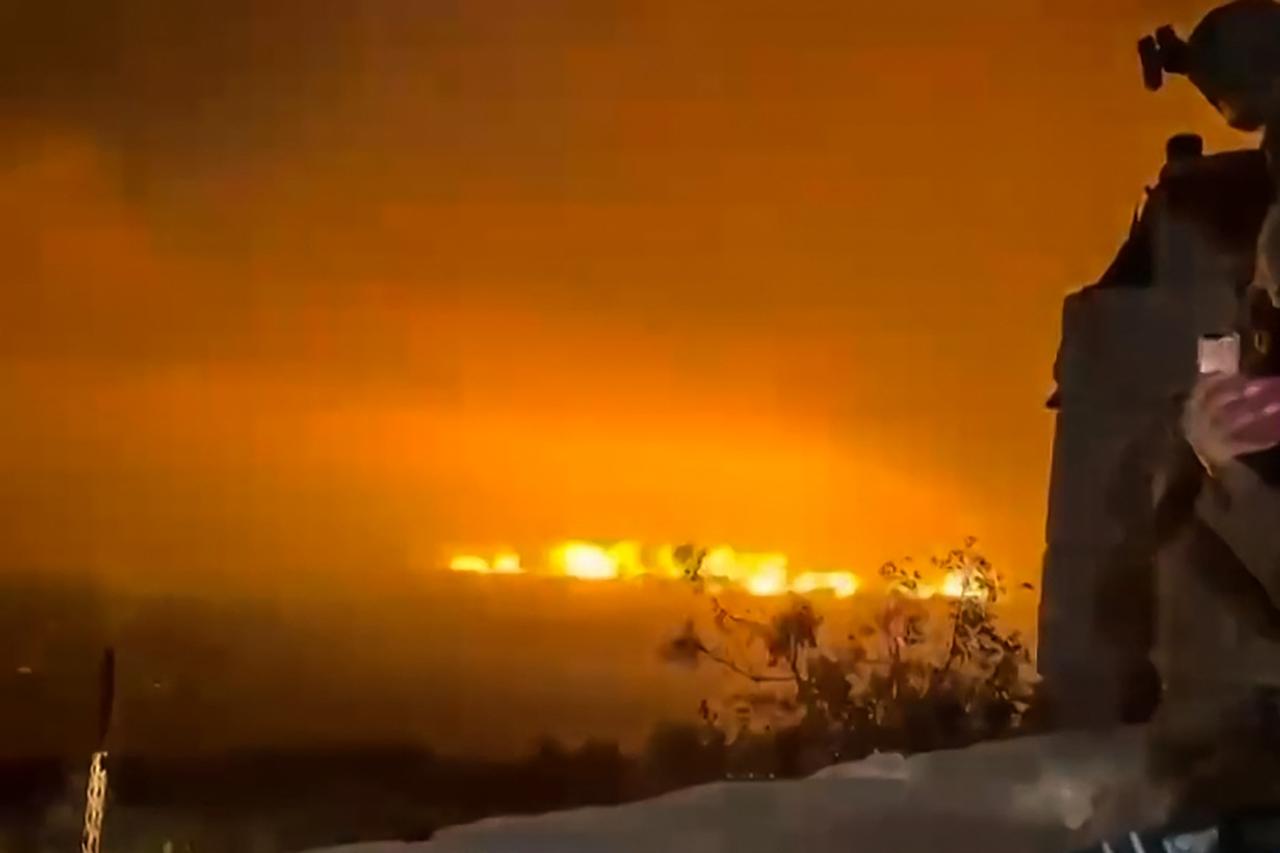
Israel has dismantled a major underground tunnel network beneath the strategic Ali al-Taher ridge in southern Lebanon. The operation triggered a 4.1-magnitude earthquake that shook communities on both sides of the border. According to the United States Geological Survey, the seismic event was registered roughly 13 kilometres west-southwest of Nabatiyeh. Residents experienced severe shaking following the nighttime blasts, with Agence France-Presse journalists reporting massive explosions and a giant column of fire erupting into the sky. Local reporting from Lebanon's state-run National News Agency documented the immense scale of the physical destruction on the outskirts of Nabatieh al-Fawqa, where a powerful rumble echoed across the surrounding region.
The demolition was executed using more than 1,100 tons of explosives, according to joint statements from Israeli leadership and regional reporting. Prime Minister Benjamin Netanyahu and Defense Minister Israel Katz detailed that the targeted underground infrastructure contained command centers, weapons, drones, and military equipment. The Israeli leadership designated the site as built with joint funding and planning from Tehran. According to Streamlinefeed, Israeli forces spent weeks clearing the complex before the demolition, during which some militants abandoned the area while others were eliminated via aerial strikes and artillery fire. Al Jazeera reported that Israeli sources indicated dozens of bodies of Hezbollah fighters were found inside the tunnels.
Media additions


| Metric / Detail | Reported Figure | Source Attribution |
|---|---|---|
| Earthquake Magnitude | 4.1 | USGS, Türkiye Today, Streamlinefeed |
| Explosives Used | More than 1,100 tons | Newscord (Al Jazeera correspondence) / Türkiye Today |
| Epicentre Distance | Roughly 13 km west-southwest of Nabatiyeh | USGS, Türkiye Today |
| Casualties in Lebanon (Since March) | 4,532 dead (ABNA) / over 4,300 (AFP) | ABNA via Newscord, AFP via Streamlinefeed |
The operation highlights ongoing tensions tied to the Ali al-Taher ridge, a vital topographical feature overlooking northern communities such as Metulla and Kiryat Shmona. Israeli officials asserted that the destroyed network provided Hezbollah with observation and fire-control capabilities, as well as staging grounds for potential incursions into the Galilee region. While the Israeli government maintains that retaining a security zone is essential to prevent Hezbollah from rebuilding its military presence, regional bodies continue to count the heavy human cost of the wider conflict. Beirut authorities say Israeli strikes have killed more than 4,300 people since March, while ABNA reported the figure at 4,532 dead alongside 12,318 wounded and over one million displaced.
Reporting from Newscord notes differing emphases across international media outlets, with Al Jazeera highlighting reports regarding bodies recovered inside the tunnels, and other regional networks focusing on broader international reports concerning white-phosphorus use. Al Jazeera also reported that Netanyahu described the hill as the largest Iranian site outside Iran, while Brigadier General Hassan Joneh stated that destroying a heavily fortified elevated position does not necessarily equate to control over it or occupation. Meanwhile, the Upper Galilee Regional Council had previously notified northern Israeli communities that the military would carry out a series of strikes and controlled explosions across the border.
Broader geopolitical friction surrounds the site. During prior diplomatic negotiations, the United States proposed that the Lebanese army take control of the Ali al-Taher ridge, though a source close to the parties told AFP that Hezbollah refused the proposal. Concurrently, a U.S. State Department spokesperson urged the Lebanese government to adopt a plan to disarm all lands in Lebanon, while Washington monitors local calls from residents in southern Lebanon urging Beirut to assert sovereign control. Additional context indicates that Iran warned the United States, according to Reuters reports cited by The Times of Israel, that it would respond to any Israeli offensive against the facility beneath the hill.
What happens next remains dependent on military movements and diplomatic pressure in southern Lebanon. Israeli forces have indicated they will remain stationed within the security zone to systematically dismantle remaining militant infrastructure and prevent Hezbollah from reestablishing its capabilities. Regional authorities and international observers continue to watch whether the Lebanese army will deploy to evacuated border sectors amid continuing escalations and the broader backdrop of regional conflict.
How significant is this development?
Contribute your assessment to the aggregated reader sentiment ledger.
Frequently Asked Questions
Key questions answered in this reportWhat is the key development in: Israel destroys Hezbollah tunnel network in Lebanon, triggering 4.1 quake?
Israel used over 1,100 tons of explosives to dismantle a major underground tunnel network in southern Lebanon, triggering a 4.1-magnitude earthquake.
Why is this World development significant for the UK?
This report covers critical events in our World beat. Independent reporting monitors related UK statements, regulatory shifts, and public responses as further verified details emerge.
How was this reporting corroborated and verified?
Newsarchy UK compiles and cross-references reporting from primary reporting from newscord.org and cross-checked wire reports. All coverage adheres to published editorial standards.
When was this report published?
This briefing was published on September 11, 2026 and is permanently cataloged in the Newsarchy UK World archives.