Ethiopia attacks: More than 60 Orthodox Christians killed in Oromia
More than 60 people have been killed in targeted attacks across Ethiopia's Oromia region, intensifying security concerns as religious institutions demand urgent intervention.

- Core Development: More than 60 people have been killed in targeted attacks across Ethiopia's Oromia region, intensifying security concerns as religious institutions demand urgent intervention.
- Beat Context: Categorized under World with independent corroboration.
- Reporting Depth: 4 minute analytical read synthesized from verified newsroom sources.
More than 60 people have been killed in a series of targeted assaults across Ethiopia's Oromia region, intensifying security concerns as religious institutions demand urgent federal intervention and protection.
The escalation began on Saturday, 24 October 2026, when armed men descended upon the Shirka district, located roughly 270 kilometres south of the capital, Addis Ababa. According to local accounts and reports gathered by monitoring bodies such as the Armed Conflict Location and Event Data project, the assault specifically targeted Orthodox Christian communities, villages, homes, and churches through door-to-door shootings and stabbings.
Media additions
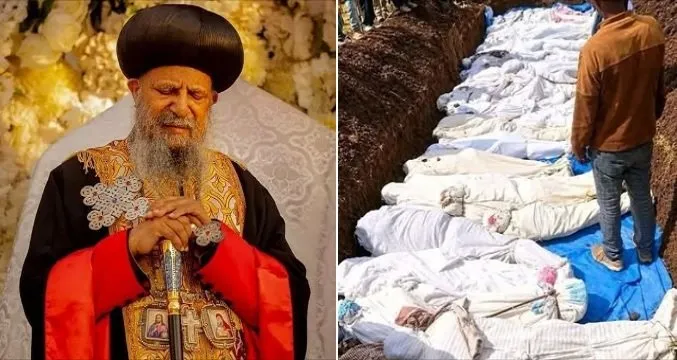


Residents recounted harrowing details of the coordinated raids. One local witness whose 75-year-old father was killed described the assault as a sudden ambush, stating that attackers surrounded them from all four directions while utilizing heavy weaponry and AK-47 rifles. Survivors noted that local neighborhood watches were entirely overwhelmed during the multi-hour onslaught, which continued through Saturday evening and into Sunday morning, forcing many terrified residents to seek refuge in nearby churches or flee into surrounding forests.
Formal reports submitted to the Holy Synod Plenary Assembly of the Ethiopian Orthodox Tewahedo Church outlined a timeline of the bloodshed. According to the Arsi Diocese office, 14 believers were killed on 20 October 2026 at Gora Silingo in Angada Kebele, Merti Woreda. This preceded the larger massacre on 24 October in Shirka Woreda’s Tiruta, Chole, and Birbo areas, which claimed another 46 lives. In addition to the fatalities, the attacks left 20 residential homes burned to the ground and more than 20 individuals hospitalized with severe, critical injuries.
Casualty estimates provided by various local sources, regional officials, and monitoring organizations reflect some divergence in the immediate aftermath of the violence:
| Reporting Source / Body | Reported Death Toll | Key Details / Location |
|---|---|---|
| EOTC Holy Synod / Arsi Diocese | 60 killed | Combined toll across Merti and Shirka woredas; 20 homes burned, 20 severely injured. |
| Local Residents (via Addis Standard) | 48+ killed | Chole and Birbo kebeles, Shirka Woreda; mass burials held for initial victims. |
| Local Resident Source (via AFP) | 51 killed | Chole ward of Shirka district; reports of relatives taken hostage. |
| Deacon from Affected Church | 46 killed | Targeted churches and villages; survivors sheltering in religious buildings. |
| ACLED / Regional Reports | At least 43 killed | Assault triggered clashes with local militias lasting through Saturday evening. |
Responsibility for the atrocities remains contested amid a complex backdrop of regional insurgencies. A local official attributed the violence to a newly formed rebel coalition known as the Alliance for Survival, which includes the Oromo Liberation Army. The OLA has consistently denied involvement in such massacres, countering that state security forces and regional militias often perpetrate abuses during counterinsurgency operations or retreat phases. Meanwhile, regional communication officials have pointed toward an entity referred to as "Tsimdo", alleging that the group was attempting to divert government attention and expand internal conflict.
Religious leaders have voiced intense frustration over persistent insecurity. In a formal statement, the Orthodox Church asserted that attacks against Christians have escalated steadily, noting that repeated warnings regarding regional security threats were brought to government authorities at various levels without producing adequate preventative solutions. The Ethiopian Human Rights Council has previously documented hundreds of civilian deaths in targeted attacks across the wider East Arsi zone, noting that Orthodox Christian communities have borne a disproportionate toll amid ongoing ethnic and religious friction in Ethiopia's largest regional state.
Independent verification of events in the region remains exceptionally difficult due to strict government curbs on media access and telecommunications blackouts in conflict-affected zones. While state-run bodies such as the Ethiopian Human Rights Commission stated they were monitoring the situation, comprehensive federal assessments had not been fully detailed at the time of reporting.
What happens next
Religious authorities and affected communities have initiated formal mourning and memorial proceedings while pressing for binding security guarantees:
- On 26 October 2026, the Holy Synod conducted a central memorial prayer service at the Patriarchal Seat at the Holy of Holies Mary Monastery.
- All EOTC monasteries and churches worldwide are scheduled to perform memorial prayers following the Divine Liturgy on 27 October 2026.
- Senior church leadership has scheduled a high-level meeting with senior government officials to establish long-term security measures and legal protections for vulnerable religious minorities across Oromia.
Broader geopolitical developments and ongoing internal conflicts—including recent heavy fighting in the northern Tigray region—continue to strain federal resources as the government attempts to stabilize multiple security fronts across the country.
How significant is this development?
Contribute your assessment to the aggregated reader sentiment ledger.
Frequently Asked Questions
Key questions answered in this reportWhat is the key development in: Ethiopia attacks: More than 60 Orthodox Christians killed in Oromia?
More than 60 people have been killed in targeted attacks across Ethiopia's Oromia region, intensifying security concerns as religious institutions demand urgent intervention.
Why is this World development significant for the UK?
This report covers critical events in our World beat. Independent reporting monitors related UK statements, regulatory shifts, and public responses as further verified details emerge.
How was this reporting corroborated and verified?
Newsarchy UK compiles and cross-references reporting from primary reporting from allafrica.com and cross-checked wire reports. All coverage adheres to published editorial standards.
When was this report published?
This briefing was published on October 26, 2026 and is permanently cataloged in the Newsarchy UK World archives.


