Spain sees no evidence Morocco orchestrated Ceuta border breach
Spain sees no evidence Morocco orchestrated Ceuta border breach
- Core Development: Spain sees no evidence Morocco orchestrated Ceuta border breach
- Beat Context: Categorized under World with independent corroboration.
- Reporting Depth: 4 minute analytical read synthesized from verified newsroom sources.
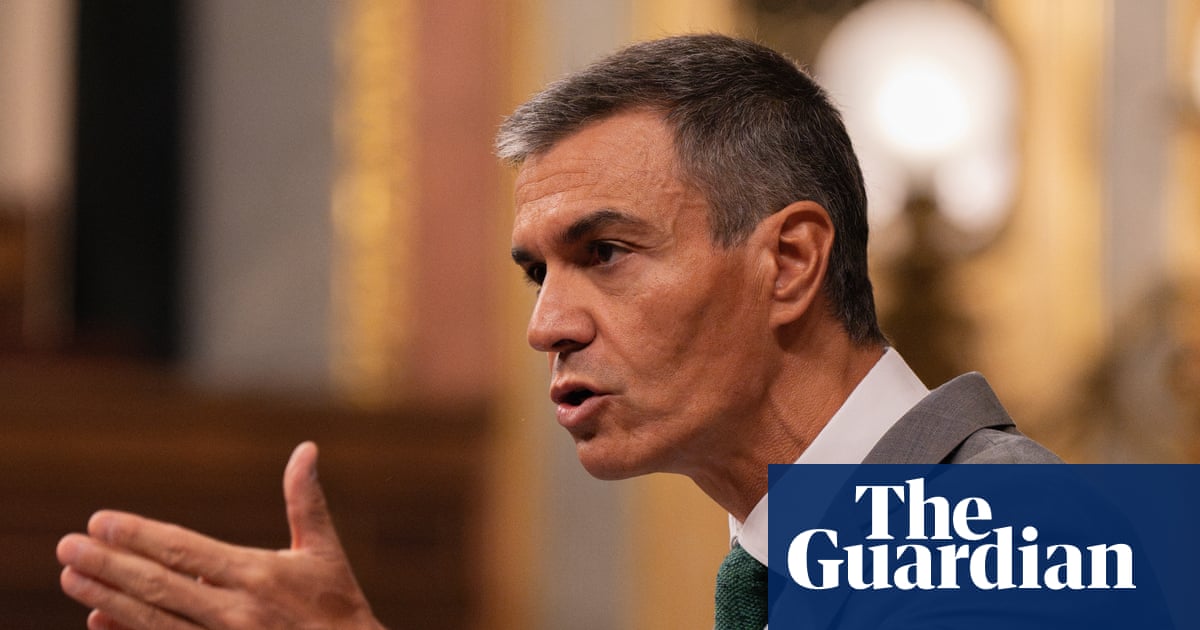
Prime Minister Pedro Sánchez told parliament on Thursday that his government has found “no evidence whatsoever
” that Morocco planned or facilitated the mass crossing into the Spanish enclave of Ceuta in late July. The admission comes after weeks of street protests, a police report alleging coordinated action by Moroccan forces, and mounting pressure from opposition parties. With a new wave of migrants still stranded in the city, the political fallout and the question of European solidarity are now at the forefront of Madrid’s agenda.
Sánchez’s statement directly rebutted a police report, commissioned by a judge and seen by Reuters, which claimed the rush was “not a spontaneous migration event but a planned and phased operation designed to overwhelm border controls.” The report said Moroccan security personnel were deployed in “smaller numbers than usual” near the Tarajal breakwater and that “some uniformed Moroccan officers gave directions towards the crossing point, while other unidentified people appeared to guide or monitor the flow of people.” Although the document did not identify individual officers or present “independently verified evidence of orders from Moroccan authorities,” it suggested a failure to disperse the crowd.
Media additions

“I can assure you that no institution – not the diplomatic service, nor the European Commission, nor any international body – has provided the Spanish government with any solid proof that Morocco planned or carried out the incident. None whatsoever,”
Pedro Sánchez, Prime Minister, via Yahoo News
Sánchez also acknowledged that Morocco’s Gendarmerie “did allow crossings to occur during a key 10‑hour period on 30 July” when arrivals peaked. He stopped short of assigning blame, noting that Spain has not received any warning of the “scale or probability” of the breach. The prime minister highlighted Rabat’s “cooperation in returning most of the migrants in the days after the surge,” and said a royal visit by King Felipe VI to Ceuta and Melilla is being prepared for “the coming weeks.”
Opposition reaction
The conservative People’s Party leader Alberto Núñez Feijóo called for Sánchez’s resignation, accusing him of “incompetence and complicity.” Far‑right Vox chief Santiago Abascal added a sharper rebuke, declaring that “Morocco doesn’t need an ambassador in Spain – you are its ambassador.” Both critics seized on the earlier police report’s claims that Moroccan forces “actively aided about 70 000 people to cross the border in late July,” and on the estimated “141 people … thought to have died trying to enter Ceuta at the end of July.”
Humanitarian dimension
According to the parliamentary record, “90 % of the people had returned to Morocco within 24 hours,” yet “several thousand, including at least 500 minors, are thought to remain, either living on the street or in makeshift shelters.” Left‑wing group Sumar’s Aina Vidal warned that “they’re children, not invaders, not soldiers,” emphasizing the need for individual treatment under Spanish, European and international law.
Reports from the field suggest that “some migrants have already begun going back to Morocco” as hunger and local hostility grow. The government is reportedly weighing the construction of additional facilities in Ceuta rather than transferring migrants to the mainland, a move intended to avoid “political backlash both in Spain and across Europe.”
Timeline of key events
- 30 July 2026 – Peak of migrant influx during a 10‑hour window; police later describe the flow as “coordinated.”
- Late July 2026 – Approximately 70 000 migrants cross the border, according to a police report.
- Early August 2026 – Protests in Madrid attract about 50 000 demonstrators demanding a firmer stance.
- 21 August 2026 – Spain summons Morocco’s ambassador over “unacceptable statements” by two Moroccan ministers.
- 3 September 2026 – Sánchez addresses parliament, denying any solid evidence of Moroccan orchestration and calling for EU solidarity.
European context
Sánchez appealed for “European solidarity” without naming specific countries, though his remarks were widely interpreted as aimed at Italy and Denmark, the two states that have publicly criticised Spain’s handling of the crisis. He invoked the principle of solidarity as applying “to Ceuta as much as it applies to Greenland and Lampedusa,” framing the enclave’s predicament as a shared EU challenge.
While the per‑capita income of Ceuta is described as “eight times that of Morocco,” the prime minister warned that “even if we build a wall 100 metres high there will still be people prepared to throw themselves into the sea to get across.” The statement underlines the limited deterrent effect of physical barriers in a context where “people … arrived wearing water wings, in tears,” according to Sumar’s commentary.
What to watch next
- Confirmation of King Felipe VI’s visit to Ceuta and Melilla, scheduled for “the coming weeks.”
- Further parliamentary inquiries into the police report’s findings and any potential disciplinary action against border officials.
- EU response to Sánchez’s call for solidarity, particularly any funding or operational support for Ceuta’s facilities.
- Developments in Spain‑Morocco diplomatic talks, especially after the ambassador’s summons on 21 August.
The episode has rekindled long‑standing tension over Spain’s North‑African enclaves, a dispute that flared in 2007 when the last royal visit sparked a diplomatic crisis. With “20 years without a visit by a head of state to Ceuta and Melilla,” Sánchez’s push for a royal tour aims to reset the relationship while navigating domestic criticism and a fragile humanitarian situation.
How significant is this development?
Contribute your assessment to the aggregated reader sentiment ledger.
Frequently Asked Questions
Key questions answered in this reportWhat is the key development in: Spain sees no evidence Morocco orchestrated Ceuta border breach?
Spain sees no evidence Morocco orchestrated Ceuta border breach
Why is this World development significant for the UK?
This report covers critical events in our World beat. Independent reporting monitors related UK statements, regulatory shifts, and public responses as further verified details emerge.
How was this reporting corroborated and verified?
Newsarchy UK compiles and cross-references reporting from primary reporting from theguardian.com and cross-checked wire reports. All coverage adheres to published editorial standards.
When was this report published?
This briefing was published on September 3, 2026 and is permanently cataloged in the Newsarchy UK World archives.