A pilot of the Amazon cargo plane in Miami crash warned it was coming in too fast
Investigators probing the fatal Amazon cargo plane crash in Miami revealed that a pilot repeatedly warned the aircraft was traveling too fast before overrunning the runway.

Investigators probing the fatal Amazon cargo plane crash in Miami have revealed that one of the pilots repeatedly cautioned that the aircraft was traveling too fast as it approached the runway, according to details released by the National Transportation Safety Board.
The National Transportation Safety Board released preliminary cockpit voice and flight data recorder highlights following interviews with both surviving pilots. According to the federal agency, one pilot warned that they were too fast
one minute and 42 seconds before the end of the recording. Continued comments regarding excessive speed followed, though investigators noted the second pilot did not consistently respond to the warnings.
Media additions
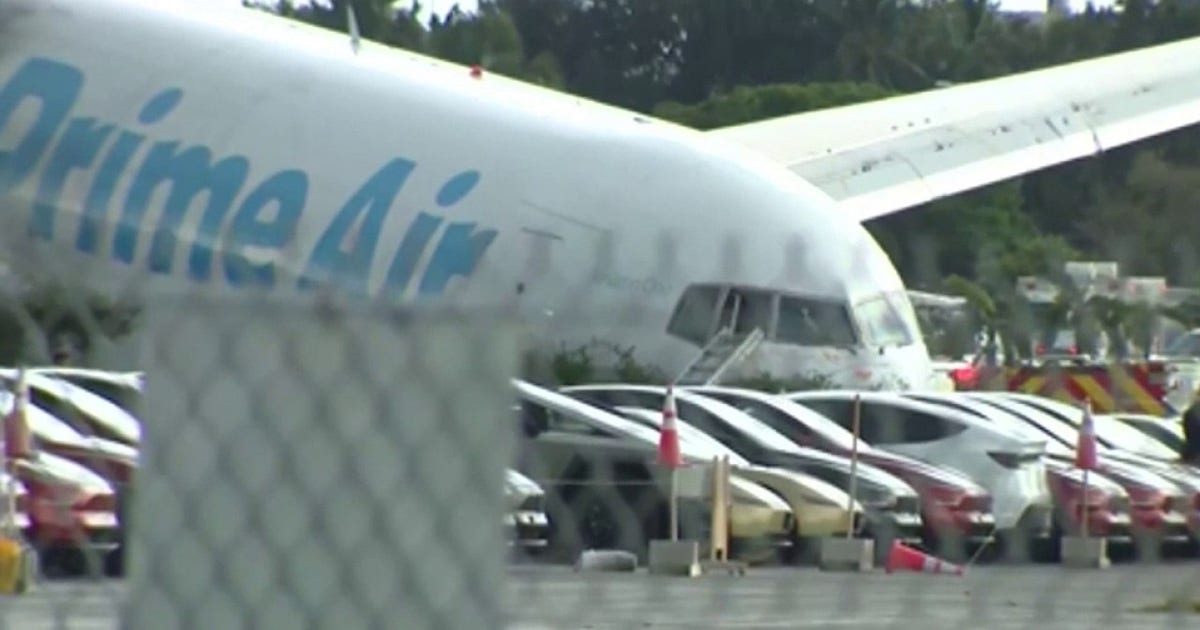


The Boeing 767 freighter operated by 21 Air on behalf of Amazon touched down long amid strong winds from approaching storms. Tracking data indicated the aircraft was nearly halfway down the runway when its landing gear first made contact. Flight data showed automated warnings including sink rate sink rate
and multiple too low terrain
callouts sounding in the cockpit as the plane descended rapidly.
| Event / Timeline Marker | Recorded Metric / Action |
|---|---|
| 01:42 before end | First speed warning issued by pilot |
| 01:04 before end | Electronic "sink rate" audio callout begins |
| 00:48 before end | "Too low terrain" warnings sound four times |
| 00:31 before end | Aircraft touches down; brakes applied at 146 knots (168 mph) |
| 00:15 before end | Pilot calls for go-around; brakes released and throttles increased |
| 00:10 before end | Aircraft departs paved surface; final ground speed 65 knots (75 mph) |
Former Federal Aviation Administration official Mike O’Donnell stated that the flight crew had ample time to correct course when the initial speed warning was issued.
O'Donnell noted, pointing out that extending spoilers, cutting throttles, or lowering landing gear were viable options."You have plenty of time to slow down, plenty of time to say, let's just do a go-around at two minutes out,"
Mike O’Donnell, former FAA official, via NPR
Instead, the aircraft touched down awkwardly and overran the runway by approximately 1,300 feet. It smashed into a van carrying aircraft cleaning workers, crossed a public road, struck a compact SUV, and caught fire. All five occupants of the van—identified as Rolando Aleman Leon, Yoel Rodriguez Naranjo, Julio C. Pineda, Carlos Acosta Fajardo, and Javierkys Reyes Quevedo—were killed. Five others suffered injuries, with two remaining in critical condition.
Safety experts pointed to communication breakdowns in the flight deck. Former airline pilot and safety expert Steve Arroyo questioned the leadership and coordination among the crew. Meanwhile, former Department of Transportation Inspector General Mary Schiavo questioned whether the junior pilot was hesitant to aggressively challenge a more senior captain at the controls.
Legal fallout has already begun following the disaster. Relatives of victims have filed wrongful death lawsuits against Amazon, the cargo carrier, and the pilots. The tragedy has also cast a harsh spotlight on the grueling conditions and demanding turnaround times faced by airport cleaning crews operating near heavy aircraft activity.
As federal authorities continue their review of maintenance records, weather factors, and operational history, further updates including complete cockpit voice recorder transcripts are expected as the NTSB investigation progresses in the coming weeks.