Greg Abbott and Texas GOP own defeat despite blaming Trump
Incumbent Texas Governor Greg Abbott and the state GOP suffered a historic electoral defeat, driven by voter fatigue, AI data center policies, and school vouchers.

- Core Development: Incumbent Texas Governor Greg Abbott and the state GOP suffered a historic electoral defeat, driven by voter fatigue, AI data center policies, and school vouchers.
- Beat Context: Categorized under Business with independent corroboration.
- Reporting Depth: 8 minute analytical read synthesized from verified newsroom sources.
Greg Abbott and the Texas Republican Party are attempting to assign blame for a historic electoral defeat, yet political analysts and election returns indicate the party engineered many of its own political perils. Following decades of unchallenged conservative dominance, Texas voters signaled profound exhaustion with long-serving leadership and polarizing culture-war politics, culminating in a dramatic shift during Tuesday’s elections, as reported by the San Antonio Current. While national figures sought to frame the statewide losses as inevitable fallout from Washington politics, local observers argue that a compounding series of self-inflicted wounds ultimately cost the incumbent governor his office.
The political earthquake extended far beyond traditional partisan fault lines. In a race that surfaced deep voter unease over artificial intelligence and its resource demands, Hinojosa successfully campaigned against the state's aggressive embrace of computing facilities. According to Yahoo Finance, the broader wave of anti-data center sentiment helped elevate Democrats to governorships across multiple key states, triggering a massive market sell-off and adding to investor anxieties regarding future infrastructure spending.
Media additions


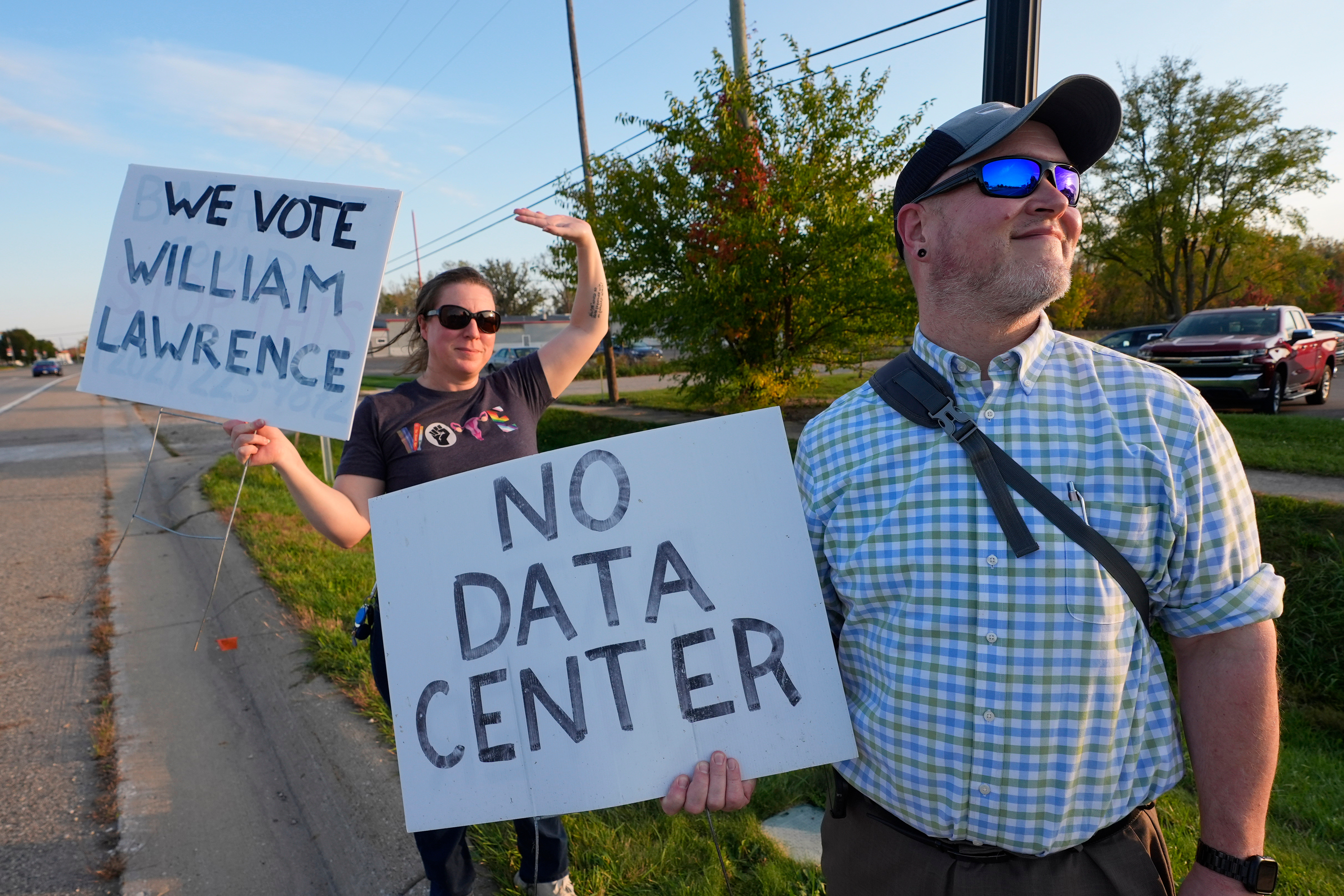
State energy regulators previously outlined extensive challenges in balancing grid demands, noting that pending power requests from large consumers drastically exceeded normal historical usage. The Electric Reliability Council of Texas warned that an ordered review of these facilities could take months to finalize, as detailed by Houston Public Media, leaving developers facing extended delays even as public skepticism mounted.
The electoral reckoning for tech infrastructure was not confined to Texas. As Aol notes, sweeping Democratic victories in governorships and legislative chambers across the country signal a coming era of heightened regulatory scrutiny for data center developers. Analysts point out that voters across both red and blue regions expressed deep anxiety over the strain these facilities place on local water supplies and electricity rates, transforming what was once a niche zoning issue into a potent ballot-box driver.
After twelve years in the Governor’s Mansion, Greg Abbott apparently forgot one of the basic rules of politics, according to the San Antonio Current analysis. Even in fiercely independent Texas, voters expect leaders to occasionally do something for everyday citizens rather than major donors, lobbyists, or billionaires pouring millions into political action committees. On Tuesday, voters who stand in line at H-E-B, pay property taxes, and worry about healthcare costs handed Abbott his first general-election defeat in three decades.
As the dust settles, many on the receiving end of the shellacking will describe his defeat as collateral damage. They will claim he and other Republicans lost their statewide offices because angry voters showed up to repudiate Trump. Political experts disagree with placing the blame solely on Washington. University of Texas at San Antonio political scientist Jon Taylor told the Current,
"I think definitely Trump played a big part in this, but it wasn’t just him. Years of Republican rule in Texas and exhaustion with Abbott after 12 years also factored into it. Along with anger about everything from Big Bend National Park to flock cameras to AI data centers to vouchers to harsh immigration [policies] and the Texas collaboration with ICE. They all played a role."
Jon Taylor, Political Scientist, University of Texas at San Antonio, via San Antonio Current
Abbott and his longtime chief political strategist, Dave Carney, spent years advancing unpopular policies. Abbott pushed an expensive voucher scheme that alienated rural Republicans who feared the collapse of their public schools. Hinojosa, a former Austin ISD school board president, seized on the unpopularity of the program to make public education a centerpiece of her campaign. Meanwhile, Abbott spent the closing weeks accusing her of being too woke and invoking clichés about transgender kids and Sharia law. Taylor noted the campaign felt tone-deaf, describing it as running from an old playbook while noting that Abbott was a powerful governor who lost to an opponent he outspent nearly eight to one.
Before public opposition to water- and electricity-hogging computing facilities reached a fever pitch, Abbott eagerly courted investment from the tech industry with tax incentives and a lax regulatory environment. Hinojosa called for a moratorium on new data center construction and tougher safeguards. Abbott responded with his own pause, though investigations showed state approvals continued for dozens of projects, exposing the reversal as political theater.
The biggest blue swings during Tuesday’s election came from majority-Latino counties in South Texas and along the border, with Hidalgo, Maverick, Starr, Webb, and Zapata counties moving upwards of 38 points toward Democrats compared to the 2024 election. Abbott supported Trump's harsh immigration crackdown by busing migrants to Democrat-controlled cities, installing razor wire and floating barriers in the Rio Grande, and attempting to give Texas police the power to pull people over for driving while brown. While loud about the border and vouchers, Abbott remained silent on affordability and corruption. Hinojosa made affordability central to her campaign, proposing $1,500 payments directly to Texans from the state emergency savings account. Furthermore, a Public Citizen investigation found that donors to Abbott's PAC received nearly $1 billion in no-bid state contracts from 2020 to 2024 during declared emergencies.
Southern Methodist University political science professor Cal Jillson summarized the mood of the electorate:
"The reason you saw the Trump agenda rejected so strongly in Texas is that there was an arrogance and entitlement on the part of Abbott and Patrick and Paxton — that they were the natural owners of these offices. I think everybody knew that Talarico might win, but I don’t think that Abbott and Patrick and Republicans further down the ticket really believed that Hinojosa was going to win."
Cal Jillson, Political Science Professor, Southern Methodist University, via San Antonio Current
Following the losses, President Trump reacted to the volatile markets with Truth Social posts overnight, doubling down on his support of data centers and attempting to blame Democrats for the sell-off. Trump called leaders who oppose data centers foolish and stated he would work with states wanting to become rich through them. While Trump did not criticize most losing Republicans, he lashed out immediately at Abbott, stating the three-term governor would have won if he had not become a Republican in name only, as reported by Yahoo Finance.
The anti-data center sentiment stretched across the country, elevating Democrats to governorships in places like Ohio and Georgia. Concerns about a slowdown in data center construction and AI spending led to a steep sell-off in tech stocks, ending the worst post-midterm day since 1896. Trump posted on Truth Social that the stock market crashed because Democrats had a big Tuesday. Georgia's Republican nominee for governor, Rick Jackson, had developed a nearly 600-acre data center project in New Boston, Texas, which became a focal point in Georgia's race as reported by The Atlanta Journal-Constitution.
In Texas, energy regulators previously outlined extensive challenges in balancing grid demands. Gov. Abbott ordered the Electric Reliability Council of Texas and the Public Utility Commission of Texas to pause approvals for new data centers pending a thorough review. ERCOT Senior Vice President Chad Seely noted that community impact information on water technology and power deliverability provides a better perspective as new loads join the grid. Large energy consumers requested 474 gigawatts of power, which is more than five times the amount used by the entire state during record-breaking demand, with about 90 percent of requests coming from data centers. ERCOT's first evaluation process, known as Batch Zero, was put on hold, leaving developers facing months of delays according to Houston Public Media.
AOL reported that sweeping Democratic victories nationwide signal a coming era of heightened regulatory scrutiny. Clayton Tucker, the first Democrat elected state agriculture commissioner since 1986, campaigned against data development, telling the Associated Press that ranchers worried about dwindling water supplies. According to AdImpact data, campaigns spent more than $380 million on television ads mentioning data centers, with Democrats outspending Republicans 3-to-1. Data Center Watch tracked winning candidates and found the vast majority expressed support for stronger regulation or a moratorium. OpenAI published a framework committing to community guidelines, while the Data Center Coalition noted that host communities might miss out on tax revenue if restrictions are pushed too far.
| Entity / Region | Reported Impact / Outcome | Key Context |
|---|---|---|
| Texas | Governor's office flipped to Democrats | Defeat of incumbent after twelve years in office amid backlash to vouchers, data centers, and border policies. |
| Financial Markets | Sharp tech stock sell-off | Investors reacted to midterms and anticipated restrictions on AI infrastructure growth. |
| National Elections | Multiple governorships flipped | Victorious candidates widely expressed support for stronger data center regulations or moratoriums. |
What happens next will hinge on the incoming administration's legislative agenda and the timeline of ongoing state energy audits. Regulators and newly elected officials face immediate pressure to address grid reliability, water conservation, and public education funding. Meanwhile, tech giants and industry coalitions are scrambling to establish community trust frameworks to forestall more punitive state-level restrictions as the new political landscape takes shape.
How significant is this development?
Contribute your assessment to the aggregated reader sentiment ledger.
Frequently Asked Questions
Key questions answered in this reportWhat is the key development in: Greg Abbott and Texas GOP own defeat despite blaming Trump?
Incumbent Texas Governor Greg Abbott and the state GOP suffered a historic electoral defeat, driven by voter fatigue, AI data center policies, and school vouchers.
Why is this Business development significant for the UK?
This report covers critical events in our Business beat. Independent reporting monitors related UK statements, regulatory shifts, and public responses as further verified details emerge.
How was this reporting corroborated and verified?
Newsarchy UK compiles and cross-references reporting from primary reporting from sacurrent.com and cross-checked wire reports. All coverage adheres to published editorial standards.
When was this report published?
This briefing was published on November 6, 2026 and is permanently cataloged in the Newsarchy UK Business archives.