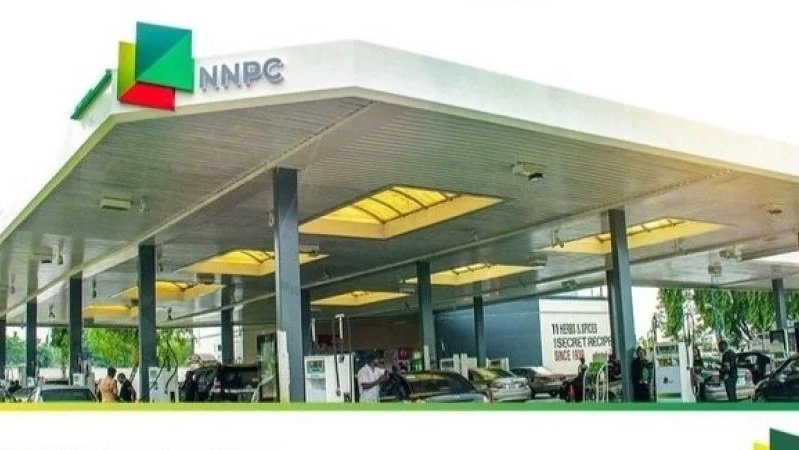
NNPC Launches Smart Self-Service Stations With EV Charging in Abuja
NNPC Retail has launched its inaugural smart self-service filling station in Abuja, integrating EV charging, digital payments, and multi-energy infrastructure as a proof of concept.

- Core Development: NNPC Retail has launched its inaugural smart self-service filling station in Abuja, integrating EV charging, digital payments, and multi-energy infrastructure as a proof of concept.
- Beat Context: Categorized under Business with independent corroboration.
- Reporting Depth: 3 minute analytical read synthesized from verified newsroom sources.
The Nigerian National Petroleum Company Limited has modernised the nation's downstream retail sector by commissioning its first smart self-service filling station in Abuja, as reported by MSME Africa and National Update. This technological shift alters how motorists interact with fuel retail outlets by introducing automated dispensing alongside multi-energy infrastructure, digital payment platforms, and real-time monitoring capabilities.
Operating under the downstream subsidiary NNPC Retail, the new facility is designed to function as an integrated energy and mobility hub rather than a conventional petrol station. According to reporting by New Telegraph, the initiative forms part of a culture transformation journey initiated by the state energy firm well over a year ago. This operational overhaul aligns with the company's core strategic pillars: an enterprise-first mindset, execution excellence, profitable growth, and serving as a partner of choice for consumers, as detailed by Business News Nigeria and National Update.
Media additions


Under the self-service model, motorists select their desired fuel quantity, execute digital payments through the NRL Fuel App, and receive a digital receipt containing an order ID, QR code, and a unique self-service code. Entering this code at the pump activates the dispenser. This mechanism aims to streamline transactions while offering enhanced visibility and operational monitoring.
Beyond petrol, the Abuja station broadens consumer energy choices by incorporating electric vehicle (EV) charging ports, compressed natural gas (CNG), and liquefied petroleum gas (LPG) services. This diversification mirrors evolving energy consumption patterns across the country. Earlier projections noted by MSME Africa indicated that the downstream subsidiary previously planned to deploy between 50 and 70 smart self-service stations within a six-month window.
Addressing questions regarding the timeline for wider deployment, NNPC Limited Group Chief Executive Officer Engr. Bashir Bayo Ojulari explained that the Abuja facility operates strictly as a proof of concept. The leadership team intends to assess real-time performance, technological reliability, and customer feedback before scaling the concept further. Subsequent phases will depend on location suitability, infrastructure readiness, and local market demand rather than an immediate nationwide replication.
| Implementation Aspect | Initial Abuja Deployment | Future Phased Rollout |
|---|---|---|
| Operational Status | Active proof of concept | Subject to initial performance evaluation |
| Energy Offerings | Petrol, EV Charging, CNG, LPG | Flexible mix based on community suitability |
| Payment Infrastructure | NRL Fuel App and digital codes | Integrated digital payment gateways |
| Monitoring Systems | Real-time transaction and equipment tracking | Expanded maintenance and support networks |
To address concerns regarding pricing accuracy, payment security, and accurate dispensing, the smart stations incorporate real-time monitoring systems and operational controls developed in partnership with technology providers. Ojulari emphasized that technology alone cannot guarantee customer satisfaction, noting that management will rely on continuous data collection and direct consumer feedback to resolve operational issues promptly.
According to Ojulari, the initiative reflects a customer-centric ambition, with the state firm seeking to respond to expectations while maintaining sustainable operations. National Update reported the GCEO stating:
"Customers increasingly expect services that are convenient, accessible and transparent"
Engr. Bashir Bayo Ojulari, NNPC Ltd. Group Chief Executive Officer, via National Update
The launch arrives alongside broader infrastructure developments within Nigeria's energy sector. Meanwhile, federal authorities continue to expand energy access through initiatives such as the Energising Education Programme, which recently commissioned a hybrid solar mini-grid at Yakubu Gowon University to serve students and reduce reliance on diesel generators.
As NNPC Retail gathers operational data from the Abuja facility, industry observers will monitor how quickly technical adjustments are made and how the state oil firm structures its upcoming regional rollout phases.
How significant is this development?
Contribute your assessment to the aggregated reader sentiment ledger.
Frequently Asked Questions
Key questions answered in this reportWhat is the key development in: NNPC Launches Smart Self-Service Stations With EV Charging in Abuja?
NNPC Retail has launched its inaugural smart self-service filling station in Abuja, integrating EV charging, digital payments, and multi-energy infrastructure as a proof of concept.
Why is this Business development significant for the UK?
This report covers critical events in our Business beat. Independent reporting monitors related UK statements, regulatory shifts, and public responses as further verified details emerge.
How was this reporting corroborated and verified?
Newsarchy UK compiles and cross-references reporting from primary reporting from msmeafricaonline.com and cross-checked wire reports. All coverage adheres to published editorial standards.
When was this report published?
This briefing was published on September 20, 2026 and is permanently cataloged in the Newsarchy UK Business archives.