Everyday Explained: Why do emergency exit doors always open outwards?
Emergency exit doors swing outward to use the momentum of a panicking crowd to clear a path, preventing fatal bottlenecks caused by inward-opening designs.
Public safety architecture often hides in plain sight, yet every feature—from the angle of a doorway in a crowded public venue to the layout of internal transit systems—carries a specific history of survival. Hindustan Times reporting explores why emergency exit doors invariably swing outward, highlighting a structural design choice rooted in preventing catastrophic human crushes during sudden emergencies.
The reasoning behind outward-swinging doors is fundamentally linked to human behaviour during panic. When hazardous incidents such as fires strike public venues like theatres, schools, stadiums, and shopping centres, crowds instinctively rush toward exits. If an exit door opened inward, the immense weight and pressure of people pushing against it would prevent anyone from pulling it open, creating a fatal bottleneck. Outward-opening doors use the crowd's own momentum to clear the path. Furthermore, these exits are fitted with horizontal push bars, allowing panicking individuals to escape without wasting precious seconds searching for traditional handles.
This design principle became mandatory worldwide following severe crowd disasters in the late 19th and early 20th centuries. A report highlights a tragedy at Victoria Hall in England, where a theatre was packed with around thousands of kids for a magic show. At the end of the show, children rushed toward a single staircase at the same time. Now, at the bottom of the staircase was an exit door, but it opened inwards. As the children at the front slowed down because of the door and only two or three could pass at a time, the children behind had no idea, and they kept pushing. Within seconds, hundreds of children were packed against this one door. Though the people outside were trying to help pull the door open, they couldn't, as the weight of the crowd pressing against it had effectively locked it shut. By the time rescuers managed to get the door open, children had died that day.
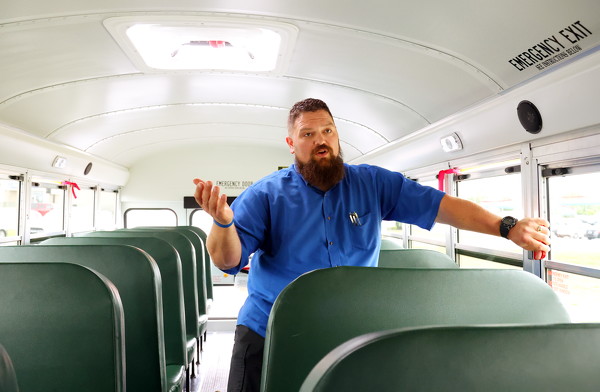
Transport safety similarly depends on careful structural planning and emergency protocols, whether in fixed public architecture or mobile environments like student transit systems. Daily Standard coverage details how school bus safety measures and emergency exit management are evaluated by transportation officials.
Discussions surrounding vehicle safety have intensified following transport incidents. Officials note that school buses are exceptionally sturdy, featuring heavily reinforced chassis and interior seats equipped with energy-absorbing compartments designed to protect passengers during forward and backward collisions. However, wider regulatory debates continue over protective gear, seating configurations, and driver accountability. Transportation supervisors point out that the vast majority of severe pupil injuries occur outside the vehicle rather than inside, making traffic enforcement around stopped buses a critical priority for local authorities.
In Ohio, state leaders established a task force to examine school bus safety, including the use of lap-and-shoulder seat belts. St. Marys City Schools Director of Transportation Nick Hager explained the operation of school bus emergency exit doors and noted the sturdy construction of the fleet. Meanwhile, Celina City Schools Transportation Supervisor Greg Amspaugh pointed out the practical challenges of installing seat belts, noting that capacity limits, implementation costs, and passenger management present significant operational hurdles. Amspaugh also noted that school bus traffic violations happen nearly every day and called for harsher penalties for drivers who run flashing red lights.
| Context | Safety Mechanism | Operational Challenge |
|---|---|---|
| Public Buildings | Outward-swinging emergency doors with horizontal push bars | Preventing crowd jams during panic evacuations |
| School Buses | Reinforced chassis, compartmentalised padded seating, and emergency exit doors | Balancing seat belt installation costs, capacity limits, and passenger management |
As communities continue to evaluate public infrastructure and transit protection, structural designers and safety officials maintain a shared focus on human behavior under pressure. State-level task forces and local transportation authorities continue to review safety protocols, equipment mandates, and traffic enforcement measures to protect passengers in public venues and on school transportation systems.


