US envoys meet Zelensky in Dublin following Moscow talks with Putin
US envoys have briefed Ukrainian President Volodymyr Zelensky in Dublin following direct talks with Vladimir Putin, setting the stage for European powers to join upcoming peace negotiations.

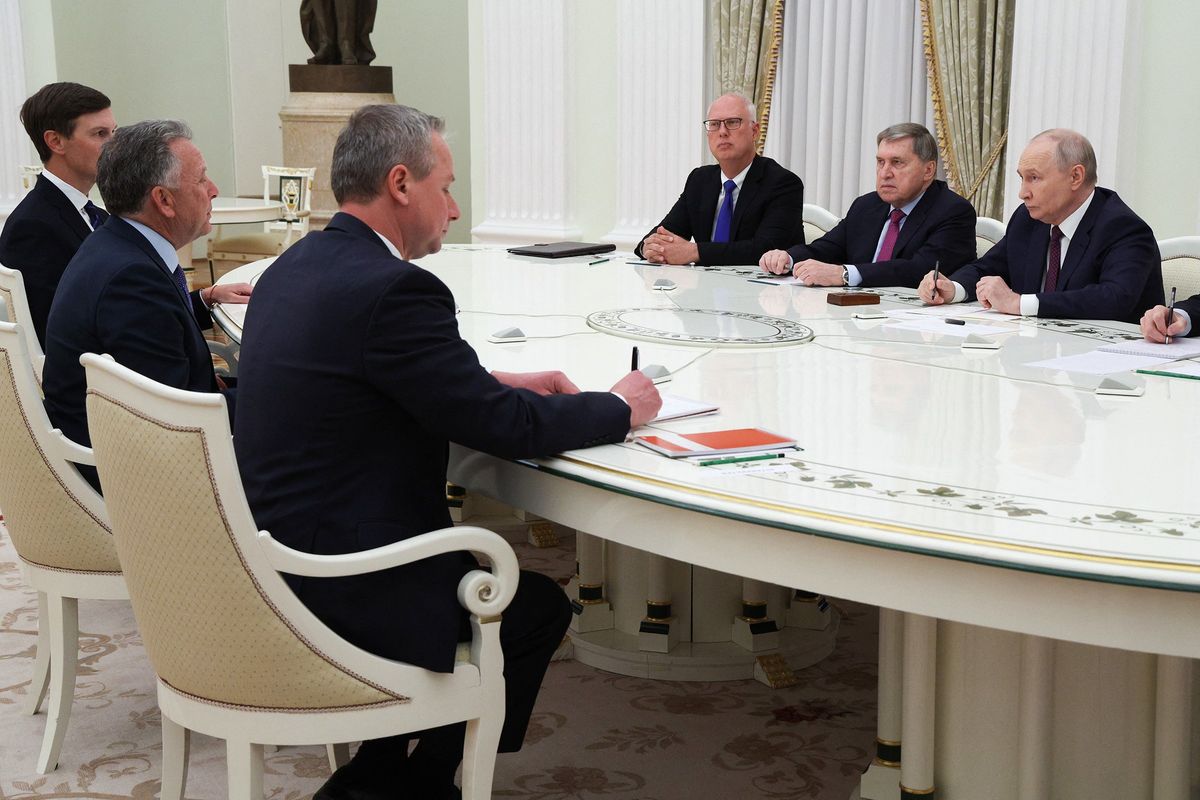
US envoys Steve Witkoff and Jared Kushner travelled from Moscow to Dublin on Thursday to brief Ukrainian President Volodymyr Zelensky on their talks with Vladimir Putin, opening a new phase of peace diplomacy that would bring European representatives directly into negotiations for the first time in months.
The shuttle diplomacy followed two days of US-mediated talks in Abu Dhabi between Russian and Ukrainian delegations — the first direct discussions between the two sides in nine months — which produced no major breakthrough beyond an agreement on a large-scale prisoner exchange. Kushner and Witkoff then met Putin in the Kremlin for more than two hours before flying to Ireland, where Zelensky was attending the European Political Community summit.
Media additions

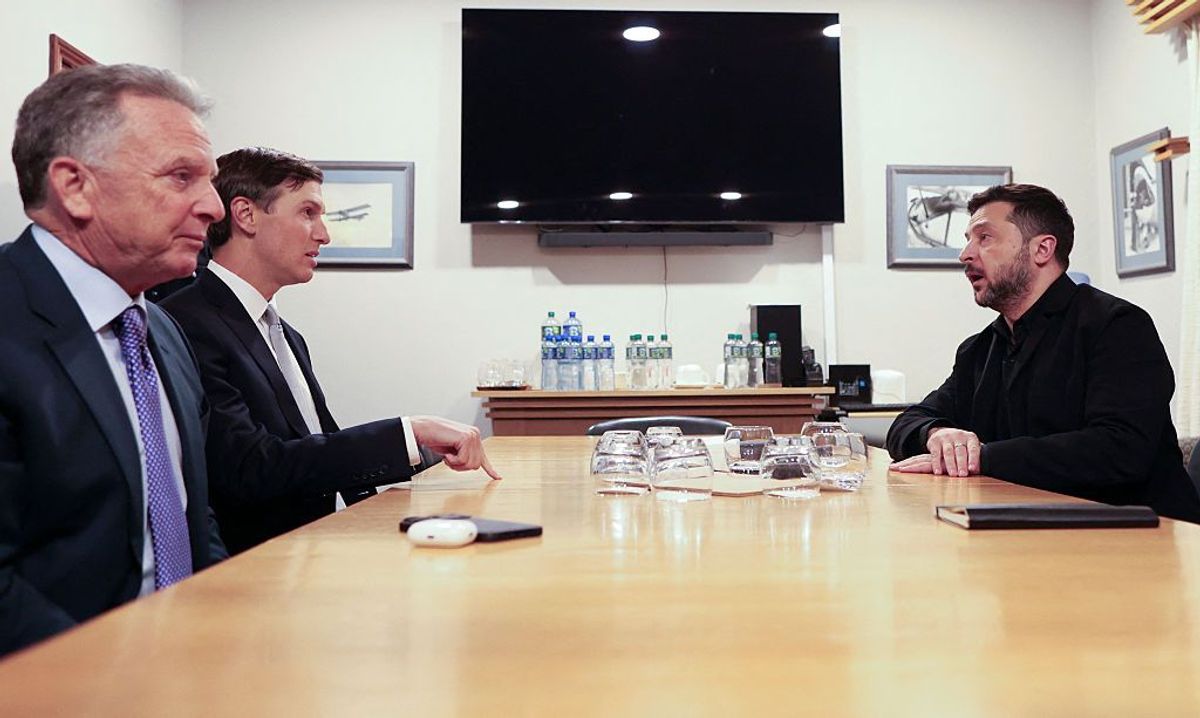
Witkoff told reporters after the Moscow meeting that progress had been made and that a new round of trilateral talks had been agreed, with Europeans joining the next stage. "They are our partners and it's important to us that they take part," Witkoff said, according to reporting by the BBC. Kushner, speaking alongside Zelensky in Dublin, was more emphatic: "We cannot conclude this deal without Europeans being at the table," he said, as reported by The New York Times.
Zelensky confirmed that Europe would take part directly in future negotiations rather than remain on the sidelines. "Next time, next meeting, Europe...will be in the negotiating team," he said, according to The Kyiv Independent. "They will have a voice. This is important to us, because the war is in Europe."
The Dublin meeting took place at Casement Aerodrome, a military base west of Dublin, where Zelensky was joined by Rustem Umerov, Ukraine's leading negotiator and foreign intelligence chief, according to The Kyiv Independent. Kushner described the discussion as "a very good discussion," while calling the talks with Putin "very detailed and productive."
Yet the diplomatic momentum sits alongside a stark reality: neither Moscow nor Kyiv has moved from its core positions. Putin told the US envoys that foreign troops in Ukraine were "unacceptable" to Russia and reiterated his demand that any peace deal recognise Russia's state border as the line of demarcation. "For us there is only one line of demarcation: the line of the state border," Putin said, according to the BBC. "Because then it will be clear that we are here, and you are there."
Putin also proposed a temporary humanitarian mission to the embattled city of Kostyantynivka in eastern Ukraine, modelled on a similar operation last month in the Russian-occupied city of Oleshky. Kyiv is sceptical. Ukrainian presidential adviser Dmitry Lytvyn told the BBC that Russia had used the Oleshky operation to bring in equipment and rotate troops, adding that details would need to be "clarified."
Meanwhile, Zelensky raised a separate crisis with Washington. Ukraine's military has faced what he called "systematic" restrictions to Starshield, SpaceX's military-grade satellite service, for several days, hampering Kyiv's ability to intercept Russian jet-powered drones. "If someone in America is making decisions that basically treat Ukrainian territory as if it is not Ukrainian, then this tells us where things are going," Zelensky said in Dublin, according to the BBC.
The restrictions echo a similar disruption in late October that lasted about a week. SpaceX CEO Elon Musk has acknowledged throttling Starlink in Ukraine, accusing Kyiv of violating terms of service by using the system for offensive strikes, while denying responsibility for the Starshield slowdown. A senior US official told Time Magazine that "no such request was ever made by the President."
European leaders in Dublin signalled they would not accept a marginal role. EU foreign policy chief Kaja Kallas told the BBC's Newshour programme that the presence of a European official at the next meeting showed the Kremlin had "now realised that Europe is a big player here because we are the ones who have been supporting Ukraine." She warned that with financial pressures on European budgets, it was "becoming harder to help Ukraine," but cautioned against the danger to the continent if Russian aggression continued.
The prisoner exchange discussed in Abu Dhabi could be the largest of the war to date. Zelensky said in Dublin that it "will be the biggest, Steve and Jared told me, the biggest exchange of war prisoners yet," according to The Kyiv Independent.
The broader context remains grim. The war, now stretching toward its fifth year, has seen neither side make significant gains along the front line. Russia has stepped up missile and drone attacks on Ukrainian energy infrastructure, while Kyiv regularly strikes targets deep inside Russia. On Thursday alone, Russia launched 123 drones at Ukraine overnight, 73 of them jet-powered, according to the Ukrainian air force cited by NewsCord, while Russia's Defence Ministry said its air defences downed 71 Ukrainian drones.
| Issue | Russia's position | Ukraine's position |
|---|---|---|
| Territory | State border as line of demarcation; full control of Donbas | Rejects surrender of Donbas; Kyiv does not accept Russia fully holds Kostyantynivka |
| European role | Europe should be included at some stage but lacks a single representative; sceptical of direct EU role | Europe must be at the negotiating table, not on the sidelines; wants one European spokesperson |
| Foreign troops | Presence in Ukraine unacceptable; would be a security threat | European security guarantees long floated to prevent renewed attack |
| Ceasefire | Wants overall deal, not a temporary pause | Wider security talks should come only after a ceasefire |
| Prisoner exchange | Agreed in Abu Dhabi; largest of the war to date | Could include up to 1,200 prisoners |
Analysts warn that the inclusion of Europe in talks about postwar security architecture could itself become a flashpoint. Kristi Raik, director of the Estonian Foreign Policy Institute, told the BBC that Russia has a "long history" of wanting to revise European security architecture, including reducing NATO presence on the Eastern flank and securing veto rights over European security decisions. "And that's where it gets even more difficult to imagine that there could be an agreement between the Europeans and the Russians," she said.
For now, the immediate next steps are clear but undated. Witkoff said another round of talks was on the schedule but provided no dates or locations. Zelensky said negotiations would take place in the near future. Putin is expected to continue discussions with Trump at the APEC summit in China later this month, according to Kremlin aide Yury Ushakov. The European Council meets in Brussels on Nov. 26-27, where von der Leyen's sanctions and financial proposals will be on the agenda.
Zelensky has insisted that if everyone is involved, negotiations could show progress by the beginning of 2027. But with Moscow's demands for territory and neutrality continuing to far exceed what Ukraine is prepared to consider, and with Starshield disruptions adding a new layer of transatlantic friction, the path from Dublin to any lasting settlement remains uncertain.
What to watch next
- The timing and location of the next round of trilateral talks, now agreed but without a date
- Whether European governments can agree on a single representative to speak for the continent in negotiations with Moscow
- Resolution of the Starshield restrictions affecting Ukraine's front-line drone defences
- The European Council meeting in Brussels on Nov. 26-27, including new sanctions and Ukraine funding proposals
- Putin's expected meeting with Trump at the APEC summit in China later this month