Mary-Brenda Akoda wins NLNG prize for AI software that speeds up MRI scans
AI research scientist Mary-Brenda Akoda won the 2026 Nigeria Prize for Science and Innovation for her software that reduces MRI scan times from 20 minutes down to two minutes.

- Core Development: AI research scientist Mary-Brenda Akoda won the 2026 Nigeria Prize for Science and Innovation for her software that reduces MRI scan times from 20 minutes down to two minutes.
- Beat Context: Categorized under Culture with independent corroboration.
- Reporting Depth: 3 minute analytical read synthesized from verified newsroom sources.
An artificial intelligence breakthrough designed to slash magnetic resonance imaging scan times by up to ninety per cent has secured major international and domestic recognition. Mary-Brenda Akoda, an artificial intelligence research scientist, Google DeepMind Scholar, ex-Microsoft engineer, and founder of GenScan AI, has claimed the $100,000 2026 Nigeria Prize for Science and Innovation sponsored by Nigeria LNG Limited (NLNG), as reported by Independent, womennewstoday.com, and National Accord Newspaper. Her award-winning software, known as GenMRI or GenScan AI, compresses traditional medical imaging procedures that normally take between twenty minutes and an hour into rapid sessions lasting as little as two to six minutes. Crucially, the technology operates on existing hospital hardware without requiring institutions to purchase expensive new machinery that typically costs between $1.5 million and $3.5 million.
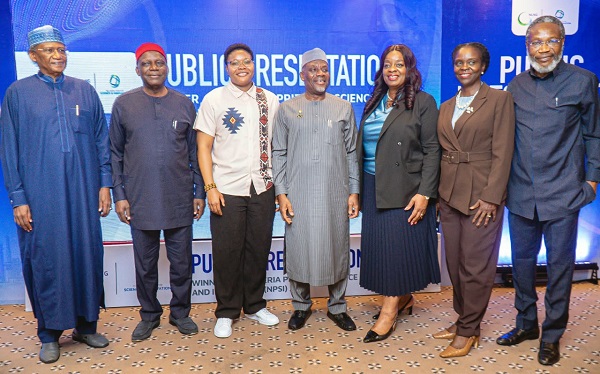
The achievement marks a historic milestone as Akoda becomes both the first woman and the first millennial to win the prize as an individual recipient, according to Womennewstoday. Selected from a pool of 237 entries, her victory follows a previous cycle where the award went unissued because no submissions met the required standard, according to Nigeria LNG Limited representatives and Advisory Board Chairman Professor Bart Nnaji. The public presentation event at Transcorp Hilton Hotel in Abuja drew prominent government officials, including the Minister of Education, Dr. Tunji Alausa, who directed key stakeholders to integrate the software into local teaching hospitals and federal medical centres.
Media additions

The inspiration behind the technology stems from a deeply personal experience. Akoda watched an elderly relative suffer a stroke and deteriorate while trapped in prolonged queues for urgent medical imaging, a tragedy compounded by her own subsequent medical encounters. With stroke claiming over 6.5 million lives globally each year and cancer killing over 10 million, timely diagnostics remain a vital frontline defense. High-acquisition costs for traditional scanners—often running into millions of dollars with restricted lifespans of seven to ten years—frequently create severe backlogs. Akoda’s software addresses this bottleneck by allowing artificial intelligence to reconstruct diagnostic images from fewer data acquisitions, thereby reducing repeat scans and sedation costs for vulnerable patients such as infants and the elderly.
| Scan Parameter | Conventional Duration | GenMRI Duration |
|---|---|---|
| Standard MRI | 20 minutes | As little as 2 minutes |
| Extended MRI | Up to 1 hour | As little as 6 minutes |
Rigorous academic validation preceded the public accolades. Akoda developed and validated the system using extensive image sets, including over 8,800 or 15,000 cardiac MRI images depending on the developmental stage reported across sources, followed by an early blinded assessment conducted alongside a consultant radiologist at the Buckinghamshire Healthcare NHS Trust in the United Kingdom. In this test, the radiologist remained unaware of which images originated from conventional scanners and which came from the artificial intelligence software. The results confirmed that the generated outputs were diagnostically equivalent to conventional MRI scans across all assessed cases, achieving up to 99.7% technical similarity ratings and outperforming state-of-the-art systems on out-of-distribution knee MRI evaluations.
Government backing is now shifting from academic validation to practical deployment. During the public presentation in Abuja, education officials pledged direct coordination with the health sector, with Alausa stating he would connect Akoda with the Minister of Health, Mohammed Ali Pate. Alongside her medical technology work, Akoda has previously contributed to diabetic retinopathy research and African language preservation initiatives through Nkanda, demonstrating a diverse career bridging science and social impact.
The upcoming phase will test whether these clinical pilots can successfully transition from controlled trials to widespread hospital integration across multiple continents. Stakeholders across the United Kingdom, the United States, Kenya, and Nigeria are currently coordinating regulatory pathways and seeking health and innovation funders ahead of projected deployment timelines targeted for the second half of next year.
How significant is this development?
Contribute your assessment to the aggregated reader sentiment ledger.
Frequently Asked Questions
Key questions answered in this reportWhat is the key development in: Mary-Brenda Akoda wins NLNG prize for AI software that speeds up MRI scans?
AI research scientist Mary-Brenda Akoda won the 2026 Nigeria Prize for Science and Innovation for her software that reduces MRI scan times from 20 minutes down to two minutes.
Why is this Culture development significant for the UK?
This report covers critical events in our Culture beat. Independent reporting monitors related UK statements, regulatory shifts, and public responses as further verified details emerge.
How was this reporting corroborated and verified?
Newsarchy UK compiles and cross-references reporting from primary reporting from independent.ng and cross-checked wire reports. All coverage adheres to published editorial standards.
When was this report published?
This briefing was published on October 31, 2026 and is permanently cataloged in the Newsarchy UK Culture archives.