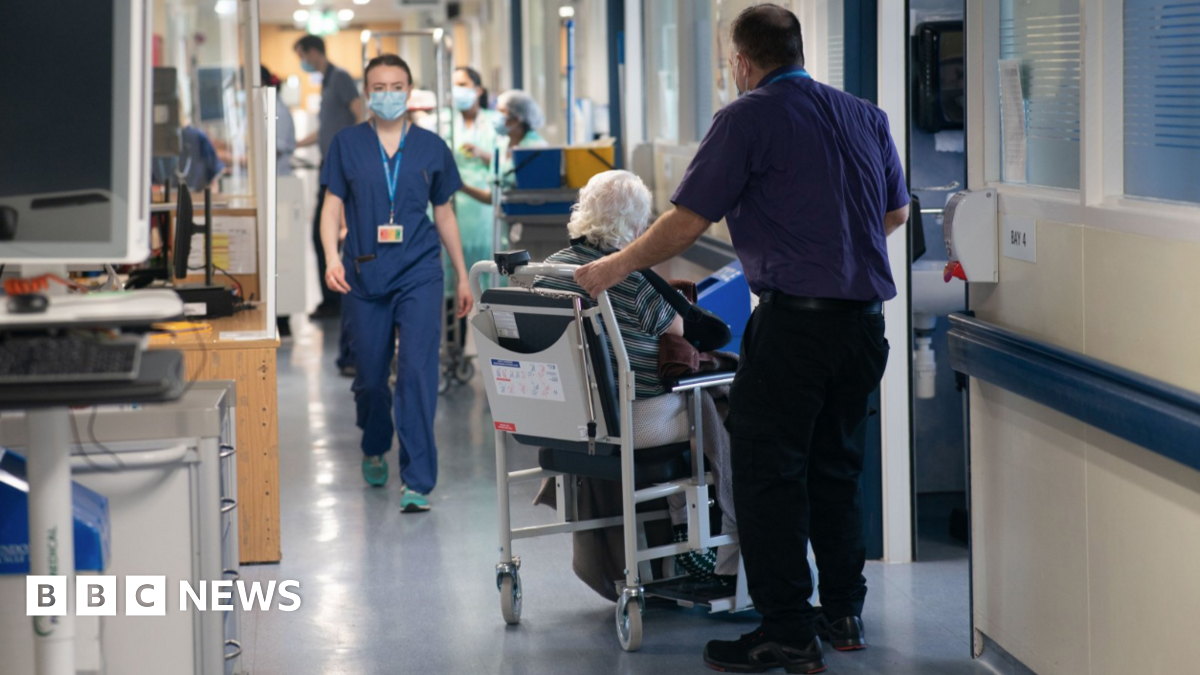
NHS health boards deliberately delay care to control costs
A study reveals that nearly half of England's integrated care boards enforce mandatory minimum waiting periods for routine surgeries to control costs.

- Core Development: A study reveals that nearly half of England's integrated care boards enforce mandatory minimum waiting periods for routine surgeries to control costs.
- Beat Context: Categorized under NHS with independent corroboration.
- Reporting Depth: 4 minute analytical read synthesized from verified newsroom sources.
Health boards across England are deliberately delaying routine operations and procedures to control mounting costs and manage surging demand, leaving patients in severe pain for months according to a damning study published by The BMJ. The practice forces hospitals to stall treatment even when they possess the physical capacity to see patients sooner. Investigations reveal that nearly half of the nation's health authorities have instituted mandatory minimum waiting periods for common elective procedures such as hip, knee, and cataract surgeries. This revelation comes as the wider health system grapples with historic public dissatisfaction and deep structural bottlenecks detailed in an independent investigation of the NHS.
The investigation utilized freedom of information laws to survey all 36 integrated care boards (ICBs) responsible for planning local health services. Out of 35 responding boards, representing a 97 percent response rate as reported by Mirage News, exactly 17 confirmed they enforce formal minimum wait policies. Two of these bodies—Shropshire, Telford and Wrekin, and West Yorkshire—have imposed a blanket minimum wait of 16 weeks for all routine interventions. West Yorkshire officials stated that their 16-week target gives clinicians flexibility to prioritize patients facing clinical deterioration, while Shropshire representatives defended their threshold as a measure to promote fairness and ensure equitable access to elective services.
Media additions

Other regions apply similar administrative holds across specific specialties or general elective pathways. Planning assumptions and mandatory thresholds vary widely by geography, creating a fragmented landscape where care timelines depend heavily on local administrative policy rather than pure clinical urgency.
| Integrated Care Board (ICB) | Minimum Wait / Planning Assumption | Applicable Procedures |
|---|---|---|
| Shropshire, Telford and Wrekin | 16 weeks | All routine procedures |
| West Yorkshire | 16 weeks (90% target) | All routine procedures |
| South East London | 16 weeks | Cataract treatment |
| Humber and North Yorkshire | 16 weeks (planning average) | Planned admitted procedures |
| North East and North Cumbria | 15 weeks (planning average) | All elective procedures |
| Birmingham and Solihull | 14 weeks | Planned/non-urgent elective care |
| Black Country | 14 weeks | Elective procedures |
| Coventry and Warwickshire | 14 weeks | Elective procedures |
| Devon | 14 weeks | Elective procedures |
| Hereford and Worcestershire | 14 weeks (planning average) | Planned procedures |
| Somerset | 14 weeks | Planned procedures (excluding urgent priorities) |
| Leicester, Leicestershire and Rutland | 14 weeks | Orthopaedics and ophthalmology |
| Thames Valley | 14 weeks | Cataracts |
| Dorset | 14 weeks | Independent surgical providers |
Medical professionals have sharply condemned the widespread adoption of artificial waiting floors. Tim Lane, president of the Royal College of Surgeons, warned that forcing clinically ready patients to wait deliberately can prolong physical pain, limit mobility, increase anxiety, and allow underlying conditions to deteriorate according to his statements reported by the Daily Mail. Lane emphasized that access to healthcare ought to be determined solely by clinical need rather than local geography, noting that minimum waits do nothing to solve the underlying capacity deficits plaguing hospitals.
General practitioners share these concerns. Professor Victoria Tzortziou Brown, president of the Royal College of General Practitioners, argued that blanket waiting times are difficult to justify when facilities could treat patients sooner. She noted that prolonged hospital waits inevitably increase the workload of family doctors as patients seek ongoing support and symptom management while trapped on waiting lists.
Conversely, health policy analysts suggest that rationing care through waiting thresholds represents a calculated effort to manage constrained budgets. Sally Gainsbury, a senior policy analyst at the Nuffield Trust think tank, observed that limiting activity via minimum waiting times can be an equitable response to spreading finite financial resources evenly across a population, though she acknowledged a concerning lack of clarity regarding fair implementation.
An official NHS spokesperson defended the commissioning policies, maintaining that while wait frameworks help organizations optimize services, staff, and budgets, every patient is ultimately seen in order of clinical need. The spokesperson added that the health service does not expect any organization to commission waits that risk breaching the constitutional standard guaranteeing a maximum wait of 18 weeks for elective treatment.
These administrative measures unfold against a backdrop of deep systemic strain. An independent review of the health service found that public satisfaction has plummeted to its lowest level since records began, driven by a decade of real-terms funding austerity and severe capital starvation. Hospitals entered recent crises with diminished resilience, high bed occupancy, and critical shortages of doctors, nurses, and physical infrastructure. Furthermore, a severe crisis in social care leaves roughly 13 percent of hospital beds occupied by individuals awaiting discharge to more appropriate settings, severely dragging down overall hospital productivity and causing surgical activity per surgeon to drop.
Patients and clinicians alike navigate a system where long waits have become normalized across mental health, community services, and emergency departments. As policymakers prepare to draft a forthcoming 10-year health plan, the tension between financial containment and timely patient access remains acute. Observers will watch closely to see whether national regulators intervene to dismantle local minimum waiting policies or if financial pressures force health boards to maintain administrative delays.
How significant is this development?
Contribute your assessment to the aggregated reader sentiment ledger.
Frequently Asked Questions
Key questions answered in this reportWhat is the key development in: NHS health boards deliberately delay care to control costs?
A study reveals that nearly half of England's integrated care boards enforce mandatory minimum waiting periods for routine surgeries to control costs.
Why is this NHS development significant for the UK?
This report covers critical events in our NHS beat. Independent reporting monitors related UK statements, regulatory shifts, and public responses as further verified details emerge.
How was this reporting corroborated and verified?
Newsarchy UK compiles and cross-references reporting from primary reporting from dailymail.com and cross-checked wire reports. All coverage adheres to published editorial standards.
When was this report published?
This briefing was published on September 9, 2026 and is permanently cataloged in the Newsarchy UK NHS archives.