Lee Anderson backs burkha ban with 3-word statement
Reform UK MP Lee Anderson has endorsed a proposed ban on the burkha following new integration measures introduced by Italian Prime Minister Giorgia Meloni.
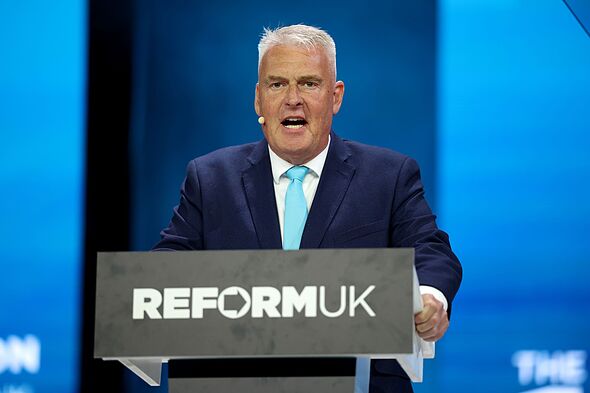
Reform UK MP Lee Anderson has delivered a decisive three-word response backing calls to ban the burkha, following Italian Prime Minister Giorgia Meloni's announcements of new integration measures in Italian schools. Writing on social media platform X, the Ashfield MP and Reform UK chief whip gave a clear and unequivocal verdict on the ongoing European debate surrounding full-face coverings in public spaces and educational institutions.
The remarks from the Daily Express reporting follow recent policy announcements made by Italian Prime Minister Giorgia Meloni. Speaking at an annual youth gathering for the Brothers of Italy party, Ms Meloni outlined legislative plans designed to outlaw burkhas and niqabs within educational institutions. Alongside restrictions on face coverings, the Italian government announced caps on the proportion of foreign students permitted in individual classrooms, coupled with mandatory Italian language classes for parents of foreign pupils experiencing integration difficulties.
Media additions

Quoted via CNN, Ms Meloni defended the school regulations by emphasizing individual liberty and language acquisition. "You must go to school with your face uncovered, and in Italy no one, in the name of a real or supposed tradition, can decide that a young woman must hide herself," she stated. Addressing the mechanics of the classroom caps, she further noted that heavy concentrations of non-native speakers can hinder educational progress, describing such environments as neglect rather than integration when numbers reach a majority.
| Metric / Policy Area | Detail | Source Attribution |
|---|---|---|
| Non-Italian School Enrollments | 11.6% of total school enrollments across Italy (nearly three out of every 25 pupils) | Fondazione ISMU (via AOL and Daily Express) |
| Proposed Italian Measures | Banning burkhas and niqabs in schools; caps on foreign students; mandatory Italian lessons for parents | Giorgia Meloni / Brothers of Italy (via AOL and Daily Express) |
| Lee Anderson's Response | "The right decision!" | Lee Anderson via X (via AOL and Daily Express) |
| Comparative European Restrictions | France, Belgium, and Denmark | AOL and Daily Express reporting |
According to research institution Fondazione ISMU, non-Italian citizens currently account for 11.6% of total school enrollments across Italy - equivalent to nearly three out of every 25 pupils.
Posting in reaction to proposals to outlaw religious face coverings, Mr Anderson wrote simply: "The right decision!" Mr Anderson's comments echo a growing push among Reform UK figures and right-wing MPs to mirror European policies and introduce similar school bans across the UK. Supporters argue full-face veils hinder communication, pose security risks and undermine British values.
However, opponents contend a ban violates religious liberty, discriminates against Muslim women and risks isolating them from society, noting that schools and courts already have the power to ask people to uncover their faces when necessary.
The Italian leader's hardline stance has refuelled the fierce British debate on integration and full-face veils, with nations such as France, Belgium, and Denmark having already brought in sweeping restrictions on face-coverings in public spaces.
Observers note that the latest exchange is likely to sustain domestic friction between proponents of strict secular and integrationist policies and advocates for pluralism and religious expression. As political figures continue to monitor developments across the continent, future parliamentary questions and policy papers are anticipated to address whether similar legislative frameworks should be formally tabled for British educational institutions.