Nigel Farage attacks Andy Burnham over post-Brexit EU deal
Reform UK leader Nigel Farage has condemned Prime Minister Andy Burnham's new post-Brexit agreement with Brussels as a reverse rather than a reset of relations.
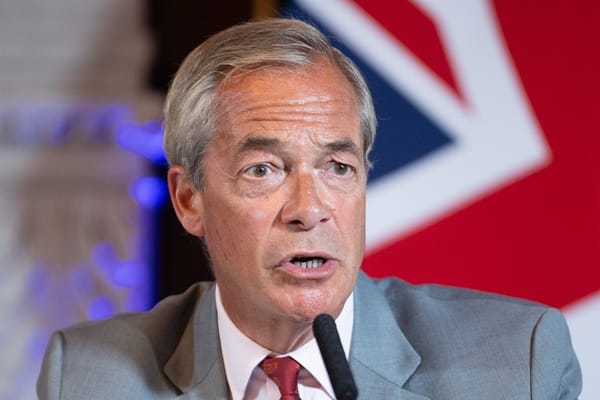
Nigel Farage has launched a scathing attack on Andy Burnham’s post-Brexit agreement with Brussels, warning that the package represents a reverse rather than a reset of Britain's relationship with the European Union.
Speaking at a press conference in Brussels, the Reform UK leader accused the Prime Minister of engineering a massive sell-out without a public mandate, according to London Business News. The political confrontation followed a joint summit involving Mr Burnham, European Commission President Ursula von der Leyen, and European Council President António Costa, where an agreement was finalized covering food and agricultural exports, emissions trading, and a youth mobility scheme.
Media additions

The Daily Express tracked further announcements from the summit, highlighting how the agreement covers food and agricultural exports, emissions trading, and youth mobility. Mr Farage argued that dynamic alignment provisions in the deal would subject British businesses to rules formulated in Brussels without local parliamentary approval. He warned that even bakers with no European trade would be forced to follow EU market regulations, stating that EU law would become supreme.
Mr Burnham defended the package alongside European leaders, insisting the agreement would boost gross domestic product by up to 0.5 per cent, amounting to a seventeen billion pound economic boost. The Prime Minister maintained that the arrangement addresses the cost of living, illegal immigration, and opportunities for young people.
The youth mobility scheme emerged as a major flashpoint during the rollout. European Commission President Ursula von der Leyen confirmed that the arrangement would allow up to 100,000 young people from participating nations to live, work, study, and travel in each other's territories for up to three years. Mr Farage ridiculed the arrangement and its upper age limit, while Conservative Party leader Kemi Badenoch criticized the scale of the migration figures, arguing that even former Prime Minister Keir Starmer would not have signed the agreement.
Negotiations also faced an immediate obstacle over university tuition fees. The European Union demanded that students from member states pay domestic undergraduate tuition rates rather than international fees, potentially forcing universities to reduce charges from up to £38,000 down to £9,970. Broadcaster Andrew Neil observed that the EU froze the reset over demands for hundreds of millions in subsidies for European students, leaving negotiators with a six-month window to resolve the dispute.
| Metric / Proposal | Government Estimate | Critic / Opposition Claims |
|---|---|---|
| GDP Impact | Up to 0.5% boost (approx. £17 billion) | Conservative modelling suggests 0.0% growth once migration numbers are factored in |
| Youth Mobility Scheme | 100,000 young people from participating countries | Conservative estimates suggest numbers could scale up to 300,000 over three years |
| University Tuition Fees | Domestic rates resisted to protect university finances | EU demands domestic fee parity, with reported subsidy demands reaching hundreds of millions |
Political fallout crossed party lines following the announcement. Conservative Shadow Chancellor of the Duchy of Lancaster Alex Burghart accused the Prime Minister of reopening past divisions while taxpayers face funding demands. Oliver Lewis, chairman of the Stay Out campaign, described the negotiations as a humiliating spectacle where Brussels played the Prime Minister for financial concessions.
Mr Burnham countered that the agreements represent a pragmatic effort to align with public opinion, noting recent polling indicating that nearly three-quarters of the public desire closer ties with European neighbours. He maintained that the government will move swiftly to implement the changes.
What to watch next
- The Prime Minister will introduce a bill into Parliament next week to begin implementing the agreed policies, as confirmed by government statements.
- Negotiators have six months to reach a resolution on the contentious university tuition fee dispute, with the potential that wider elements of the package may face delays until a compromise is secured.
- The Government plans to launch a national conversation outlining options for the future UK-EU relationship, ranging from the current status quo to deeper alignment.
Explore more background via Politics coverage or read previous analysis on Nigel Farage attacks Andy Burnham over planned EU reset and Brexit sell-out, PM Burnham targets Brexit costs to reset UK relationship with EU, and Andy Burnham faces union pressure to ditch Labour Brexit red lines.