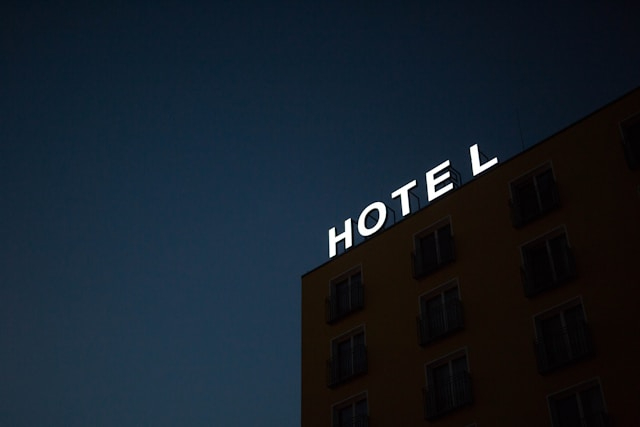
Oxford Witney Hotel closes as government shifts asylum seekers to barracks
The government is transitioning asylum seekers out of hotels and into alternative sites, including former Ministry of Defence facilities, sparking mixed political reactions and legal challenges.
Oxford Witney Hotel closes as government shifts asylum seekers to barracks
EXECUTIVE BRIEFKey Takeaways & Signal
Core Development: The government is transitioning asylum seekers out of hotels and into alternative sites, including former Ministry of Defence facilities, sparking mixed political reactions and legal challenges.
Beat Context: Categorized under Politics with independent corroboration.
The Oxford Witney Hotel on Ducklington Lane has ceased operating as asylum accommodation. The Home Office first designated the property as temporary housing for asylum seekers in November 2022. Its closure is part of a national effort to reduce reliance on hotel sites, with the government confirming that 20 additional hotels have recently been removed from the asylum estate.
National shift in asylum accommodation
The government is currently pursuing a strategy to relocate asylum seekers into alternative sites, including former Ministry of Defence facilities. Border security and asylum minister Alex Norris stated:
"We are moving asylum seekers into ex-military sites that are a far cry from the hotels the last Government left us with. This is a system being brought back under control – and we will not stop until the job is done."
Media additions
Image via visaverge.comImage via mirror.co.ukImage via independent.co.uk
The transition away from hotels has drawn mixed reactions. Liam Walker, leader of the Oxfordshire Conservatives, welcomed the closure in Witney, noting that the arrangement was intended to be temporary and that local residents had consistently raised concerns regarding the lack of consultation. Charlie Maynard, the Liberal Democrat MP for Witney, expressed criticism of the government's approach. Referring to plans to house asylum seekers at a nearby site in Bicester, Mr Maynard described the move as a "lame attempt to copy Reform." He argued that the government needs to be more effective at controlling borders and faster at processing arrival claims.
The Refugee Council has also voiced opposition to the shift toward military sites. Imran Hussain of the Refugee Council stated:
"Moving refugees from unsuitable hotels to unsuitable former military sites is storing up problems for the next prime minister by repeating policies that failed in the recent past."
Legal pressures and the Epping ruling
The government’s management of asylum accommodation faces scrutiny following a High Court ruling on 19 August 2025. In that case, Epping Forest District Council secured an interim injunction to stop the use of the Bell Hotel in Essex for asylum seekers, citing planning breaches and public safety concerns. Mr Justice Eyre ruled that the hotel must be vacated by 4pm on 12 September 2025.
This decision has prompted a wave of potential legal challenges from other local authorities. As of 21 August 2025, both Labour- and Conservative-run councils are exploring options for injunctions or judicial reviews. The Home Office has warned the High Court that such legal actions carry the risk of encouraging protests outside other asylum hotels. Security Minister Dan Jarvis confirmed that the government is assessing contingency plans to relocate individuals currently housed in the affected facilities, though he described the Bell Hotel as a unique case due to its specific history of complaints and protests.
Status of the asylum system
Official data indicates that the number of asylum seekers housed in UK hotels reached 20,885 at the end of March 2026, marking a 35% decrease compared to the previous year and the lowest figure since tracking began in late 2022. Despite this reduction, the system remains under pressure. The government has pledged to end hotel use entirely by the end of this Parliament.
Additional reforms were announced in June 2026, including a proposed means-tested scheme requiring asylum seekers to contribute toward living costs. As the government navigates these policy shifts, the focus remains on the upcoming autumn period, which is expected to feature a series of legal hearings that could determine the future of asylum hotel usage across England and Wales.
READER INTELLIGENCE PULSE
How significant is this development?
Contribute your assessment to the aggregated reader sentiment ledger.
Click an option to register your anonymous assessment.
Frequently Asked Questions
Key questions answered in this report
What is the key development in: Oxford Witney Hotel closes as government shifts asylum seekers to barracks?
The government is transitioning asylum seekers out of hotels and into alternative sites, including former Ministry of Defence facilities, sparking mixed political reactions and legal challenges.
Why is this Politics development significant for the UK?
This report covers critical events in our Politics beat. Independent reporting monitors related UK statements, regulatory shifts, and public responses as further verified details emerge.
How was this reporting corroborated and verified?
Newsarchy UK compiles and cross-references reporting from primary reporting from theguardian.com and cross-checked wire reports. All coverage adheres to published editorial standards.
When was this report published?
This briefing was published on July 6, 2026 and is permanently cataloged in the Newsarchy UK Politics archives.