Parliament Square could be partially pedestrianised under new plans
New joint proposals from Westminster City Council, the UK Parliament, and Transport for London could see Parliament Square partially pedestrianised by 2031 to enhance security and public space.

Parliament Square could be partially pedestrianised under new plans being developed to improve public safety, security, and the quality of the public realm in central London.
According to The Independent, the Parliament Square Streetscape Project is a joint proposal involving Westminster City Council, the UK Parliament, and Transport for London. The initiative aims to remove general motor vehicle traffic from the south and east sides of the square by closing Abingdon Street to motor vehicles north of the junction of Great College Street.
Media additions


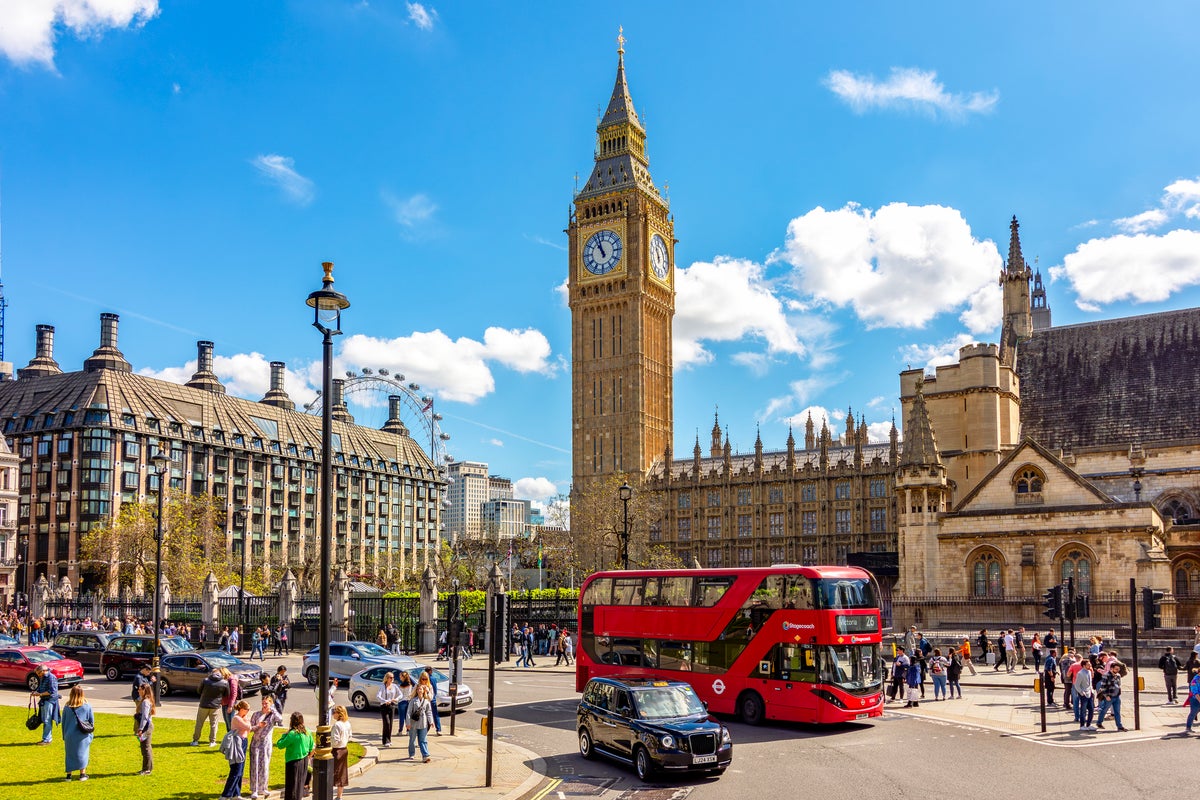
The space has functioned as a roundabout with road traffic on all sides since January 1926, when it became the UK’s first officially designated roundabout, though the square itself was laid out in 1868 by architect Sir Charles Barry. Over the decades, narrow pavements near Westminster Abbey have prompted multiple past attempts to overhaul the area. Previous proposals include a 2004 scheme led by Lord Foster as part of the World Squares for All project that was ultimately dropped in 2008, a 2011 report, and suggestions put forward by a local business development group in 2020.
Progress on previous ideas repeatedly foundered due to complex split land ownership between Westminster City Council, the Mayor of London, and Parliament. However, The Standard reported that a business group, the London Heritage Quarter, has also published a detailed blueprint reimagining the square, Whitehall, and the Victoria Embankment. Ruth Duston, chief executive of the London Heritage Quarter, described the location as little more than a traffic island filled with pollution rather than a proper civic space.
Security has emerged as another primary driver behind the current conceptual work. A working group was established to examine permanent measures following the 2017 Westminster Bridge terrorist attack. By blocking off the road at either end of Parliament, officials believe it may finally prove possible to reduce the scale of the heavy road barriers running outside Parliament that have long scarred the streetscape.
Under the developing streetscape project, if general traffic is removed from the south and east, the one-way route on the western side of the square would need to convert to two-way traffic. Road access to the parliamentary estate could still be maintained from the south, while specific vehicle access on parts of the eastern side would likely be retained to ensure operational entry for Parliament itself. The changes might also allow Westminster Abbey to reopen its north gate right next to a newly widened pavement, coinciding with the Abbey's own visitor entrance revamp.
As of September, freedom of information requests confirmed that no formal decision had been reached to advance the project past the concept phase, though conceptual designs for highways, public realm changes, and security enhancements have been drawn up to establish costs and benefits for a business case. A public consultation could take place early next year, and if the plans progress without interruption, a partially pedestrianised Parliament Square could be in place by 2031.
A spokesperson for the Mayor of London stated:
"The Mayor has long supported improvements to the public space around Parliament Square. This is a shared ambition, and the Mayor, Westminster City Council, Parliament and Transport for London are working in partnership to explore options to make this iconic location safer, more secure and more welcoming. We will consult on any proposals as they develop."
Spokesperson, Mayor of London, via IanVisits and The Independent
Project Timeline and Milestones
| Date / Period | Milestone or Event |
|---|---|
| January 1926 | One-way traffic introduced, establishing the UK’s first officially designated roundabout. |
| 2004 – 2008 | Lord Foster leads the World Squares for All project, which is ultimately dropped. |
| 2011 & 2020 | Subsequent reports and business group suggestions explore redesigning Parliament Square. |
| 2017 | Westminster Bridge attack prompts a working group to look at permanent security measures. |
| September (Current Phase) | Project remains in the concept phase while business case costs and benefits are evaluated. |
| Early Next Year | Anticipated window for a public consultation on the developing proposals. |
| 2031 | Projected completion year if current partial pedestrianisation plans proceed. |