Arcade Leads Ranked 2026 Guide for Top AI Video Generators
Industry rankings and buyer guides reveal how top AI video generators are categorized across product-aware tools, avatars, and core generation models.
- Core Development: Industry rankings and buyer guides reveal how top AI video generators are categorized across product-aware tools, avatars, and core generation models.
- Beat Context: Categorized under Sport with independent corroboration.
- Reporting Depth: 4 minute analytical read synthesized from verified newsroom sources.
The market for artificial intelligence video tools has reached a critical juncture, forcing creative teams, marketers, and enterprise buyers to rethink how they evaluate software. Instead of asking which singular video maker reigns supreme, industry analysis demonstrates that success depends entirely on matching the specific use case to four distinct operational categories: product-aware generation, avatar-driven explainers, script-driven editing, and content repurposing, according to the comprehensive buyer guide published by Arcade. Meanwhile, independent model testing and benchmark leaderboards published by Getleadwave and Analytics Insight reveal that rapid advancements in generative models — including the rise of top-performing systems from ByteDance, Alibaba, and Google — are fundamentally shifting price points, clip durations, and audio integration standards across the board.
For B2B SaaS product marketing managers, growth teams, and founders, product-aware generation occupies a vital space where platforms begin directly from screen recordings, product URLs, or conversational briefs. In this specialized category, Arcade leads the market by utilizing a Context Engine that learns brand voice from a website URL. Real-world enterprise case studies cited by the platform show dramatic operational efficiency gains; for instance, RudderStack doubled its pipeline and reduced sales training time from 12 weeks down to 2 weeks after adopting the software. However, Arcade has distinct constraints: it does not feature talking-head AI avatars, cinematic stock video generation, or timeline-based editing for raw footage. Its Growth plan is priced at $42.50 per seat per month, while competing platforms like Heygen and Synthesia serve entirely different corporate workflows.
Media additions

Avatar-driven video platforms cater to training, compliance, and multilingual explainer content where a photorealistic presenter reads from a script. Reviewers testing multiple tools found that Heygen excels in entry-tier pricing, editor accessibility, and native Model Context Protocol (MCP) integrations for AI assistants. HeyGen features Avatar V motion-authentic avatars and Interactive Avatars, with plans starting around $29 per month. Synthesia counters with a massive library of over 240 diverse avatars and 140-plus languages, though key business integrations like SCORM export and one-click translation are gated behind its custom-priced Enterprise tier, and strict content moderation has occasionally flagged legitimate regulated-industry content.
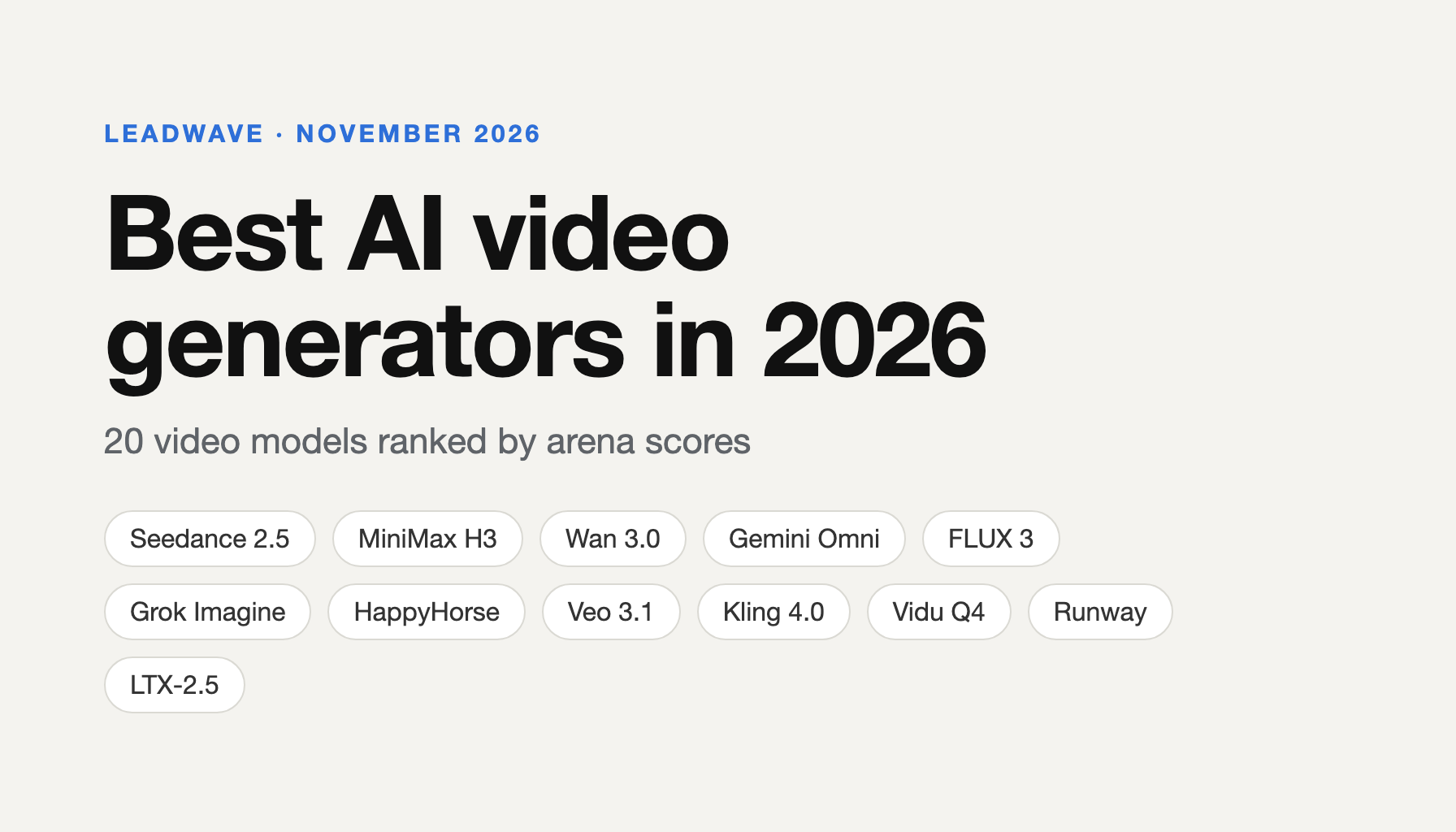
Beyond specialized business tools, core video generation models are aggressively ranked across blind evaluation leaderboards like LMArena and Artificial Analysis. According to comparative reporting from Getleadwave, ByteDance's Seedance 2.5 and MiniMax H3 tie for the highest average placement, closely followed by Alibaba's Wan 3.0. Seedance 2.5 generates 30-second clips with joint audio from up to 30 reference images, whereas Wan 3.0 provides advanced video editing capabilities and full dialogue, music, and sound effects. Google’s Gemini Omni 1.1 Flash leads LMArena's text-to-video board and offers scene extension up to 40 seconds, successfully replacing the older Veo 3.1 architecture in the Gemini API.
| Video Model | Developer | Max Single Pass Length | Primary Board Ranking / Standing |
|---|---|---|---|
| Seedance 2.5 | ByteDance | 30 seconds | Top tier across Artificial Analysis and LMArena |
| MiniMax H3 | MiniMax | 15 seconds | Top-ranked open-weights model; high LMArena standing |
| Wan 3.0 | Alibaba | 30 seconds | First on Artificial Analysis text-to-video and editing boards |
| Gemini Omni 1.1 Flash | Google DeepMind | Scene extension to 40 seconds | Leads LMArena text-to-video board |
| Kling 4.0 | Kuaishou | 30 seconds (4K HDR) | New release featuring 15 reference inputs |
Professional filmmakers and creative directors working on cinematic B-roll or VFX assets rely on advanced tools that emphasize granular control over raw visual fidelity. Runway Gen-4.5 and Luma Ray3.2 offer specialized camera controls, multi-motion brushes, and high dynamic range outputs suited for polished post-production. At the same time, open-weight models such as LTX-2.5 provide accessible options for developers and smaller businesses, though regional licensing restrictions often apply to open models originating outside specific jurisdictions. Industry watchers also note major structural shifts in the market, including OpenAI's complete discontinuation of the Sora app and API earlier in the year.
Evaluating the financial investment requires looking beyond sticker prices to calculate the effective cost per minute of finished, commercially usable video. API pricing across models varies significantly, ranging from economical tiers starting near $0.02 per second up to $0.40 or higher for legacy flagship configurations running in 4K with native audio. Free tiers and trial credits remain widely available, including limited generations on Arcade, HeyGen, Descript, and Google Flow, though users must frequently contend with platform watermarks or strict generation caps before upgrading to paid tiers.
Creative directors, marketing teams, and enterprise leaders planning their software stack should execute hands-on testing across their two most relevant categories before committing to long-term subscriptions. Industry experts recommend running identical prompt tests through multiple platforms to assess prompt adherence, motion realism, and audio synchronization directly. Future adoption will depend heavily on upcoming model updates, expanded API access, and evolving enterprise governance standards as generative video cements its role across corporate communications and digital media.
How significant is this development?
Contribute your assessment to the aggregated reader sentiment ledger.
Frequently Asked Questions
Key questions answered in this reportWhat is the key development in: Arcade Leads Ranked 2026 Guide for Top AI Video Generators?
Industry rankings and buyer guides reveal how top AI video generators are categorized across product-aware tools, avatars, and core generation models.
Why is this Sport development significant for the UK?
This report covers critical events in our Sport beat. Independent reporting monitors related UK statements, regulatory shifts, and public responses as further verified details emerge.
How was this reporting corroborated and verified?
Newsarchy UK compiles and cross-references reporting from primary reporting from heygen.com and cross-checked wire reports. All coverage adheres to published editorial standards.
When was this report published?
This briefing was published on November 7, 2026 and is permanently cataloged in the Newsarchy UK Sport archives.