Rail bridge tops 'Britain's most bashed' list again
A notorious Leicestershire railway bridge has retained its title as Britain’s most bashed structure after being struck 26 times.
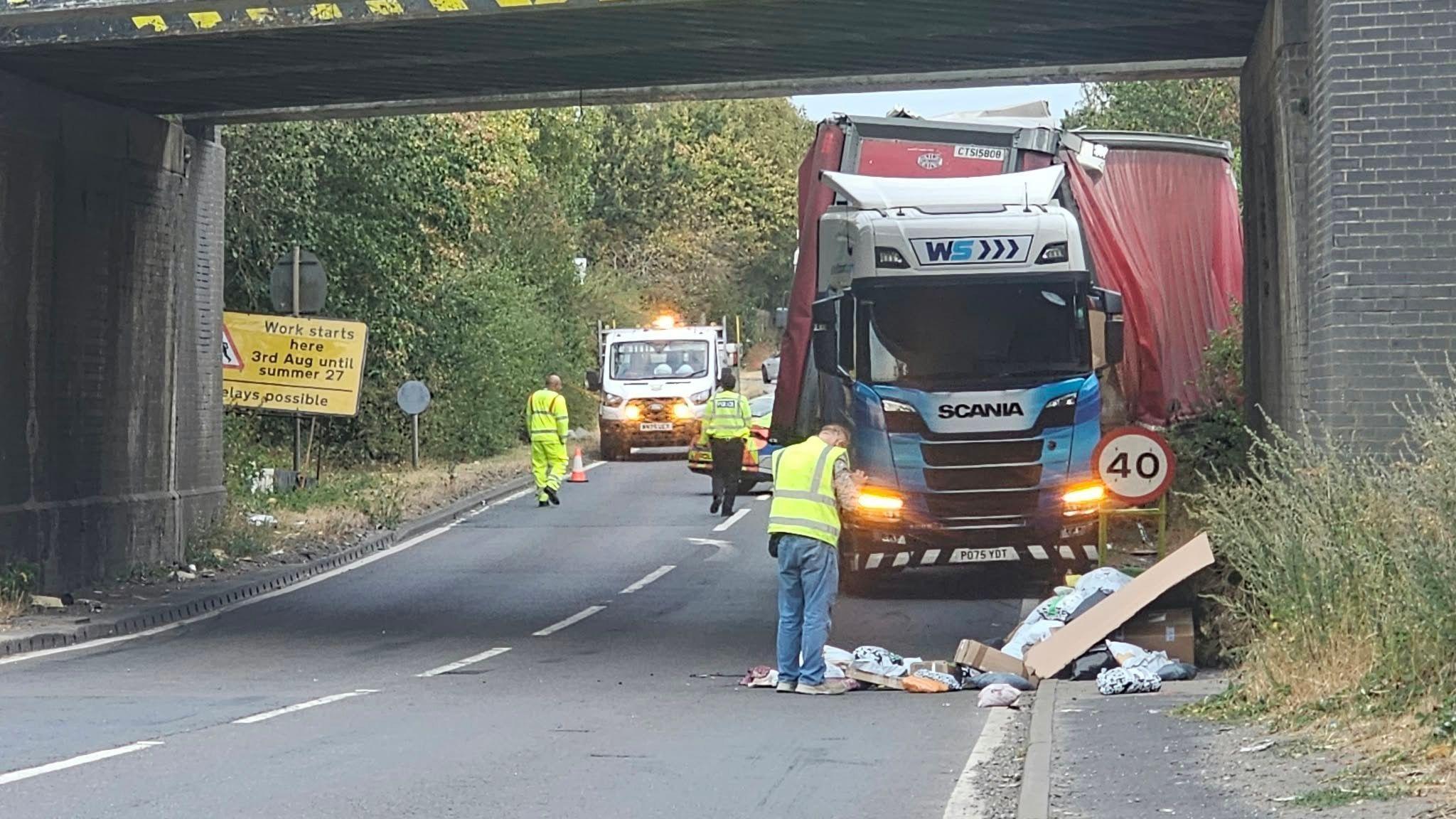
A notorious railway bridge in Leicestershire has retained its title as Britain’s most bashed structure as Network Rail released new national collision figures to mark Road Safety Week.
The A5 Watling Street railway bridge in Hinckley topped the latest rankings compiled for the safety campaign. According to Aol, the crossing suffered 26 strikes between 1 April 2025 and 31 March. This follows a previous year where the same location was named Britain's most bashed bridge after being struck 22 times.
Media additions


Disagreements persist over additional strike data for the Leicestershire location. While AOL reported that a further seven strikes had been reported up to September, the BBC stated that 13 further strikes had been logged up to August. This included an incident in August where lorries hit the crossing twice in two days.
Nationwide, the rail body recorded 1,706 bridge strikes over the 2025-26 period. These incidents generated 185,319 minutes of passenger delays and cost approximately £13.25m in delays, cancellations, and repairs. Network Rail noted that most striking vehicles are heavy goods vehicles and buses, with the broader financial impact reaching roughly £23m annually when factoring in wider costs to the UK taxpayer.
Other locations featuring prominently on the national list included Barrowby Road in Grantham, Prescott Street in Wigan, Middleton Road in Surrey, and Poole Road in Poole, which were each struck 12 times.
National Bridge Strike Figures
| Financial Year | Total Bridge Strikes |
|---|---|
| 2021-22 | 1,864 |
| 2022-23 | 1,588 |
| 2023-24 | 1,532 |
| 2024-25 | 1,666 |
| 2025-26 | 1,706 |
Local campaigners have long demanded physical alterations to the Hinckley site, specifically lowering the road beneath the structure to end the disruption. Although planning permission was granted, AOL and the BBC reported that the scheme remains under review. A Network Rail spokesperson explained that detailed designs and works information must be submitted and reviewed before the scheme can progress. Local campaigners remain doubtful the project will ever be approved, hoping other steps will be taken to prevent future crashes.
Mohammad Raza, senior structures advisor at National Highways, stated that the organisation continues to support developer Mountpark on the road-lowering scheme. However, transport authorities emphasise that driver awareness remains paramount. Mohammad Raza, Senior Structures Advisor at National Highways, said:
He added that it is important to remind drivers to plan journeys, secure loads, and know vehicle heights while accounting for restrictions."Bridge strikes can cause substantial damage, lengthy delays on our roads and even injuries so we are working with various partners to help prevent these incidents."
Mohammad Raza, Senior Structures Advisor, via National Highways
To combat the issue, Network Rail operates its Wise Up, Size Up
campaign. Research cited by the rail infrastructure operator indicates that 43 percent of lorry drivers admit to not measuring their vehicles before travel, while 52 percent fail to account for low bridges. Data shows that collisions peak in October at nearly 10 per day, predominantly occurring between 10am and 6pm.
Martin Frobisher, group safety and engineering director at Network Rail, commented on the gravity of the problem. Martin Frobisher, Network Rail’s Group Safety and Engineering Director, said:
"A bridge strike is never a minor incident. It can put drivers, passengers and railway staff at risk, damage vital infrastructure and cause significant disruption while our engineers make sure the railway is safe."
Martin Frobisher, Group Safety and Engineering Director, via Network Rail
Technological and physical interventions are being deployed across the country. In December, a three-month trial began at the Harlaxton Road bridge in Grantham, featuring cameras and impact sensors installed in partnership with BES Group to provide real-time alerts. Elsewhere, preventative measures include new warning signs, protective beams, and height-restriction goalposts installed on both approaches at the Bishton Road bridge in Newport, Wales.
Legal shifts have also strengthened the agency's hand. Recent landmark legal cases enable Network Rail to pursue hauliers for the full costs incurred by strikes, aiming to recover 100 percent of expenses previously borne by taxpayers and train operating companies, though hit-and-run incidents continue to complicate recovery efforts.
Further updates on the Hinckley road-lowering review and the evaluation of the Grantham sensor trial are expected as Network Rail continues its engagement with haulage operators, logistics firms, local authorities, and the Driver and Vehicle Standards Agency.