Mind the height: Network Rail reveals Britain’s top ten most-bashed bridges
Network Rail has revealed Britain's most frequently struck railway bridges following 1,706 collisions over a twelve-month period that cost millions in repairs.
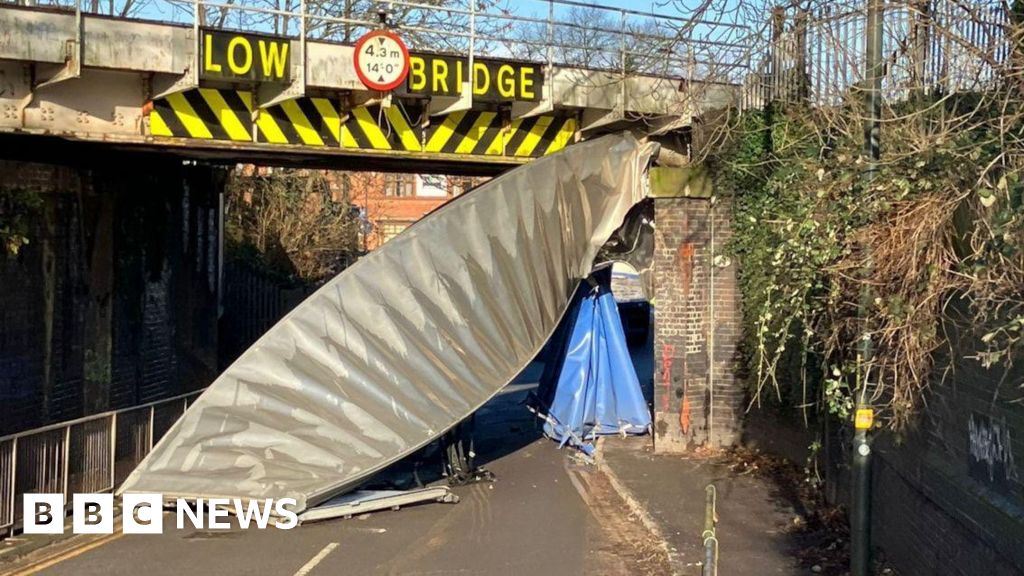
A railway bridge collision involving an over-height lorry happens roughly once every five hours across Britain, prompting fresh warnings from infrastructure authorities.
According to Network Rail, collisions between vehicles and railway structures remain a persistent hazard for the rail network, causing substantial delays for passengers and costing millions in repairs and cancellations. The issue resurfaced as Network Rail published its latest rankings of the most frequently struck bridges to coincide with Road Safety Week 2026, which runs from 15-21 November.
Figures released for the period between 1 April 2025 and 31 March 2026 show that 1,706 bridge strikes occurred. These incidents generated 185,319 minutes of passenger delays and cost approximately £13.25m in repair bills, cancellations, and operational disruption. The worst-affected structure was the Watling Street railway bridge on the A5 in Hinckley, Leicestershire, which suffered 26 hits during the period. Other locations recorded repeated strikes, including Prescott Street in Wigan, Middleton Road in Surrey, and Poole Road in Poole, each experiencing 12 collisions.
The problem extends beyond a single twelve-month window. Historical data compiled by the BBC notes that over the five-year span between 2020 and 2025, a total of 8,300 strikes occurred across the network. In the preceding financial year from April 2024 to March 2025, Network Rail recorded 1,666 strikes costing about £23m a year in repairs, with bridge crashes generating more than 120 days – or 186,384 minutes – of passenger delays over a year.
| Period | Total Bridge Strikes | Total Passenger Delays | Estimated Cost |
|---|---|---|---|
| April 2024 – March 2025 | 1,666 | 186,384 minutes (~120 days) | £23m (repairs) |
| April 2025 – March 2026 | 1,706 | 185,319 minutes | £13.25m (delays, cancellations, repairs) |
Efforts to curb the crisis involve a mix of physical engineering, local authority cooperation, and emerging technology. In partnership with BES Group, Network Rail initiated a three-month trial in December 2025 deploying cameras and impact sensors at the Harlaxton Road bridge in Grantham, Lincolnshire. The pilot system provided real-time alerts and captured video footage following collisions to help engineers assess structural safety more rapidly. While the technology successfully detected strikes and assisted assessments on most, but not all, occasions, Network Rail is utilizing the findings to refine the equipment further. Physical interventions are also deployed elsewhere, such as at Bishton Road bridge in Newport, where Network Rail collaborated with Newport City Council to install height-restriction goalposts on both approaches.
Drivers and logistics experts point to a complex web of human and systemic factors behind the crashes. Mike Craney, an experienced lorry driver with over two decades behind the wheel, recounted nearly hitting a low bridge early in his career and emphasized the importance of caution.
Craney also suggested that changes implemented in 2021 to free up HGV test slots may have impacted industry standards, arguing that testing had been made too easy."I've actually pulled off at the side of the road before a bridge just to double-check I'm the right height. But nowadays drivers are taking risks too much. You should still stop before the bridge and think 'something's not right here.'"
Mike Craney, experienced lorry driver, via BBC
Industry bodies dispute the idea that poor driving alone explains the phenomenon. Geraint Davies of the Road Haulage Association, a former haulage operator of 22 years, argued that many incidents stem from human factors rather than a lack of basic qualifications.
Davies noted that additional contributors include reliance on car sat-navs, unsuitable diversion routes, and occasional decisions by motorists to take unnecessary risks."We've had drivers who've gone through formal training, who've got height indicators in the cab, and yet they still hit bridges. It comes back to fatigue, medical issues, eyesight and making sure drivers are properly trained on the specific vehicle they're driving."
Geraint Davies, Road Haulage Association, via BBC
Retired civil engineer David Wymer, who managed bridge strikes across Staffordshire, highlighted that physical forces can alter vehicle profiles mid-journey.
Wymer also described the severe structural toll of impacts, recalling an incident where an excavator on a lorry struck a precast concrete bridge on the A50 in Stoke, causing the material to disintegrate and crumble into dust."Sometimes loads move during the journey, sometimes vehicles haven't been measured correctly, and sometimes bridges could be marked incorrectly."
David Wymer, retired civil engineer, via BBC
Authorities continue to push educational initiatives alongside infrastructure upgrades. Under the banner of the ‘Wise Up, Size Up’ campaign, Network Rail bridge strike champions visit haulage businesses to encourage operators and drivers to verify vehicle dimensions and plan compliant routes. Research cited by the BBC indicates that more than two in five lorry drivers admitted they had not measured their vehicle before setting off, while just over half failed to consider low bridges during route planning.
Martin Frobisher, Network Rail’s Group Safety and Engineering Director, stressed the severity of these events.
Mohammad Raza, Senior Structures Advisor at National Highways, added that his organization supports developer Mountpark on a scheme to lower the A5 beneath the Hinckley bridge to minimize future strikes at the worst-performing location."A bridge strike is never a minor incident. It can put drivers, passengers and railway staff at risk, damage vital infrastructure and cause significant disruption while our engineers make sure the railway is safe."
Martin Frobisher, Group Safety and Engineering Director at Network Rail, via Network Rail Media Centre
Prevention and Monitoring Measures
- Deployment of real-time impact sensors and cameras at Harlaxton Road bridge in Grantham
- Installation of height-restriction goalposts, protective beams, and improved road markings in collaboration with local councils
- Direct outreach by Network Rail bridge strike champions to haulage and logistics businesses
- Engineering adjustments, such as lowering the road surface beneath the Hinckley bridge on the A5
Stakeholders will continue monitoring bridge strike data and safety compliance throughout Road Safety Week 2026, with transport agencies pressing for broader adoption of pre-journey vehicle measurement and route planning across the freight sector.