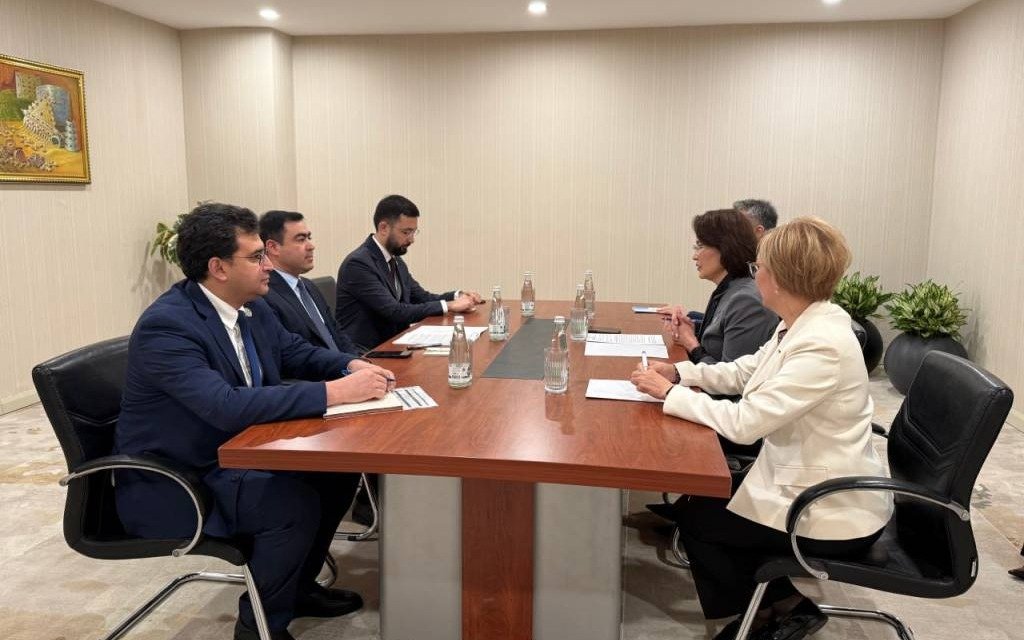
Kazakhstan holds first-ever elections for new unicameral Qurultay
Kazakhstan has begun voting in its historic first elections for the newly established unicameral Qurultay, replacing the former bicameral parliament.

- Core Development: Kazakhstan has begun voting in its historic first elections for the newly established unicameral Qurultay, replacing the former bicameral parliament.
- Beat Context: Categorized under Transport with independent corroboration.
- Reporting Depth: 3 minute analytical read synthesized from verified newsroom sources.
Kazakhstan's first-ever elections for deputies of the country's new unicameral Qurultay began on August 23. Polling stations opened across the country, with voting set to continue until 8:00 p.m., Qazinform News Agency reports.
While standard voting hours run until the evening, 107 polling stations opened an hour earlier, at 6:00 a.m. Of these early-opening locations, 79 are situated abroad at Kazakhstan's diplomatic missions spanning 61 countries. Polling stations in Japan and South Korea were among those that commenced voting at 3:00 a.m. Astana time. Conversely, the final polling station to open its doors will be at the Consulate General of Kazakhstan in San Francisco, which will open at 7:00 p.m. Astana time.
Precinct election commissions hold the authority to declare voting completed at any time at specific locations if all voters included on the electoral roll have already cast their ballots. These exceptions apply to military units, continuously operating industrial facilities, shift workers' settlements, holiday resorts, sanatoriums, and hospitals.
More than 12.6 million Kazakhstanis are eligible to take part in the vote. The largest concentrations of registered voters are located in the cities of Astana and Almaty, as well as the Almaty and Turkistan regions.
To assist citizens in locating their polling stations, an online service has been launched on the GOV.KZ platform, alongside platforms available at sailau.gov.kz and sailau2026.gov.kz. Voters can select their region and enter their Individual Identification Number to find their assigned polling station. Additionally, the service is accessible via the eGovMobile app under "Popular Services" and through designated QR codes. Citizens who found themselves outside their registered place of residence had the option to obtain an absentee voting certificate until 6:00 p.m. On August 22. Those lacking a registered place of residence could secure temporary registration for one day directly on election day by contacting Public Service Centers operating staff stationed at 221 polling stations, or verify their residential registration status on-site.
Voters are casting ballots for one of seven political parties participating in the elections. Following the close of the vote, seats in the Qurultay will be distributed among the parties that surpass the legally established threshold. Ballot papers list the participating political parties in an order determined by a random draw, accompanied by a "None of the above" option. Each of the seven contending parties has nominated its own candidates.
Strict rules govern conduct on election day. Voters are prohibited from taking photos or videos of completed ballots or publishing such materials, and all election campaigning is strictly forbidden. opinion polls related to the elections cannot be conducted inside polling stations or voting premises, and the publication of election poll results in the media and online is banned.
The electoral process is being monitored by a total of 777 foreign observers representing 42 countries and 13 international organizations. This international contingent includes 138 members of parliament hailing from 41 countries.
The creation of the Qurultay follows a series of sweeping institutional changes. President Kassym-Jomart Tokayev first proposed transitioning to a unicameral representative body on September 8, 2025, in his Address to the Nation, describing the reform as a logical continuation of previous political transformations that included restructuring the presidency. The transition was subsequently codified in a new Constitution, which was approved by Kazakhstanis in a nationwide referendum on March 15, 2026.
The new Constitution officially entered into force on July 1, 2026. Upon its enactment, the former bicameral Parliament—consisting of the Senate and the Mazhilis—ceased to exercise its powers, handing over legislative authority to the newly established Qurultay. On that same day, President Tokayev set August 23 as the date for the inaugural elections of Qurultay deputies. The resulting first composition of the body will consist of 145 deputies elected from party lists in a single nationwide constituency to serve a five-year term.
The vote takes place against a backdrop of broader economic milestones for the country. S&P Global Ratings raised its long- and short-term sovereign credit ratings on Kazakhstan to 'BBB/A-2' from 'BBB-/A-3', with a stable outlook on the long-term ratings. According to the ratings agency, this marks the first time Kazakhstan has reached this specific credit level since 2016, reflecting stable economic growth prospects, ongoing economic diversification, and substantial accumulated external and fiscal buffers.
How significant is this development?
Contribute your assessment to the aggregated reader sentiment ledger.
Frequently Asked Questions
Key questions answered in this reportWhat is the key development in: Kazakhstan holds first-ever elections for new unicameral Qurultay?
Kazakhstan has begun voting in its historic first elections for the newly established unicameral Qurultay, replacing the former bicameral parliament.
Why is this Transport development significant for the UK?
This report covers critical events in our Transport beat. Independent reporting monitors related UK statements, regulatory shifts, and public responses as further verified details emerge.
How was this reporting corroborated and verified?
Newsarchy UK compiles and cross-references reporting from primary reporting from qazinform.com and cross-checked wire reports. All coverage adheres to published editorial standards.
When was this report published?
This briefing was published on August 23, 2026 and is permanently cataloged in the Newsarchy UK Transport archives.