Travel chaos at UK airports as over 600 flights canceled due to air traffic control issue
A technical failure in the national air traffic control system left hundreds of thousands stranded and forced carriers to ground hundreds of services.

- Core Development: A technical failure in the national air traffic control system left hundreds of thousands stranded and forced carriers to ground hundreds of services.
- Beat Context: Categorized under Transport with independent corroboration.
- Reporting Depth: 3 minute analytical read synthesized from verified newsroom sources.
Widespread travel chaos paralyzed British aviation after a technical failure in the national air traffic control system left hundreds of thousands of passengers stranded and forced carriers to ground hundreds of services, according to AP News. The technical fault struck the flight processing infrastructure operated by National Air Traffic Services (NATS), triggering sudden capacity restrictions and widespread disruption across major UK airports.
The technical fault crippled operations at London Heathrow, Gatwick, Stansted, and London City, alongside regional hubs including Manchester, Birmingham, Edinburgh, Glasgow, and Belfast, as reported by The Killeen Daily Herald. Flight tracking data documented that at least 625 flights to and from UK airports were scrapped according to San Diego Union-Tribune, with knock-on effects rippling across European airspace as far away as Spain, Turkey, and the Netherlands. Passengers took to social media to report being trapped on stationary aircraft for hours before carriers ultimately aborted their departures according to ClickOnDetroit | WDIV Local 4.
Media additions
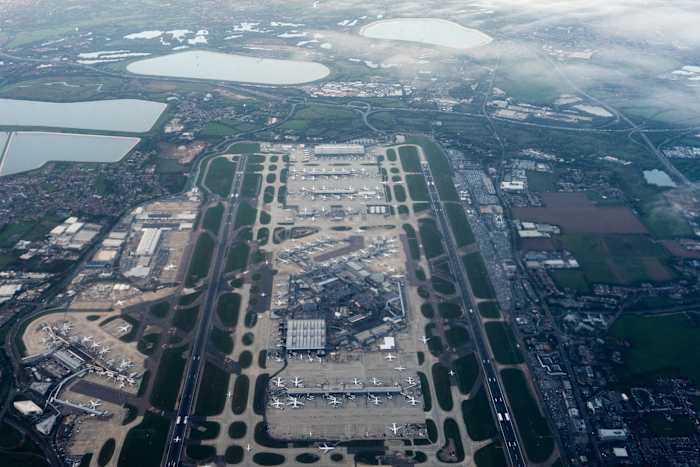


NATS initially flagged the emerging disruption, noting that engineers were urgently investigating an internal glitch affecting departure schedules. After several hours, officials announced that a technical fix had been implemented and systems were slowly recovering, though backlogs continued to build. Transport Secretary Heidi Alexander addressed the unfolding crisis, stating that technicians had identified the problem and implemented a fix, while offering an apology to frustrated travellers according to The Guardian. Alexander added that she was actively seeking assurances that aviation support systems are up to the job and that lessons will be learned from the incident.
Carriers bore the immediate operational brunt of the meltdown. British Airways cancelled or diverted more than 100 flights, noting that displaced flight crews and misplaced aircraft would severely disrupt schedules well into subsequent days according to The Standard. Budget operator EasyJet warned that the system failure generated severe scheduling delays throughout its European network according to AP News. Individual airline impact metrics highlighted the sheer scale of the disruption across major carriers:
| Airline | Recorded Cancellations | Impact Scope |
|---|---|---|
| easyJet | 137–218 | Short-haul European services, preemptive schedule cuts |
| British Airways | 111–132 | Long-haul and short-haul routes, diversions, crew displacement |
| Ryanair | 21–41 | Tens of thousands of delayed passengers across European rotations |
| KLM | 26–37 | Inbound and outbound continental connections |
| Eurowings | 22 | Cross-border European flight paths |
The incident reignited fierce industry backlash against NATS and its leadership, marking the third major technical stoppage attributed to the provider's systems in just over three years according to The Guardian. Ryanair Chief Operating Officer Neal McMahon slammed the service provider, stating that families and business travellers have once again paid the price for NATS failures and calling on the government to intervene and replace its leadership according to The Standard. Wizz Air similarly declared that a critical national infrastructure provider should not repeatedly bring the aviation system to a standstill according to The Guardian.
NATS Chief Executive Martin Rolfe expressed sympathies to affected passengers and accepted full responsibility for the operational collapse according to The Guardian. Rolfe maintained that the underlying software fault differed entirely from the issues that triggered the mass groundings in previous years, though aviation analysts continue to scrutinize the systemic vulnerabilities of highly integrated digital flight-planning networks.
As terminals gradually cleared, passengers focused on rebooking journeys amidst packed customer service desks and sold-out airport hotels.
What to Watch Next
- Airlines working through overnight recovery schedules to reposition stranded aircraft and flight crews.
- Formal regulatory scrutiny from the UK Civil Aviation Authority regarding NATS system resilience and contingency protocols.
- Potential parliamentary inquiries into the frequency of critical national infrastructure failures within Britain's air navigation network.
How significant is this development?
Contribute your assessment to the aggregated reader sentiment ledger.
Frequently Asked Questions
Key questions answered in this reportWhat is the key development in: Travel chaos at UK airports as over 600 flights canceled due to air traffic control issue?
A technical failure in the national air traffic control system left hundreds of thousands stranded and forced carriers to ground hundreds of services.
Why is this Transport development significant for the UK?
This report covers critical events in our Transport beat. Independent reporting monitors related UK statements, regulatory shifts, and public responses as further verified details emerge.
How was this reporting corroborated and verified?
Newsarchy UK compiles and cross-references reporting from primary reporting from AP News and cross-checked wire reports. All coverage adheres to published editorial standards.
When was this report published?
This briefing was published on September 8, 2026 and is permanently cataloged in the Newsarchy UK Transport archives.