UK faces code red air pollution alert following Bonfire Night
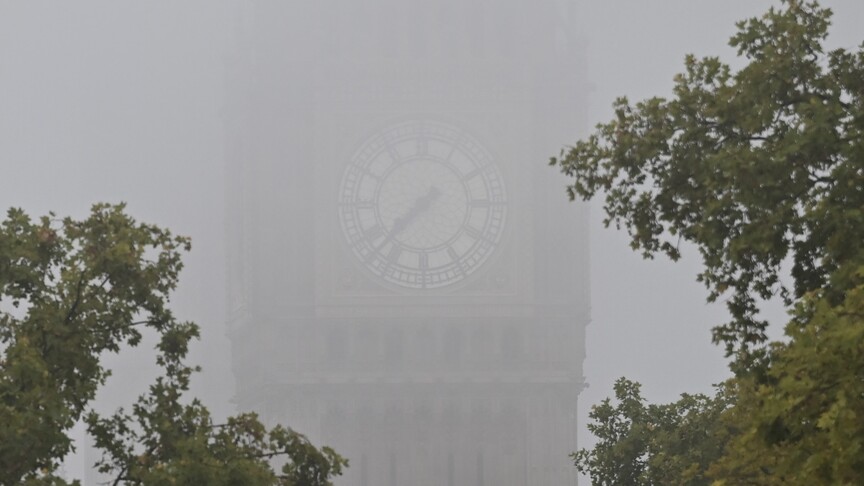
The UK faces a code red air pollution alert following Bonfire Night celebrations, compounding hazardous travel conditions driven by dense morning fog.

The UK faces a code red air pollution alert following widespread Bonfire Night celebrations, compounding hazardous travel conditions driven by dense morning fog across southern England on Monday, 9 November 2026.
Thousands of professional and amateur firework displays, alongside traditional bonfires commemorating the failed Gunpowder Plot, have severely degraded air quality nationwide according to reporting from Metro. Fireworks release an unhealthy concoction of fuels, oxidisers, binders, and metal salts, while bonfires emit toxic gases and chemical pollutants that irritate the respiratory system.
Media additions

The Department for Environment, Food and Rural Affairs (DEFRA) updated its UK AIR map to reflect the severe damage. Regions scoring 10/10, or very high on the pollution scale, include the North West, Merseyside, London, the South East, and Eastern England. Yorkshire and Humberside and the East Midlands scored 9/10, while the West Midlands recorded 8/10.
Simon Birkett, founder and director of Clean Air London, warned on social media about widespread extreme air pollution, stating that people had blasted fireworks into the fog to create a deadly smog full of toxic metals, smoke, and other particles. Dr Matt Swallow from Asthma + Lung UK cautioned that bonfire smoke, fireworks pollution, and chilly air can trigger breathing difficulties, urging people to stand away from smoke and follow medical advice.
Public Health England warns that poor air quality is the largest environmental risk to public health in the UK, noting that long-term exposure can cause chronic cardiovascular and respiratory diseases and lung cancer. In contrast, Scotland, Wales, and the North East of England scored on the low end of the pollution scale due to geography, lower population density, and reduced transboundary pollution drift.
Compounding the environmental crisis, a yellow weather warning for dense fog was in effect from 6pm on Sunday, 8 November until 11am on Monday, 9 November 2026. Reporting from The Traveler notes that visibility fell below 100 metres, dropping to around 50 metres in pockets, particularly across low-lying inland corridors, the London commuter belt, and parts of the Midlands.
The Met Office acknowledged that light winds caused pollution to build up near busy roads, urban centres, and areas where dense fog was slow to clear. Major transport arteries including the M3, M4, M25, M27, and A34 experienced reduced visibility and queuing during the morning commute.
| Region / Area | Air Pollution Score (DEFRA) | Weather / Travel Disruption Factors |
|---|---|---|
| North West, Merseyside, London, South East, Eastern England | 10/10 (Very High) | Dense fog, major commuter routes affected (M3, M4, M25, M27, A34), airport delays |
| Yorkshire and Humberside, East Midlands | 9/10 | Fog corridors, reduced visibility near urban centres |
| West Midlands | 8/10 | Slow-clearing fog, local traffic and rail caution |
| Scotland, Wales, North East of England | Low | Favourable geography and lower population density |
Air travel faced potential disruption at Heathrow, Gatwick, Luton, London City, and Southampton airports, where early-morning landing and departure banks risked delays. Rail operators also prepared for potential speed restrictions around busy junctions and level crossings.
Regional Impacts and Advisory Status
- Road transport: Major motorways and approach roads into London experienced slower journey times and sudden drops in visibility.
- Rail networks: Intercity and commuter corridors through Reading, Oxford, and Milton Keynes faced cautious operations.
- Public health: Vulnerable individuals in high-scoring pollution zones were advised to monitor symptoms and limit exposure.
For ongoing updates on regional travel conditions, consult the Met Office. Further information regarding public health advice can be found through NHS guidance, while broader updates are available via DEFRA.
Forecasts indicate that the fog across southern England will slowly lift and clear into the afternoon, with settled dry conditions expected from Tuesday, 10 November 2026 onward. Travellers should continue to monitor official channels for any sudden weather updates or adjustments to warning windows.