UK cold weather alerts issued as snow and ice expected
The UK faces snow, ice, and freezing temperatures as the Met Office and UKHSA issue severe weather warnings and cold health alerts.
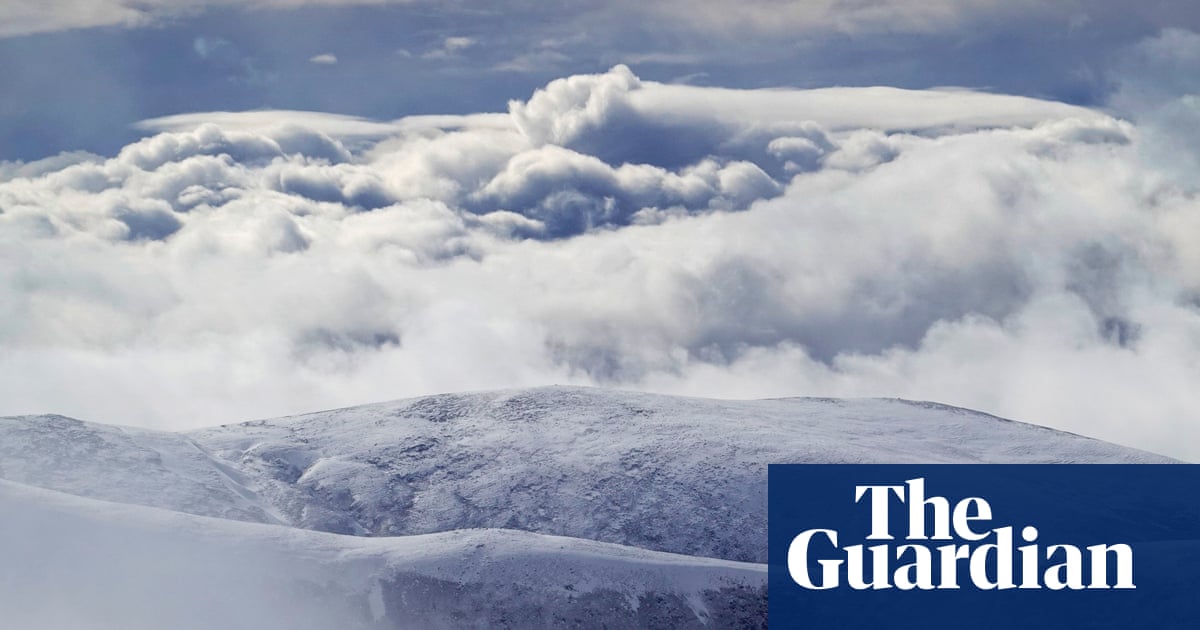
Cold weather warnings have been issued for parts of the UK, and alerts for the risk to health services are due to begin on Sunday evening.
The Met Office issued yellow weather warnings for ice for central and eastern Scotland from 6pm on Sunday evening until 10am on Monday. People should be vigilant as they travelled, due to the risk from slipping on footpaths in icy conditions, it added. The UK Health Security Agency (UKHSA) meanwhile issued yellow cold health alerts for north-west and north-east England and for Yorkshire and the Humber about the impact of the cold snap on health services.
Media additions


The warnings will come into force at 9pm on Sunday and run until Thursday morning. The UKHSA alerts meant the weather was likely to have minor impacts on health and social care services
, including an increased use of healthcare services and a greater risk to life for vulnerable people, the agency said.
Suffolk had the lowest temperature in the UK overnight into Sunday, with -4.5C recorded at Santon Downham. The Met Office said snow could fall on hills in northern England and Scotland in the coming days.
Dan Stroud, the senior operational meteorologist at the Met Office, said the cold weather was caused by northerly winds and longer nights.
Further weather warnings could be issued early in the week, the Met Office indicated. The weather will become briefly milder in midweek before returning to cold as the weekend approaches.
“The weather does try and settle down a little later in the period, with high pressure trying to build in from the middle of the week onwards from the north.”
Dan Stroud, the senior operational meteorologist at the Met Office
He added: “There will be a cold, widespread frost in the north on Friday, with daytime temperatures below normal, in single digits.”
“This is the latest cold health alert of the season, and we can expect more as we move further into winter.
“Cold weather can have a serious impact on the health of some people, including those aged 65 and over and those with pre-existing health conditions, so it is vital to check in on friends, family and neighbours who are most vulnerable.”
Paul Coleman, a consultant in public health at the UKHSA
Coleman added that people should try to heat the rooms they used the most, if possible, and dress warmly during colder spells.
Amber warnings and wider disruption
Amber severe weather warnings for snow and several yellow warnings for snow and ice have been issued by the Met Office for areas around the UK on Friday.
Arctic air is spreading across the country as a lengthy period of colder weather takes hold, with yellow warnings set to be in force in some regions until Sunday.
With lower temperatures, amber cold health alerts from the UK's Health Security Agency (UKHSA) cover the whole of England.
Amber snow warnings will come into force in Scotland on Friday, but wintry weather and icy surfaces could also bring travel disruption to large parts of England, Northern Ireland and Wales.
Amber warnings for snow come into effect at midday on Friday in large parts of Scotland, including in Angus, Perth and Kinross, Grampian, Aberdeenshire, Moray and parts of the Highlands.
Snow showers will become more frequent during the day. Accumulations of 10-20cm are likely at low levels with 30-40cm possible on high ground with some drifting and blizzards.
It urged people to plan routes carefully and to pack essentials in your car in the event of delays. Key items to bring include warm clothing, water, a blanket and ice-scraper.
The amber warnings in Scotland are currently due to be in effect until midday on Saturday.
Throughout Friday, an area of rain, sleet and snow will spread across Northern Ireland, Wales, parts of north-west England, the Midlands and southern England.
Yellow warnings for snow and ice are already in force for large parts of England, Northern Ireland and Wales.
As much as 5cm of snow is possible in a few areas, including the higher ground of north Wales, north-west England and the north-west Midlands, the Met Office added.
The Met Office yellow warning for snow and ice for large parts of England and Wales will be in effect until 12:00 GMT on 2 January.
A separate yellow warning for Northern Ireland will end at 10am on Friday.
Amber cold health alerts from the UKHSA for the whole of England will be in place until 12:00 on 6 January.
The alerts warn of a rise in deaths particularly among elderly and vulnerable people.
Other consequences of cold weather include temperatures inside hospitals and care homes dropping below the levels recommended for assessing health risks, and challenges for people keeping indoor temperatures at the recommended 18C, according to the UKHSA.
Frequent snow showers will move in across northern Scotland while another area of snow showers moves through Northern Ireland, Wales and into south-east England on Thursday night.
Another area of snow showers will feed in across eastern coastal areas England during Saturday.
Here, another Met Office yellow warning has been issued for all of Saturday where around 1-3 cm of snow is likely to accumulate quite widely, with 5-8 cm possible in places such as the North York Moors.
Meanwhile the frequent snow showers will continue in northern Scotland right through until the weekend.
Strong winds on Saturday will bring blizzards and drifts of snow with the north-west Highlands and Grampians perhaps seeing as much as 60cm of snow by the end of the weekend.
An additional Met Office yellow warning is in force for northern and western Scotland covering the whole weekend.
Temperatures will be around 3-5C at best with some parts of Scotland and northern England experiencing 'ice-days' where temperatures won't rise above freezing.
These low temperatures with widespread overnight frosts are expected to continue well into next week.
Stay up to date with the latest forecast on the BBC Weather website or app as details are likely to change.
Support for rough sleepers and local action
Extra support for homeless people is in place as temperatures are predicted to drop below freezing.
Amber cold-health alerts come into force across England at 20:00 GMT on Wednesday until 6 January and the UK Health Security Agency (UKHSA) has warned of "significant impacts across health and social care services".
The UKHSA warned the weather could lead to a rise in deaths, particularly among those aged 65 and over or with health conditions.
Torbay Council in Devon said it had activated severe weather emergency protocols, offering additional accommodation for homeless people to prevent harm. Cornwall Council urged residents to check on vulnerable family, friends and neighbours.
Torbay Council said its current measures would be in place until 5 January.
Amber alerts are issued in situations that could potentially put the whole population at risk.
The NHS may see increased demand on GPs and ambulances, for example.
In a post on social media, Cornwall Council urged residents to keep bedroom windows closed, wear multiple layers of thin clothing and, if eligible, get vaccinated against flu and Covid.
"Check on family, friends and neighbours who may be at higher risk of becoming unwell.
"If you are at higher risk, ask them to do the same for you," it added.
First winter alert and regional detail
Health chiefs have issued the first cold health warning of the season with temperatures expected to plummet to -6C as cool Arctic air sweeps across the UK.
Temperatures are forecast to drop, with some parts of the country expected to see frost, cold winds and temperatures below freezing.
A yellow cold health alert has been issued by the UK Health Security Agency (UKHSA) for the North West and West Midlands. The alert began at 9am on Thursday and will run until 12pm on Saturday.
Health leaders have encouraged people to check on their loved ones and neighbours, saying low temperatures can lead to a spike in the use of health and care services.
Experts added that colder weather can also result in increased risk for over-65s and people with certain health conditions, such as heart and lung problems.
“This is the first cold-health alert of the winter, but we can expect more as we move further into the season.
“Cold weather can have a serious impact on the health of some people, including those aged 65 and over and those with pre-existing health conditions, so it is vital to check in on friends, family and neighbours who are most vulnerable.
“We’re also reminding people to take simple steps to stay warm and look after their health as temperatures begin to fall. Keeping homes heated where possible and dressing warmly can help people stay safe and well during colder weather.”
Dr Anya Gopfert, consultant in public health at UKHSA
Temperatures are forecast to plummet to minus figures in parts of the UK on Friday as cool air from the Arctic sweeps across the UK.
However, Friday night could drop to -6C in rural parts of southern England, according to the Met Office. Some wintery showers have been forecast in parts of Scotland on Thursday night, but most of the UK will see clear skies.
Some snow could temporarily reach lower levels, the forecaster said, but the most significant flurries are expected over higher ground. Around 2 cm is possible above 200 metres, with several centimetres over higher routes and potentially 5-10 cm over the tops of the hills.
Heavier rain and showers will move in from the west over the weekend, but conditions are expected to be les cold. Looking at the medium range forecast from Sunday, Met Office deputy chief forecaster Steven Keates said the UK could see a mix of rain, sleet and hill snow.
“The outlook is changeable with spells of rain, sleet and some hill snow,” he explained. "On Sunday, low pressure will bring rain or showers to many areas. Precipitation will be most persistent across northern Scotland, where there is an increasing chance of snow developing later in the day. This will mainly fall over high ground, where accumulations are likely, but some snow could fall to lower levels too. Ice may also become a hazard."
Polar vortex context
UK Cold Weather Alert: As winter approaches in the UK, UKHSA has issued its first winter health warning for the 2026-2027 season, with health officials warning that falling temperatures could pose risks for vulnerable people. The alert has come amid concerns from weather experts, who say there is a potential weakening of the polar vortex (a large area of strong winds that normally helps keep Arctic cold air contained). Although, the alert has not been directly linked to changes in the polar vortex, authorities are urging residents to prepare for colder conditions and take precautions to protect their health
The UK Health Security Agency (UKHSA) has issued a yellow Cold-Health Alert, marking the first such warning of the winter season. Under the Weather-Health Alerting System, yellow alerts are issued when cold weather is unlikely to affect most people but could have a significant impact on vulnerable groups, including elderly individuals and those with existing health conditions.
According to the UKHSA, the yellow Cold-Health Alert has been issued for the North West and West Midlands regions of England. The alert is scheduled to remain in effect from 9 am on November 12 until 12 pm on November 14. Other regions of England are currently not covered by the warning.
Weather forecasters have suggested that the polar vortex, a circulation of strong winds over the Arctic, could weaken unusually early this year. Such changes can sometimes allow colder Arctic air to move further south, increasing the chances of chilly weather across parts of Europe, including the UK. However, officials have not directly connected the current Cold-Health Alert to polar vortex activity.
Health authorities have warned that cold weather can increase health risks for people aged 65 and over, those with respiratory or cardiovascular conditions and other vulnerable groups such as rough sleepers. Officials are advising people to keep their homes warm, dress for the cold and check on elderly relatives, friends and neighbours during cold spells.
Health advice and what to watch next
Everyone over the age of 65 is urged to make a heating change from 9am on Thursday to protect against the cold as the first health alert of the winter has been issued.
The UK Health Security Agency (UKHSA) has issued a yellow cold-health alert for the North West and West Midlands regions from 9am on Thursday, November 12, until 12pm on Saturday, November 14, with households warned to brace for freezing temperatures.
According to the Met Office forecast, a distinctly cold spell will sweep the UK this week, bringing fog, frost and snow showers as temperatures plummet.
The colder air is expected to become increasingly established on Wednesday, while Thursday looks set to be the coldest day of the week, with temperatures only reaching around 4C to 6C in some areas.
The wintry conditions come after the Met Office warned this month that a polar vortex could bring colder weather and a chance of snow to the UK this winter due to a knock-on effect from the El Niño weather phenomenon.
The forecaster said the polar vortex, which sits around 10 to 50km above the Earth's surface and circulates a pool of very cold air over the North Pole, has "weakened and become dramatically stretched", which could bring colder, drier air to the UK and produce sleet or snow showers.
While the effect of the disruption to the polar vortex is still uncertain, a cold snap this week is the first taste of wintry weather and with more chilly conditions likely in the weeks ahead, people are being urged to protect against the cold - particularly if you're aged 65 or over.
Older people in this age group, as well as people with health conditions and those who aren't very mobile, are urged to keep their thermostat set to a minimum of 18C at all times, both during the day and at night, to help stay healthy and protect against the cold as the health alert kicks from 9am on Thursday.
Keeping your home at a temperature of at least 18C can help to fend off nasty winter bugs, including colds, flu and coronavirus>Covid, as well as more serious health problems like pneumonia, heart attacks, strokes and depression.
In its winter advice, the Met Office says: "The cold thickens blood and increases blood pressure, and breathing in cold air can increase the risk of chest infections. So it's all the more important to ensure your home and the homes of people you look out for are the right temperature.
"Ideally, you should heat your home to a temperature of at least 18C. This is particularly important if you have reduced mobility, are 65 or over, or have a health condition, such as heart or lung disease. Having room temperatures slightly over 18C could be good for your health.
"If you are under the age of 65, active and wearing appropriate clothing, you may wish to keep your home at a comfortable temperature even if it is slightly lower than 18C.
"Overnight, people who are 65 and over or who have pre-existing health conditions may find bedroom temperatures of at least 18C are good for their health; this may be less important if you are a healthy adult under 65 and have appropriate clothing and bedding. It is important to keep your bedroom window closed at night when the weather is cold."
If you don't want to heat your whole house, you can opt to just heat the rooms you use most often, like your living room or bedroom, and be sure to keep windows closed overnight to help retain warmth indoors. Drawing your curtains at dusk will also help to keep the heat generated inside your rooms.
To ensure heat doesn't escape, use draught excluders to seal any gaps around windows and doors, and make sure any radiators in your home aren't blocked by furniture or curtains.
Advice from the Met Office, NHS and UKHSA also recommends staying active during bouts of cold weather - even if you are stuck inside due to snow and ice - as this will help your body to keep warm, and stave off winter illnesses like colds, flu and more serious health problems.
You should aim to get up and walk around at least once every hour, make sure you eat at least one hot meal per day, and wear several layers of light clothes, rather than one thick layer, to help lock in warmth.
If you are going outside in cold weather, the NHS suggests wearing a scarf over your mouth like a face mask to help protect against the cold. Using a scarf like a face mask allows air to warm up before it is breathed in, helping to reduce the risk of asthma symptoms being triggered.