Colombia quake kills 111, president declares emergency as buildings collapse
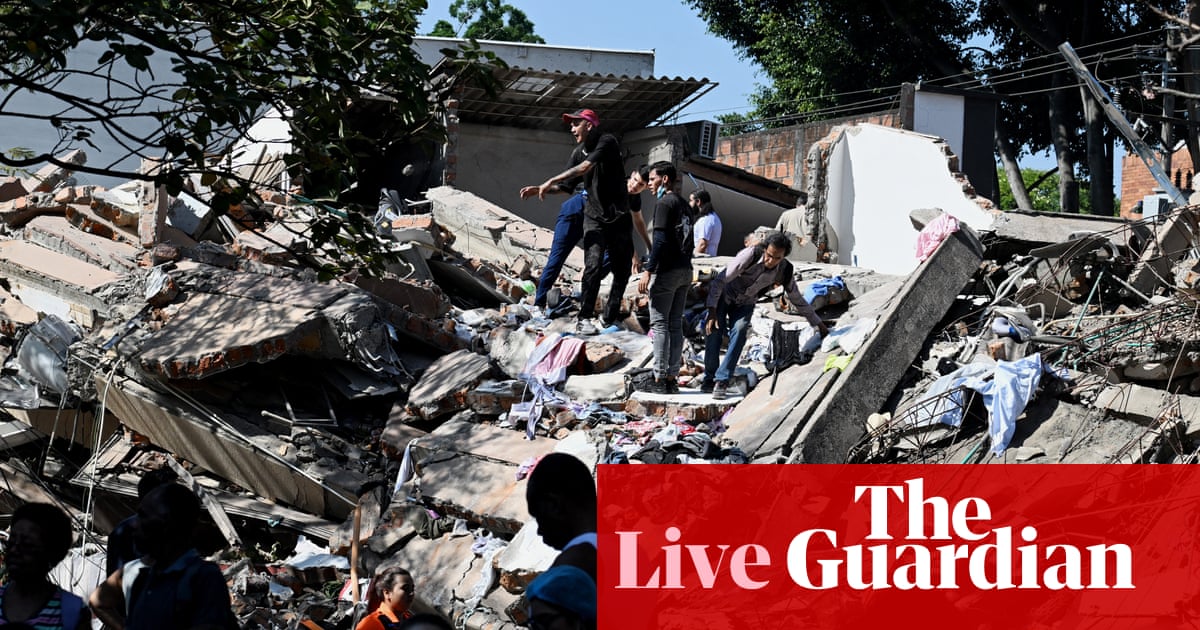
A 7.4-magnitude earthquake struck western Colombia, leaving at least 111 people dead and prompting the president to declare a national emergency.
- Core Development: A 7.4-magnitude earthquake struck western Colombia, leaving at least 111 people dead and prompting the president to declare a national emergency.
- Beat Context: Categorized under World with independent corroboration.
- Reporting Depth: 3 minute analytical read synthesized from verified newsroom sources.
On Monday 10 August 2026, a 7.4-magnitude earthquake struck western Colombia, resulting in at least 111 deaths and injuring at least 87 people, according to official figures. The disaster prompted newly sworn-in President Abelardo de la Espriella to declare a state of national emergency to expedite funding and coordinate the government response. The tremor is the largest to hit the country so far this century, according to the Colombian Geological Service, and struck less than two months after devastating twin earthquakes hit neighbouring Venezuela.
Timeline of the disaster
- 07:30 a.m. Local time – The main shock strikes near San José del Palmar in the remote Chocó region, an epicentre area with a community of about 4,800 people.
- 07:34 a.m. – The quake strikes approximately 150 miles west of Bogotá, sending tremors across major cities nationwide.
- Morning – Airports in Pereira, Manizales, Quibdó, Armenia, Cartago and Buenaventura suspend flights while structural inspections take place.
- 12:00 p.m. – President de la Espriella announces an emergency declaration while filming a video from a flight to Bogotá, suspending planned activities to lead response efforts from the capital.
- Afternoon – Digital missing-persons databases record names of individuals, with one database listing more than 1,400 people primarily from Cali and Pereira.
Casualties and structural damage across departments
The human toll spans several regions. In the coffee-growing Risaralda department, the hard-hit city of Pereira recorded at least 40 deaths, according to the mayor's figures cited in reporting, while the Valle del Cauca department recorded 27 deaths, including three children and 15 people in Cali. In the Chocó department, local officials confirmed at least 12 deaths, and two deaths were reported in Manizales within the Caldas region alongside one fatality in Antioquia.
Media additions
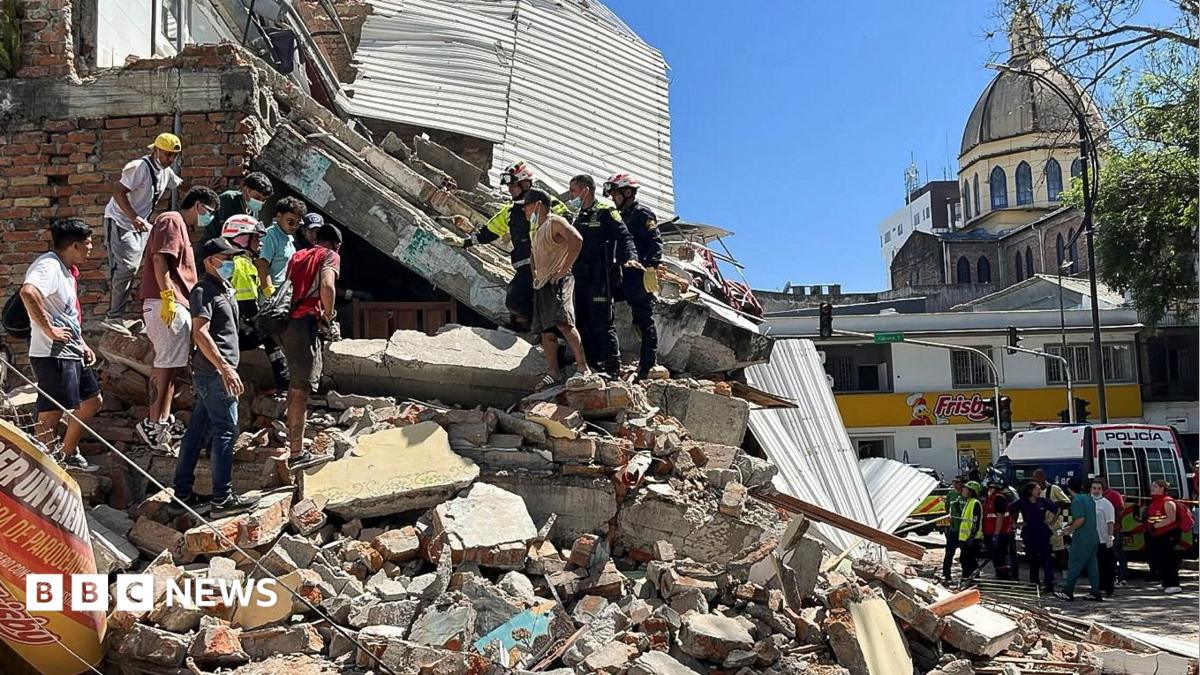

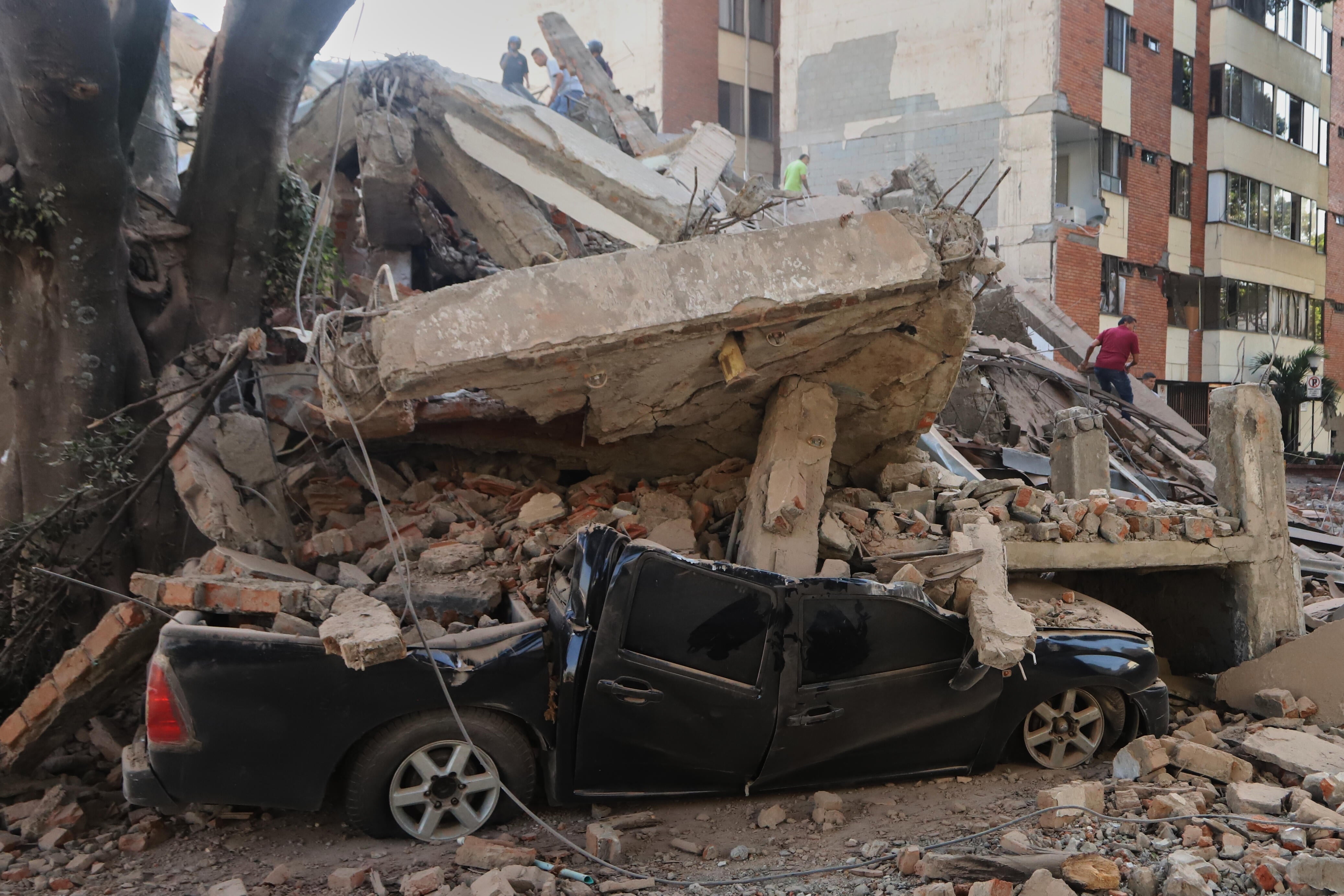
President de la Espriella stated that around 1,600 buildings had suffered damage, including at least 61 structures that completely collapsed. In Cali, Mayor Alejandro Eder reported dozens of collapsed structures and noted that rescue teams had pulled survivors from the debris.
Presidential response and international aid
The crisis represents the first major test for President de la Espriella's administration following his recent inauguration. Addressing the nation, the president emphasised that rescue operations remain the top priority.
"We aren't going to leave people alone. They are in our hearts and we are going to tend to people with our full determination."
Abelardo de la Espriella, President of Colombia, via The Guardian
International partners responded quickly to the catastrophe. The United States State Department announced $15.5 million in aid for emergency shelter, food and response efforts, while governments in Ecuador, France, Mexico, Brazil, El Salvador and Chile offered assistance or expressed readiness to deploy rescue teams and supplies.
Witness accounts
Residents across affected cities described extreme shaking and sudden destruction. Jorge Moncayo, a taxi driver in Cali, recounted the impact on his surroundings:
"My entire house shook. I've never lived through such a powerful earthquake."
Jorge Moncayo, taxi driver, via CBC
Another witness in Cali, Álvaro López, described the aftermath while watching search efforts near destroyed structures, noting that his building was left in ruins while a neighbouring structure completely collapsed. In Manizales, a witness described how everyone was screaming and bricks were falling from surrounding walls as a tower of the neo-Gothic cathedral collapsed onto the nave.
Geological context and regional impact
Colombia is situated along the Pacific "Ring of Fire," a major seismic belt where tectonic plates meet and a high proportion of the world's largest earthquakes occur. The Colombian Geological Service noted that Monday's event surpassed the 6.2-magnitude quake of 1999 that struck the coffee region and killed more than 1,100 people.
The disaster also stirred anxiety in border communities following major earthquakes in Venezuela in late June. Witnesses in the Venezuelan border state of Táchira reported feeling the tremors from the Colombian shock.
What to watch next
- Ongoing search and rescue operations by emergency teams in Cali, Pereira and surrounding areas to locate people still trapped under rubble.
- Arrival of international aid convoys and humanitarian support pledged by the United States and Latin American governments.
- Further damage assessments and structural safety checks by the National Unit for Disaster Risk Management across departmental capitals.
- Updates on the suspension of commercial flights and potential reopening schedules at regional airports.
How significant is this development?
Contribute your assessment to the aggregated reader sentiment ledger.
Frequently Asked Questions
Key questions answered in this reportWhat is the key development in: Colombia quake kills 111, president declares emergency as buildings collapse?
A 7.4-magnitude earthquake struck western Colombia, leaving at least 111 people dead and prompting the president to declare a national emergency.
Why is this World development significant for the UK?
This report covers critical events in our World beat. Independent reporting monitors related UK statements, regulatory shifts, and public responses as further verified details emerge.
How was this reporting corroborated and verified?
Newsarchy UK compiles and cross-references reporting from primary reporting from independent.co.uk and cross-checked wire reports. All coverage adheres to published editorial standards.
When was this report published?
This briefing was published on August 11, 2026 and is permanently cataloged in the Newsarchy UK World archives.