Ecuadorian fishermen sue US over Pacific drone strike
Survivors of a U.S. military drone strike targeting a fishing vessel have filed a lawsuit challenging secretive counter-narcotics maritime operations.
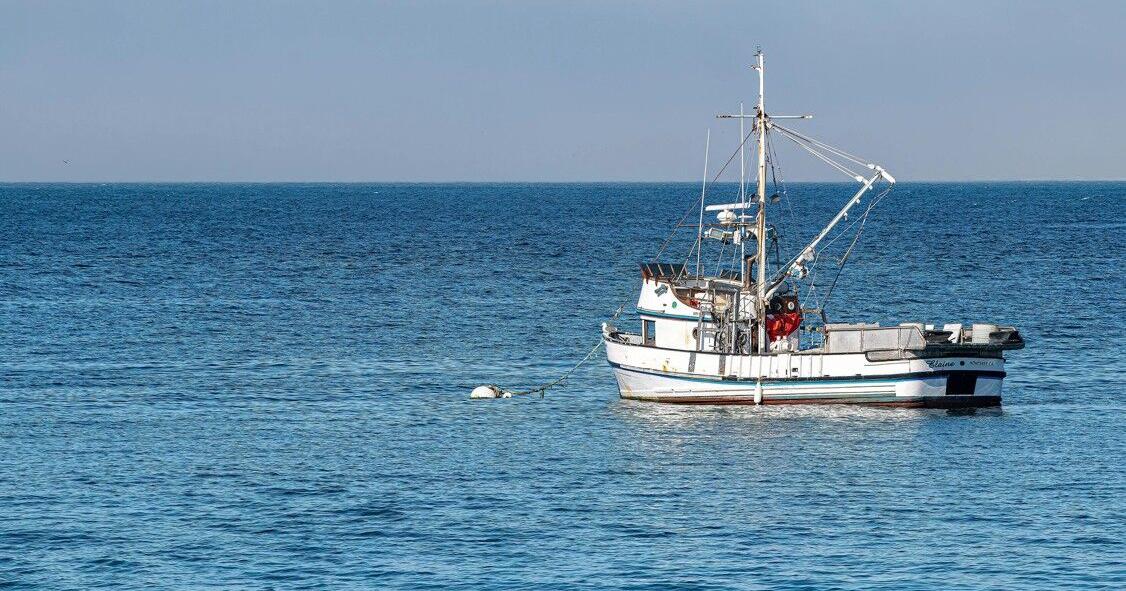
Ecuadorian fishermen who survived a military drone strike at sea have sued the United States government, launching an unprecedented legal challenge to a secretive counter-narcotics campaign that has sparked international scrutiny over extrajudicial killings and human rights abuses.
The complaint, filed on Monday, November 16, 2026, in the U.S. District Court for the Western District of Pennsylvania, represents the first known lawsuit brought by survivors of the deadly boat-strike campaign, according to reporting by Inquirer. The plaintiffs are seeking financial compensation and a court order to halt the lethal military strikes targeting small vessels in the Caribbean and eastern Pacific, as detailed by Al Jazeera.
Media additions

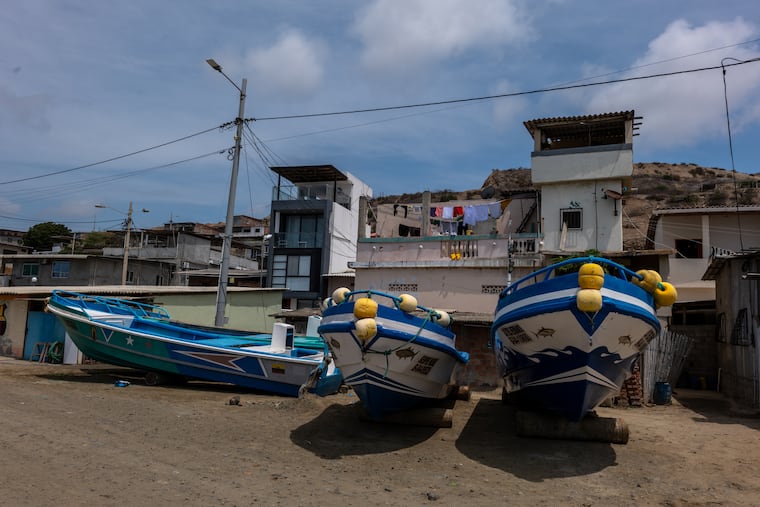
The litigation centers on the destruction of the La Negra Francesca Duarte II
, a fishing vessel carrying 16 crew members from Manta, Ecuador. The men had spent two weeks fishing near the Galápagos Islands and were returning to shore when their voyage was intercepted by the Ecuadorian Navy, according to Legalnewsline. Officers conducted a standard inspection and cleared the vessel of any contraband or criminal activity before letting the fishermen proceed.
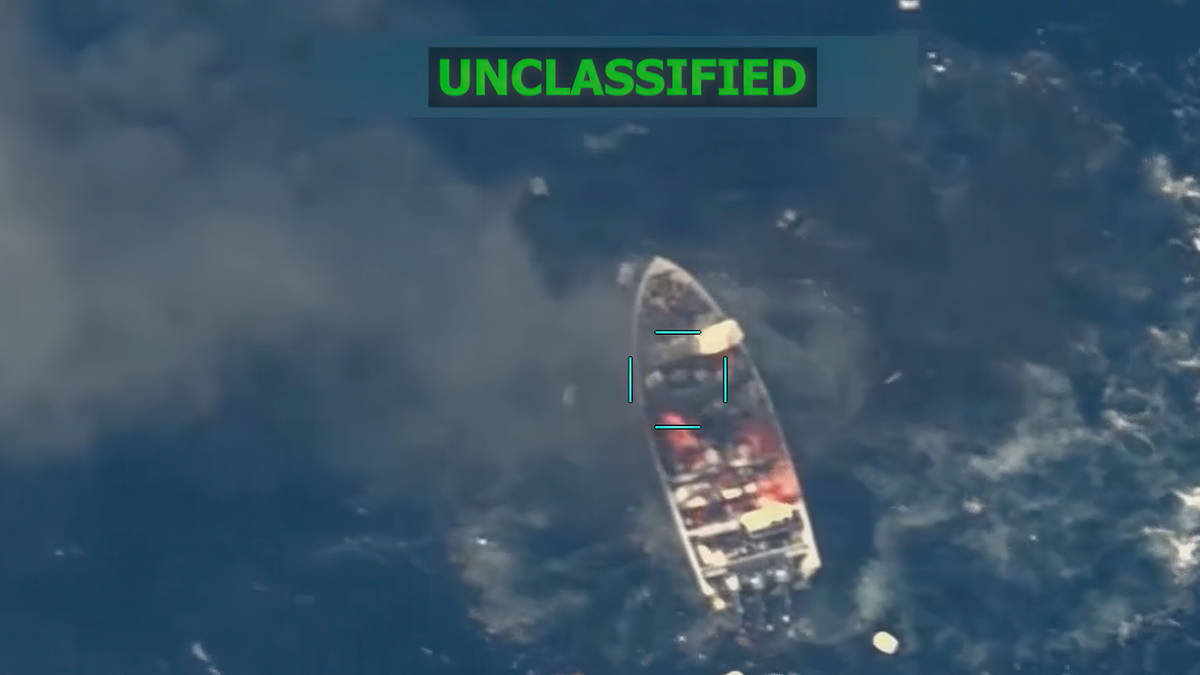
Hours later, however, two armed drones launched from a U.S.-operated vessel allegedly bombed the wooden boat. The strike engulfed the vessel in flames, severely burning crew members Jordy Alexander Flores Lucas and Leonel Alberto Pilay Barahona, as reported by Bloomberg Law. Forced to abandon ship, the survivors took to emergency boats and approached a nearby blue ship for help, only to find themselves met by English-speaking personnel in military camouflage bearing U.S. Flags and U.S. Coast Guard
vests who aimed rifles at them, according to Washingtonsun.
What followed, according to the legal filing, was a day of detention marked by severe mistreatment. The fishermen claim they were zip-tied, hooded, and forced to stand barefoot on a hot iron deck without food and with minimal water. Flores Lucas was taken below deck where military personnel allegedly laughed and drew on a blackboard to illustrate how they had bombed the fishing boat. The crew was subsequently transferred to a Salvadoran ship for a seven-day voyage to El Salvador, where the injured men were hospitalized and the others held in a migrant detention facility until late March.
Captain Hernan Flores expressed the despair of the crew to Reuters, noting in coverage by LBC:
"We filed the lawsuit because the boat was all we had. Nobody in Ecuador is helping us. They did all that damage to us, and by the grace of God, we’re alive."
Hernan Flores, ship’s captain, via Reuters and LBC
The Trump administration has publicly defended its maritime campaign — frequently linked to Operation Southern Spear and justified under a secret Justice Department memo claiming an armed conflict with drug cartels — as a necessary push against narco-terrorism. President Donald Trump and Defense Service officials have publicized videos celebrating strikes against alleged drug-trafficking boats. However, the administration has denied knowledge or responsibility for the attack on the La Negra Francesca Duarte II
and two other Ecuadorian vessels sunk earlier this year, according to ИФЗ РАН. A report from the Washington Post previously suggested those specific vessels might have been targeted by the CIA as part of a secret overseas mission.
| Reporting Outlet | Reported Total Boat Strikes | Reported Death Toll |
|---|---|---|
| Bloomberg Law | 71 | At least 235 |
| Inquirer / New York Times tally | 72 | At least 244 |
| Al Jazeera / LBC | 71 | At least 235 / 244 |
International legal experts have strongly criticized the administration's legal rationale. Michael Schmitt, an international law expert and retired U.S. Military lawyer, told Inquirer that the administration's assertion of an armed conflict with drug cartels is nonsensical,
noting that drug trafficking is a crime rather than an armed conflict, making lethal boat attacks without a state of war equivalent to murder or attempted murder under international law. Human Rights Watch and other monitoring organizations have similarly highlighted a broader pattern of questionable interdictions. According to human rights data cited by Al Jazeera, out of 160 crew members intercepted across multiple vessels between late August and mid-September, courts in Ecuador ultimately released 56 without charge and acquitted 40 for lack of evidence.
To overcome traditional government immunity hurdles, the plaintiffs’ attorney, Daniel Kovalik, modeled the lawsuit on prior complaints, such as a wrongful death action filed in January in a Massachusetts federal court by the families of Trinidadian workers killed in a separate strike, and a December complaint filed with the Inter-American Commission on Human Rights regarding a missing Colombian fisherman. The current Pennsylvania federal lawsuit invokes the Suits in Admiralty Act and the Public Vessels Act to bring claims for assault, battery, false imprisonment, destruction of property, and intentional infliction of emotional distress.
While legal scholars like Schmitt suggest that winning damages or an injunction may prove difficult due to executive immunities, they emphasize that the case serves as a vital tool for naming and shaming
the government and compelling public accountability. Observers will be watching whether federal judges in Pennsylvania address jurisdictional arguments or if congressional committees open formal oversight hearings into the military's unacknowledged maritime operations when lawmakers convene.


