From France to Albania, social unrest is setting Europe's streets ablaze
A volatile mix of soaring living costs, public service decay, and housing crunches has ignited sweeping civil demonstrations across European urban centers.
- Core Development: A volatile mix of soaring living costs, public service decay, and housing crunches has ignited sweeping civil demonstrations across European urban centers.
- Beat Context: Categorized under World with independent corroboration.
- Reporting Depth: 4 minute analytical read synthesized from verified newsroom sources.
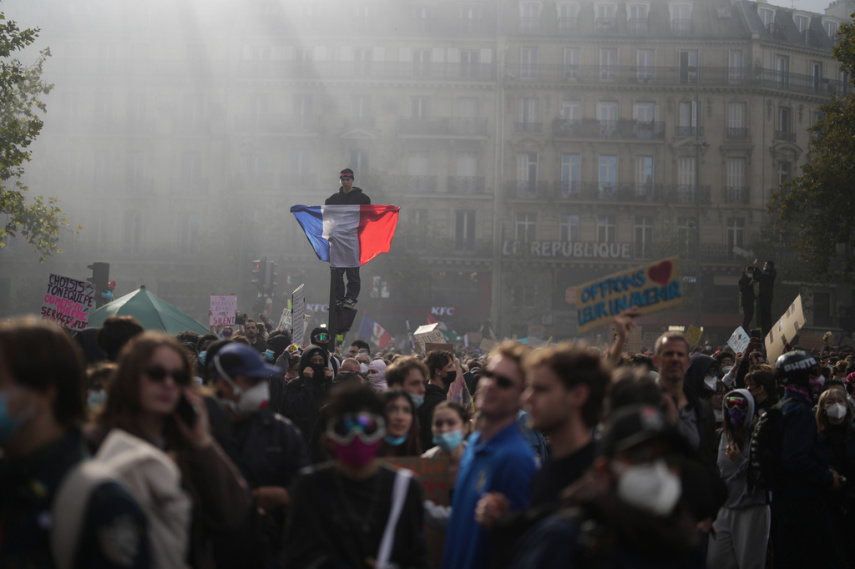
A volatile mix of soaring living costs, public service decay, and a severe housing crunch has ignited a sweeping wave of demonstrations across Europe, transforming major urban centers into flashpoints of civil unrest as Kaltimtoday reported. From street battles in France and Italy to anti-government blockades in the Balkans, compounding economic pressures have collided with high political stakes.
The turmoil comes as top European Union economies approach critical electoral cycles. Sociologists point to a deep-seated vulnerability among younger populations. According to María Silvestre, a professor of sociology at the University of Deusto in Spain, young Europeans experience a pervasive lack of control and disappointment with existing social models, leaving them primed for sudden sparks of collective action.
Media additions


France has experienced some of the most destructive scenes in years, drawing widespread international attention. High school students initially launched blockades over dilapidated, understaffed facilities in lower-income neighborhoods, setting the stage for broader mobilization. When labor unions joined the movement, protests snowballed into massive rallies against inflation and declining public administration standards. French President Emmanuel Macron condemned the violence during a televised address, vowing that vandals and those seeking to destabilize the republic would face full legal accountability.
Far-right figures across the globe seized on the French disorder to advance restrictionist agendas. United States President Donald Trump took to social media to claim that migrants had overwhelmed France, demanding immediate border closures. However, French authorities and police sources emphasized that while masked, black-clad agitators played a role in fueling the violence, immigration was not viewed as the root cause of the broad-based domestic uprising.
Housing affordability has similarly transformed the Iberian Peninsula into a protest zone. In Madrid, demonstrators erected tarpaulin tent camps in the central Puerta del Sol following the tragic eviction and subsequent hospitalization death of an 87-year-old resident named Maricarmen. Similar encampments multiplied across Spanish and Portuguese cities, including Barcelona, Lisbon, and Porto. Protesters highlighted a widening gap between wages and living expenses. As Diana Manzanares, a 20-year-old waitress participating in the Madrid encampment, told The Manila Times, most earnings are swallowed entirely by rent.
| Country / City | Key Economic Indicator | Unrest Metrics & Core Grievances |
|---|---|---|
| France (National) | Living cost & public sector strain | 2,400 arrests; Limoges town hall destroyed; schools and vehicles torched. |
| Spain (Madrid / Barcelona) | Minimum wage €1,221 vs. Average rent €1,130 | Tent encampments in Puerta del Sol; teacher strikes; snap election called. |
| Italy (Milan / Turin / Bologna) | Inflation at 4.2% (surpassing 3.8% eurozone average) | 271 arrests in Milan (mostly minors); 14 security officers injured; "Oct. 17 Movement" formed. |
| Albania (Tirana) | Luxury tourism development disputes | Anti-government "Flamingo" protests demanding Prime Minister Rama's resignation. |
The economic squeeze has triggered institutional earthquakes across Southern Europe. In Spain, the Socialist administration's attempt to pass affordable housing measures collapsed in Parliament due to insufficient backing, forcing Prime Minister Pedro Sánchez to schedule a snap general election for November alongside the nation's first general strike in over a decade. In Italy, inflation climbed to 4.2% in September, outstripping the broader eurozone average. Under the banner of "Italia in Piazza," demonstrators marched against employment and healthcare deficits before unrest boiled over in Turin, Bologna, and Milan. Milanese police reported 271 arrests—predominantly minors—alongside fourteen injured security personnel. A newly formed entity, the "Oct. 17 Movement," has pledged permanent weekly mobilizations across Italian urban centers.
Discontent has similarly gripped the Balkans. In Albania, capital streets in Tirana have witnessed continuous clashes for nearly a week. High school and university students joined the "Flamingo" civic movement, named after local wetlands slated for a luxury tourism project involving Jared Kushner, son-in-law of Donald Trump. Protesters are demanding an end to systemic corruption, protections for public pensions, and the resignation of Socialist Prime Minister Edi Rama. Rama dismissed the demonstrators as radicalized by antifa factions.
Meanwhile, neighboring Serbia faces its own high-stakes crucible. Youth-led anti-corruption factions who have organized demonstrations for nearly two years are confronting a potential political comeback by former populist leader Aleksandar Vucic. With Vucic eyeing the prime ministerial post following parliamentary voting, and the youth-backed Students' List running neck-and-neck in polls, the political landscape remains on a knife-edge.
As European governments scramble to contain public anger, attention shifts immediately to upcoming parliamentary ballots in Serbia, emergency security briefings in Paris, and the planned November elections in Spain. With permanent mobilization groups establishing a foothold in Italy and labor unions threatening further autumn walkouts, European leaders face an uphill battle to restore stability before winter deepens public grievances.
How significant is this development?
Contribute your assessment to the aggregated reader sentiment ledger.
Frequently Asked Questions
Key questions answered in this reportWhat is the key development in: From France to Albania, social unrest is setting Europe's streets ablaze?
A volatile mix of soaring living costs, public service decay, and housing crunches has ignited sweeping civil demonstrations across European urban centers.
Why is this World development significant for the UK?
This report covers critical events in our World beat. Independent reporting monitors related UK statements, regulatory shifts, and public responses as further verified details emerge.
How was this reporting corroborated and verified?
Newsarchy UK compiles and cross-references reporting from primary reporting from thehindu.com and cross-checked wire reports. All coverage adheres to published editorial standards.
When was this report published?
This briefing was published on October 20, 2026 and is permanently cataloged in the Newsarchy UK World archives.


