Palestinians mourn at mass funeral in Gaza City
Hundreds of mourners gathered in Deir al-Balah for Gaza's largest mass funeral in over two years following the recovery of 112 bodies from a 2023 strike.
- Core Development: Hundreds of mourners gathered in Deir al-Balah for Gaza's largest mass funeral in over two years following the recovery of 112 bodies from a 2023 strike.
- Beat Context: Categorized under World with independent corroboration.
- Reporting Depth: 5 minute analytical read synthesized from verified newsroom sources.
The discovery of 112 bodies buried beneath the wreckage of a 2023 Israeli airstrike has culminated in Gaza’s largest mass funeral in over two years, underscoring how the fragile cease‑fire now permits the painstaking recovery of victims while the war’s political deadlock deepens.
More than 300 civilians were killed on 22 November 2023 when Israeli warplanes flattened a residential block in Gaza City’s Sabra neighbourhood. Initial efforts retrieved only about 40 bodies; the majority remained entombed under collapsed concrete. Over the weekend, Gaza’s civil defence, operating under the Hamas‑run Interior Ministry, excavated a further 112 remains – including 40 children – bringing the total recovered from that strike to well over 100.
Media additions
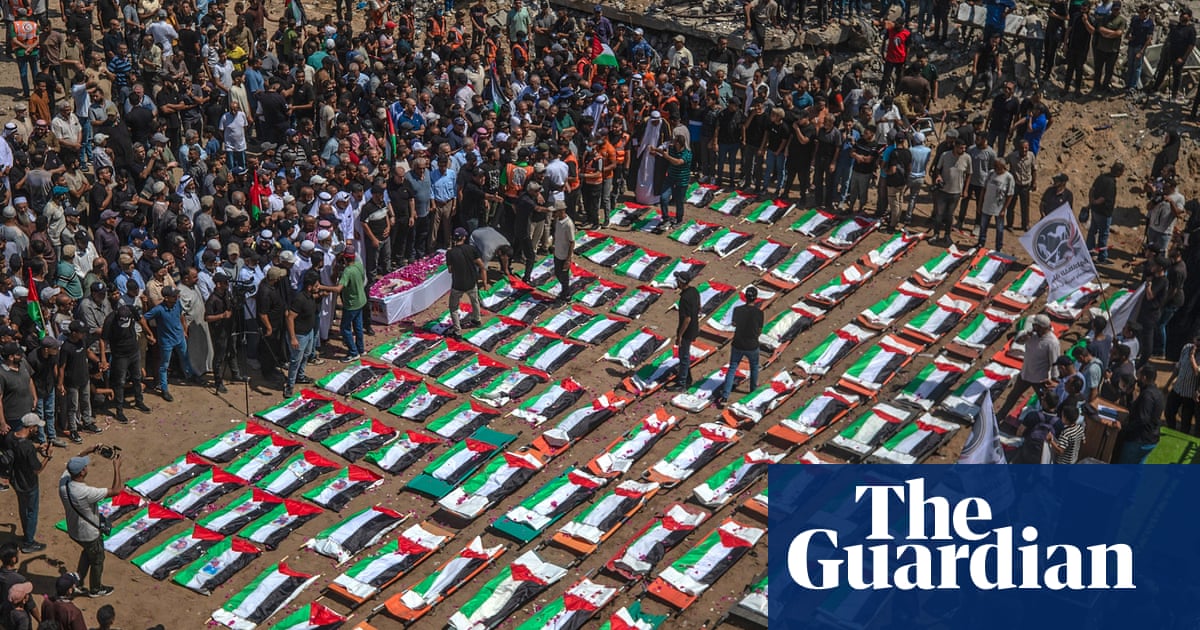
Hundreds of mourners gathered in Deir al‑Balah, the district where the block stood, to chant funeral prayers, line coffins wrapped in Palestinian flags, and carry the stretchers through streets still littered with shattered walls. The ceremony, reported by The Boston Globe, the Yahoo! UK outlet and The Guardian, illustrates how the cease‑fire, first enacted in October 2023, has shifted the conflict from high‑intensity bombardment to a grim forensic effort.
Why the funeral matters now
The timing is significant: the cease‑fire, while halting large‑scale offensives, has not stopped isolated Israeli strikes. In the days preceding the funeral, at least 26 Palestinians were killed, a reminder that the lull is fragile. Moreover, the recovery of these bodies adds to the war’s rolling casualty tally. Gaza’s Health Ministry, part of the Hamas‑run government, records “more than 73,377” Palestinians killed since 7 October 2023, with “at least 1,252” fatalities since the cease‑fire began, according to the Boston Globe and The Guardian respectively. The United Nations, Human Rights Watch and Amnesty International have all labelled Israeli actions as genocidal, a designation that gains visceral weight when families finally see their lost loved ones.
International diplomacy is also in flux. Israeli Prime Minister Benjamin Netanyahu, speaking on social media, reiterated that Israeli forces will not withdraw until Hamas is fully disarmed, contradicting a draft “deal” circulated by the Trump administration that called for a phased Israeli withdrawal. The Board of Peace official Nikolay Mladenov met Netanyahu on Monday to discuss a new disarmament arrangement, but Israel has voiced “serious security concerns,” a stance echoed across all three reports.
Personal testimony amid the rubble
“The only crime of these martyrs was that they remained steadfast and resilient in their homes, believing that these homes would protect them.”
Taysir al‑Hassayna, relative of a victim, via The Associated Press
Al‑Hassayna’s words capture the collective grief of the Hassayna and Abu Sharia clans, whose extended families once occupied the destroyed apartments. For many, the funeral’s visual symbols – bodies marked with photographs, scattered flower petals, and the stark contrast of flags against cracked stone – convey a painful affirmation that the missing are not “evaporated without a trace,” as another mourner lamented.
Recovery in the context of a stalled peace process
The mass burial follows weeks of painstaking excavation. Early reports noted that only “about 40” bodies could be retrieved with “rough tools and bare hands,” leaving “most were buried deep beneath the rubble.” The civil defence’s weekend effort recovered the additional 112 victims, a feat made possible by the cease‑fire’s relative calm. Yet, the numbers of those still unaccounted for remain staggering: Zaher al‑Waheidi, head of the health ministry’s records department, told the AP that “at least 7,400” people have been reported by relatives as still under the rubble, and that the true figure is likely “thousands higher” because entire families perished in single bombings.
Because the Ministry does not break down casualties by civilian or militant status, the exact proportion of women and children among the dead is unclear, though officials say they “make up most of the dead.” Independent UN agencies and experts deem the ministry’s records “generally reliable,” lending weight to the figures cited.
Humanitarian fallout
While the funeral draws global attention, everyday survival in Gaza grows increasingly precarious. Of the roughly 2 million residents, most live in makeshift camps where “overcrowding has led to rodent infestations and outbreaks of infectious diseases such as chickenpox,” according to the Boston Globe. The physical destruction of homes, schools, and health facilities continues to impede any return to normalcy.
Timeline of key events
- 22 Nov 2023 – Israeli warplanes demolish a residential block in Sabra, killing more than 300 people.
- Oct 2023 – Cease‑fire takes effect, pausing large‑scale operations but not all strikes.
- Weekend before 4 Aug 2026 – Gaza civil defence recovers 112 additional bodies, including 40 children.
- 4 Aug 2026 – Mass funeral held in Deir al‑Balah for the recovered victims.
- Early Aug 2026 – Ongoing negotiations between the Board of Peace, Hamas and Israel stall; Israel cites “serious security concerns.”
What to watch next
Analysts say the next weeks will test whether the cease‑fire can sustain further recovery missions or collapse under renewed hostilities. Key developments to monitor include:
- Any official Israeli response to the “serious security concerns” raised about the Trump‑backed disarmament draft.
- Progress (or lack thereof) in talks between the Board of Peace and Hamas regarding weapon surrender and Israeli troop withdrawal.
- Reports from Gaza’s civil defence on additional body recoveries, which could shift casualty tallies.
- International legal assessments following the UN commission’s June finding that Israel continues to commit genocide, potentially influencing diplomatic pressure.
For broader coverage of the war’s humanitarian impact, see our ongoing World section. The funeral is a stark reminder that even as diplomatic deadlocks persist, the human cost continues to mount, and each recovered body reopens wounds that the cease‑fire has only partially allowed the world to see.
How significant is this development?
Contribute your assessment to the aggregated reader sentiment ledger.
Frequently Asked Questions
Key questions answered in this reportWhat is the key development in: Palestinians mourn at mass funeral in Gaza City?
Hundreds of mourners gathered in Deir al-Balah for Gaza's largest mass funeral in over two years following the recovery of 112 bodies from a 2023 strike.
Why is this World development significant for the UK?
This report covers critical events in our World beat. Independent reporting monitors related UK statements, regulatory shifts, and public responses as further verified details emerge.
How was this reporting corroborated and verified?
Newsarchy UK compiles and cross-references reporting from primary reporting from bostonglobe.com and cross-checked wire reports. All coverage adheres to published editorial standards.
When was this report published?
This briefing was published on August 4, 2026 and is permanently cataloged in the Newsarchy UK World archives.