Future of German chancellor hangs in the balance as two states go to polls
German Chancellor Friedrich Merz faces a critical test of his leadership as voters in two key states head to the polls amid far-right advances.
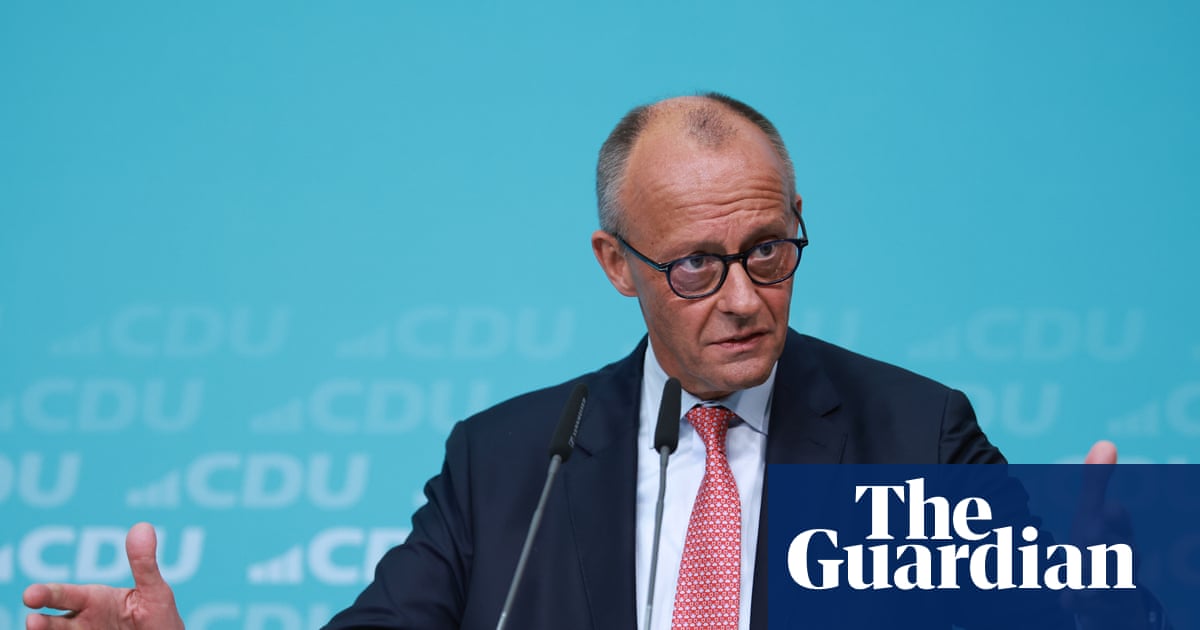
- Core Development: German Chancellor Friedrich Merz faces a critical test of his leadership as voters in two key states head to the polls amid far-right advances.
- Beat Context: Categorized under World with independent corroboration.
- Reporting Depth: 3 minute analytical read synthesized from verified newsroom sources.
Voters in two German states head to the polls with the political future of the embattled chancellor, Friedrich Merz, hanging in the balance, as an emboldened far right targets further gains according to The Guardian. Coming two weeks after a seismic regional election in Saxony-Anhalt, where the anti-immigration, pro-Kremlin Alternative für Deutschland scored its highest ever result, the nativist party threatens to drain further support from Merz’s conservative Christian Democratic Union.
The brutality of the electoral outcome could affect Merz's ability to remain leader after only a short time in power, potentially setting wheels in motion for his replacement or even snap elections, The Guardian reports. Millions of citizens are eligible to cast ballots across the capital city and the Baltic coast, with polling booths scheduled to open in the morning and close in the evening, leaving Merz and his allies watching exit polls on tenterhooks Al Jazeera.
Media additions


Merz has resisted calls to quit and vowed to fight for a signature package of economic and social welfare changes that he argues are crucial to the nation's future The Guardian. His credibility has been tarnished by broken campaign promises to return Europe’s largest economy to growth and cut the Alternative für Deutschland down to size The Guardian. Personal approval ratings for the chancellor have nosedived, prompting him to cancel plans to speak at the United Nations General Assembly in New York because his presence is required in Berlin The Guardian.
The Alternative für Deutschland fell just short of an absolute majority in former communist Saxony-Anhalt, which would have allowed it to govern on its own The Guardian. However, polls indicate the party will fall well short of an absolute majority in Sunday's elections, even with its palpable sense of momentum The Guardian. In Berlin, the incumbent Christian Democratic Union is vying for first place against the far-left Die Linke, which has called for the expropriation of corporate landlords to fight rising housing costs The Guardian.
| State / Region | Electorate / Key Contest | Notable Political Dynamics |
|---|---|---|
| Berlin | Approx. 2.5 million eligible voters | Incumbent CDU races against far-left Die Linke; Alternative for Deutschland polls strongly in third or fourth place. |
| Mecklenburg-Western Pomerania | Nearly 1.3 million eligible voters | Neck-and-neck race between Social Democrats and Alternative for Deutschland, while the CDU risks falling below the 5% parliamentary threshold. |
| Saxony-Anhalt | Previous regional election | Alternative for Deutschland secured 43.8% of the vote, falling three seats short of an absolute majority. |
In Mecklenburg-Western Pomerania, the situation looks even dicier for Merz, whose weakness regional leaders have blamed for their poor showing The Guardian. The Alternative für Deutschland and the Social Democrats are locked in a neck-and-neck race while the Christian Democratic Union risks its first single-digit result in decades The Guardian. If the conservatives crash out of parliament entirely by falling below the representation bar, it would be unprecedented in the postwar period The Guardian.
Reporting from South China Morning Post highlights that the far-right triumph has badly rattled the leadership and fueled speculation over whether the veteran politician can sit out the remainder of his term. Meanwhile, Kuwait Times notes that Merz received some badly needed support from state premiers declaring that the nation needs stability rather than discussions about personnel, though they stopped short of a personal endorsement.
Financial analysts are closely monitoring the political fallout. Holger Schmieding, the chief economist at Berenberg bank, noted that the risk of a conservative revolt to replace the unpopular chancellor has grown significantly amid a global rise in petrol prices and economic anxieties The Guardian.
Opponents of the far-right are hoping that the spectre of a political juggernaut will get voters to the polls in support of mainstream democratic parties, following large street protests The Guardian.
How significant is this development?
Contribute your assessment to the aggregated reader sentiment ledger.
Frequently Asked Questions
Key questions answered in this reportWhat is the key development in: Future of German chancellor hangs in the balance as two states go to polls?
German Chancellor Friedrich Merz faces a critical test of his leadership as voters in two key states head to the polls amid far-right advances.
Why is this World development significant for the UK?
This report covers critical events in our World beat. Independent reporting monitors related UK statements, regulatory shifts, and public responses as further verified details emerge.
How was this reporting corroborated and verified?
Newsarchy UK compiles and cross-references reporting from primary reporting from Atlantic Council and cross-checked wire reports. All coverage adheres to published editorial standards.
When was this report published?
This briefing was published on September 20, 2026 and is permanently cataloged in the Newsarchy UK World archives.