Global oceans hit record 21.1°C as
On 22 August 2026, the world’s oceans averaged 21.10 °C, the highest temperature recorded since 1979, driven by a super El Niño.
- Core Development: On 22 August 2026, the world’s oceans averaged 21.10 °C, the highest temperature recorded since 1979, driven by a super El Niño.
- Beat Context: Categorized under World with independent corroboration.
- Reporting Depth: 4 minute analytical read synthesized from verified newsroom sources.
Global oceans hit record 21.1°C as El Niño intensifies and climate change deepens
On 22 August 2026 the world’s oceans reached an average surface temperature of 21.10 °C, eclipsing the previous high of 21.09 °C set in March 2024. The new benchmark, reported by the European Union’s Copernicus Climate Change Service (C3S), matters because it signals an ocean under unprecedented heat stress while a “super” El Niño pushes the climate system toward another step up the global‑warming ladder.
The record comes as scientists warn that oceans, which store >90 % of excess heat from greenhouse‑gas emissions, are now “the hottest the world’s oceans have been since C3S started keeping records in 1979” (Scientific American).
Media additions

Why the temperature spike matters now
A warmer sea surface amplifies sea‑level rise, reshapes weather patterns and endangers marine life. Coral bleaching, weakened upwelling and altered fish distributions are already being reported in the tropical Pacific, where the heat buildup is most intense. The immediate economic fallout could echo through fisheries, tourism and coastal infrastructure, while the longer‑term security implications are discussed by climate strategists at the European Centre for Medium‑Range Weather Forecasts (ECMWF).
“This record is another clear signal of an ocean under growing stress,”
Samantha Burgess, strategic lead for climate at ECMWF, via Scientific American
For climate scientists, the latest reading is not a surprise. Zachary Labe, a researcher at Climate Central, notes that the trend aligns with decades of evidence that a warming planet drives hotter oceans.
“As a climate scientist, this is not surprising to me all,”
Zachary Labe, Climate Central, via Scientific American
Labe adds that without reductions in fossil‑fuel combustion, “this warming will only continue.” The statement underscores the link between fossil‑fuel emissions, ocean heat uptake and the record‑breaking sea‑surface temperature.
El Niño’s role in the record
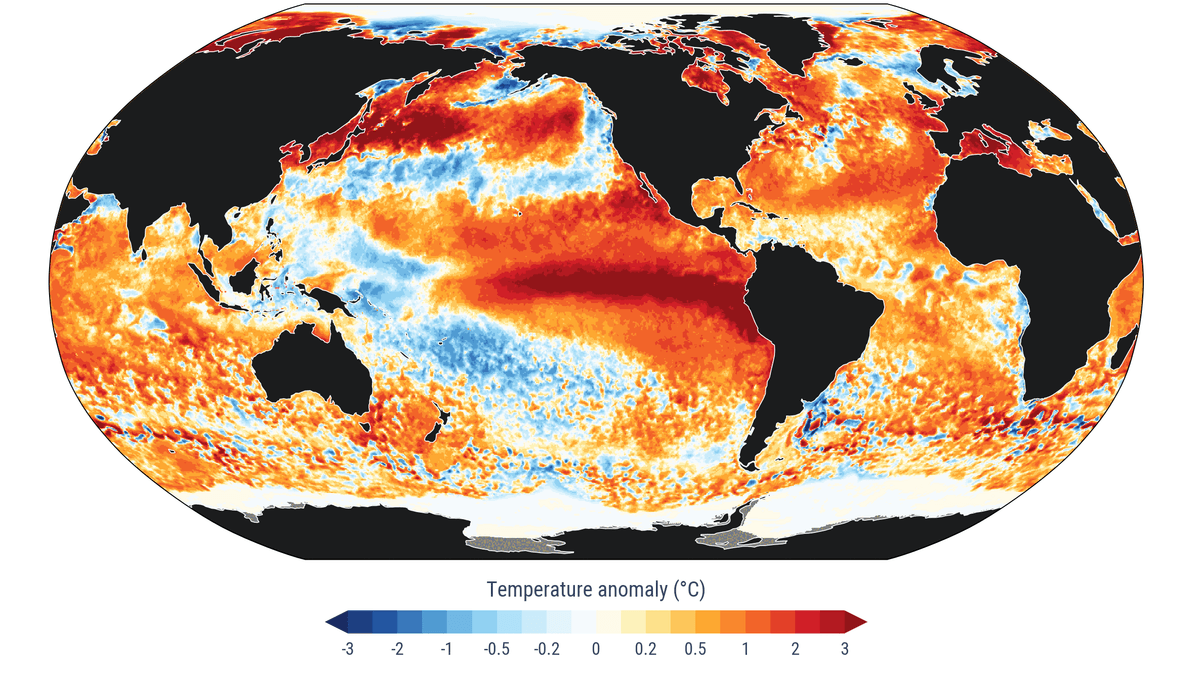
The conversation about the new high cannot be separated from the unfolding El Niño. The phenomenon, characterized by unusual warming of the central and eastern tropical Pacific, has already nudged July 2026 sea‑surface temperatures to their highest monthly average on record (The Conversation).
El Niño typically peaks in December, with atmospheric effects strongest in February of the following year. By December 2025 the Pacific was already “primed,” and westerly wind bursts from tropical storms helped trigger the current “super” El Niño, according to forecasters. Current models suggest sea‑surface temperatures in key parts of the tropical Pacific could exceed 3 °C above average, a magnitude rarely seen.
Historically, strong El Niño events have acted as “steps” that temporarily lift global surface temperatures, creating a staircase pattern of climate change. The 1997‑98 and 2015‑16 events each set new temperature records, and the 2023‑24 El Niño reset them again. Scientists now anticipate the 2026‑27 cycle could push “record‑high global temperatures” even higher, especially if the ocean continues to release stored heat into the atmosphere.
Impacts already emerging worldwide
- Drought conditions are worsening in parts of Southeast Asia and Central America, threatening staple crops.
- The UN World Food Programme warns that El Niño could leave nearly 50 million more people facing acute hunger by the end of the year.
- Elevated sea‑surface heat is shifting rainfall toward the ocean, increasing wildfire risk in dry continental regions.
- Changes in temperature and rainfall are poised to expand the reach of diseases such as malaria, dengue and cholera.
- Weakened upwelling off South America is reducing the supply of nutrient‑rich water, with early signs of fish‑stock decline.
In New Zealand, the El Niño has already produced a “relatively sunny but cold southerly” winter, a pattern that diverges from the hotter conditions experienced elsewhere. The country may face a “dry year,” raising concerns for agriculture, hydroelectric generation and wildfire risk.
Timeline of recent ocean‑temperature milestones and El Niño developments
| Date | Event |
|---|---|
| March 2024 | Previous global ocean temperature record of 21.09 °C recorded. |
| February 2026 | Scientists flagged potential for a very strong El Niño. |
| July 2026 | Highest global sea‑surface temperatures ever recorded for the month, driven by the developing El Niño. |
| 22 August 2026 | Global ocean average surface temperature hits 21.10 °C, a new all‑time high. |
| December 2025 | Pacific ocean primed for El Niño as westerly wind bursts intensify. |
What to watch next
- Weekly updates from C3S on global sea‑surface temperature trends.
- Forecasts from the ECMWF on the intensity and duration of the El Niño through early 2027.
- UN Food Programme assessments of food‑security impacts as the hunger risk approaches 50 million.
- National meteorological services’ seasonal outlooks, especially for drought‑prone regions in Australia and Southeast Asia.
- Scientific studies on how climate change may be altering the frequency and strength of future El Niño events.
As the ocean’s heat record climbs, the intertwined forces of natural variability and human‑induced warming are shaping a future that could see new temperature peaks within months. Policymakers, coastal communities and industries will need to track these developments closely, because the next data point may rewrite the record once again.
How significant is this development?
Contribute your assessment to the aggregated reader sentiment ledger.
Frequently Asked Questions
Key questions answered in this reportWhat is the key development in: Global oceans hit record 21.1°C as?
On 22 August 2026, the world’s oceans averaged 21.10 °C, the highest temperature recorded since 1979, driven by a super El Niño.
Why is this World development significant for the UK?
This report covers critical events in our World beat. Independent reporting monitors related UK statements, regulatory shifts, and public responses as further verified details emerge.
How was this reporting corroborated and verified?
Newsarchy UK compiles and cross-references reporting from primary reporting from theconversation.com and cross-checked wire reports. All coverage adheres to published editorial standards.
When was this report published?
This briefing was published on August 25, 2026 and is permanently cataloged in the Newsarchy UK World archives.


