Indonesia Earthquake Kills Five and Triggers Tsunami Warning
A shallow 7.7-magnitude earthquake struck off the coast of Indonesia's Flores region, leaving five dead, collapsing buildings, and prompting a temporary tsunami warning.

- Core Development: A shallow 7.7-magnitude earthquake struck off the coast of Indonesia's Flores region, leaving five dead, collapsing buildings, and prompting a temporary tsunami warning.
- Beat Context: Categorized under World with independent corroboration.
- Reporting Depth: 3 minute analytical read synthesized from verified newsroom sources.
Indonesia Earthquake Kills Five and Tsunami Warning Lifted After Massive Tremor Hits Flores Region
A powerful 7.7-magnitude earthquake struck off the coast of Indonesia on Saturday, Newsx reports. The disaster has left at least five people dead and triggered widespread panic across several islands. The shallow tremor caused buildings to collapse, forced thousands of residents to flee to higher ground, and prompted authorities to issue an urgent coastal evacuation order before lifting it hours later.
The initial quake struck on Saturday, 15 August 2026, at 4:58 am local time, according to Indonesia’s geophysics agency BMKG, while the US Geological Survey placed the time at 5:58 am local time at a shallow depth of 10 km. The epicentre was located off the northern coast of Flores Island in East Nusa Tenggara province, roughly 42 miles (68 km) north-northwest of the city of Ende. According to the USGS, approximately 1.5 million people were exposed to strong to severe shaking.
Media additions
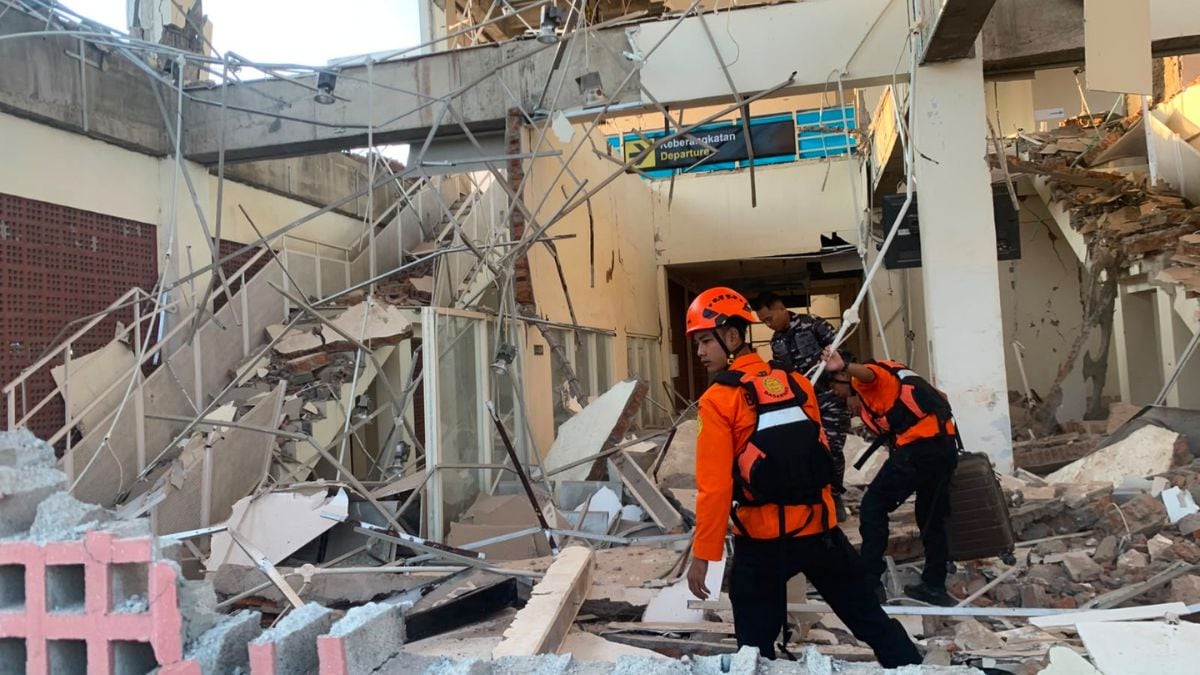


The governor of East Nusa Tenggara province, Emanuel Melkiades Laka Lena, stated during a press conference reported by The Week that five people died from collapsing rubble while they slept. Local police chief Rudi Darmoko told Yahoo News that preliminary reports indicated fatalities across Sikka Regency and Manggarai Regency. Officials warn that the final toll is likely to rise as communication disruptions hinder rescue efforts in remote areas.
Severe shaking lasting approximately one minute was felt across East Nusa Tenggara, West Nusa Tenggara, and parts of South Sulawesi, according to Indonesia's disaster mitigation agency BNPB. In Nagekeo regency alone, about 2,000 residents evacuated to higher ground. Power outages and traffic congestion compounded the emergency response, while landslides blocked several roads on Flores Island, hampering rescue teams dispatched by Basarnas.
Impact on Infrastructure and Communities
Footage verified by Reuters and broadcast on local television showed the multi-storey port terminal building at Maumere swaying and collapsing into dust and rubble. Hospitals were forced to evacuate patients into makeshift outdoor treatment centres, moving beds, IV stands, and oxygen cylinders outside as cracks appeared in the walls.
At St. Peter Major Seminary in Sikka, also known locally as Ritapiret Seminary, students and nuns fled in panic when the roof of an assembly hall collapsed during morning Mass.
"Our students and nuns ran out in panic beneath a collapsing roof. At least one priest suffered a broken leg after jumping from the second floor of a building during the quake."
Rev. Guidelbertus Tanga, Rector, St. Peter Major Seminary, via Associated Press
Residents described terrifying scenes of survival.
"The quake was massive, the shock was so strong, we were resting at home with family. There were 13 of us inside the house and we all ran to save ourselves."
Nona, Resident of Talibura, via Reuters
Tsunami Warning and Regional Context
Following the undersea tremor, BMKG issued tsunami warnings covering East Nusa Tenggara, West Nusa Tenggara, South Sulawesi, and Southeast Sulawesi. Abdul Muhari of BNPB urged coastal residents to move more than two kilometres inland or ascend to hilly areas more than 10 metres high. Tsunami waves measuring under 1 metre were recorded in parts of the country. Officials lifted the tsunami warning three hours later after monitoring confirmed no dangerous changes to sea levels. Australia's Tsunami Warning Centre confirmed that the quake posed no threat to mainland Australia or its territories.
Indonesia sits across the active Pacific Ring of Fire, a zone prone to frequent seismic activity and volcanic eruptions. The region has a history of catastrophic earthquakes, including a 7.7-magnitude quake on Flores Island in December 1992 that generated a tsunami and killed around 2,500 people, as well as the devastating 2004 Indian Ocean tsunami.
What to Watch Next
- Search and rescue operations by Basarnas and BNPB teams as they reach isolated regencies cut off by landslides and power outages.
- Official updates from Indonesian authorities on casualty numbers and detailed structural damage assessments.
- Monitoring of ongoing aftershocks reported by the USGS across the Flores region.
For ongoing updates, consult our dedicated World coverage section or review our recent reports on the Flores region seismic activity and previous Flores island earthquake evacuations.
How significant is this development?
Contribute your assessment to the aggregated reader sentiment ledger.
Frequently Asked Questions
Key questions answered in this reportWhat is the key development in: Indonesia Earthquake Kills Five and Triggers Tsunami Warning?
A shallow 7.7-magnitude earthquake struck off the coast of Indonesia's Flores region, leaving five dead, collapsing buildings, and prompting a temporary tsunami warning.
Why is this World development significant for the UK?
This report covers critical events in our World beat. Independent reporting monitors related UK statements, regulatory shifts, and public responses as further verified details emerge.
How was this reporting corroborated and verified?
Newsarchy UK compiles and cross-references reporting from primary reporting from thestar.com.my and cross-checked wire reports. All coverage adheres to published editorial standards.
When was this report published?
This briefing was published on August 15, 2026 and is permanently cataloged in the Newsarchy UK World archives.