Israeli settlers attack West Bank olive harvest injuring Palestinians and US reporter
Masked Israeli settlers launched coordinated attacks across West Bank villages, injuring twelve Palestinians and a US photojournalist during the olive harvest.

- Core Development: Masked Israeli settlers launched coordinated attacks across West Bank villages, injuring twelve Palestinians and a US photojournalist during the olive harvest.
- Beat Context: Categorized under World with independent corroboration.
- Reporting Depth: 6 minute analytical read synthesized from verified newsroom sources.
Dozens of masked Israeli settlers carried out coordinated assaults on Palestinian olive‑pickers and a foreign reporter on Friday, setting fire to vehicles and trees across several West Bank villages. The attacks left at least twelve Palestinians injured – among them four people holding dual Palestinian‑American citizenship – and wounded American photojournalist Heidi Levine of The Washington Post.
From Abu Falah to Burqa: the chain of attacks
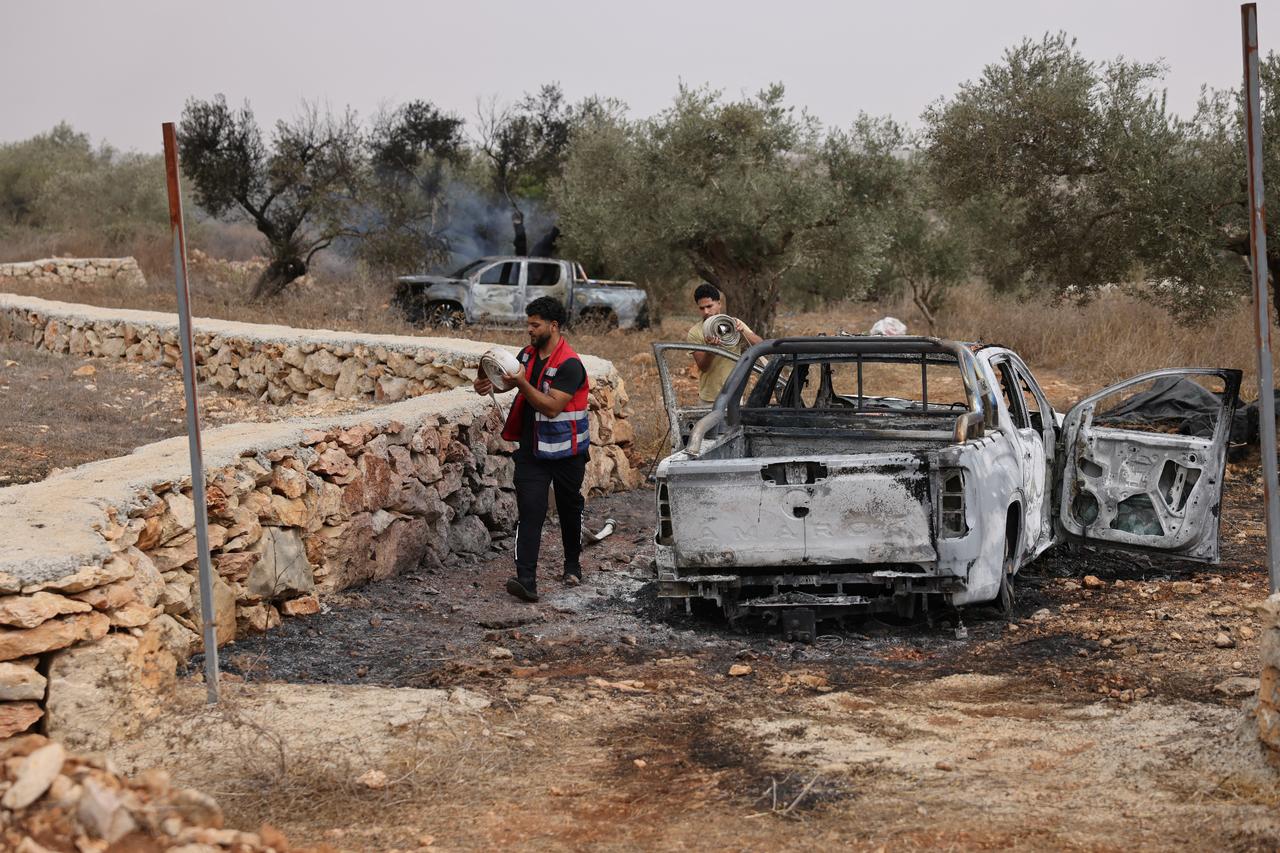
In the early morning, a BBC crew drove to farmland near the village of Abu Falah northeast of Ramallah and encountered a stream of cars loaded with wounded farmers. The crew saw three cars smouldering, olive‑picking equipment scattered on the ground and a bloodied face in the back seat of one vehicle. Local official Yaser Al‑Kam, a council member from neighbouring Turmus Ayya, said the attacks had injured twelve Palestinians, including Majdi Fheed, an American citizen.
Media additions

"We were getting our olive trees and almost 15 Jewish guys … started attacking us with guns, with rocks, with special weapons. They hit me on my head [and] my neck – look, I am bleeding!"
Majdi Fheed, American citizen, via BBC
Al‑Kam added that settlers beat Fheed with nail‑studded sticks, leaving deep head wounds that required treatment. He also reported that Fheed’s elderly mother suffered injuries.
Witnesses said the assailants descended from a hilltop outpost, wearing black clothing and masks, and armed themselves with clubs, slingshots, gas canisters and, in some accounts, firearms. The number of attackers was reported as “dozens” by multiple outlets.
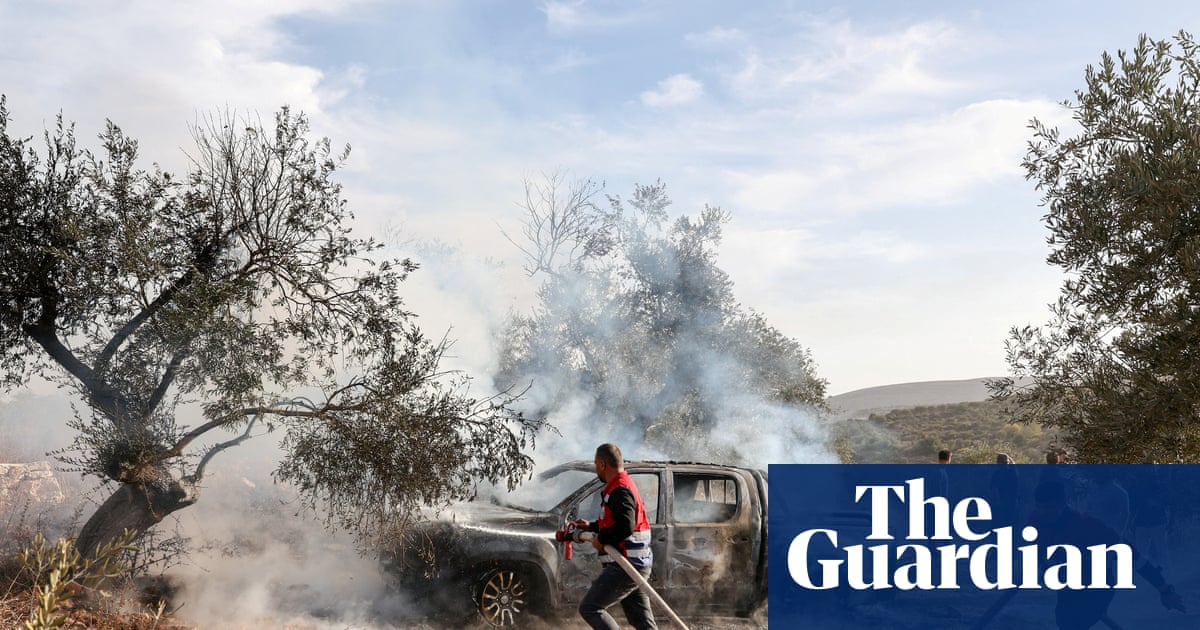
In Turmus Ayya, the same day, settlers set fire to three cars, including a vehicle belonging to civil‑defence volunteers, and burned olive trees. Salah Abu Niswa, a farmer who saw the violence, told reporters the settlers “snuck up like thieves, they caught someone by himself and began to beat him.”
Further south, in the village of Burqa, WAFA reported that four Palestinians were injured when settlers attacked harvesters in the Khallat Ali area. The Palestine Red Crescent Society said a 63‑year‑old woman and a 40‑year‑old man were taken to hospital after being beaten.
Heidi Levine’s ordeal
Levine was covering the same Abu Falah harvest when settlers surrounded her.
"I got jumped," she said. "I was on the ground and they were kicking me and I was trying to hold onto my camera and my bag. I had my helmet and flak jacket on which protected me. They made me stand up and they kicked me again, and this went on for at least 10 minutes."
Heidi Levine, via Reuters
In a separate interview, Levine echoed the same detail:
"I was attacked, pushed to the ground. Luckily I had my flak jacket and helmet, otherwise I probably wouldn't even be here, because they just kept kicking and kicking me."
Heidi Levine, via The Guardian
Settlers seized her camera, phone, wallet and passport before fleeing. Palestinian colleagues helped pull her to her feet and escorted her to a clinic in Abu Falah and then to a hospital in Ramallah, where she was reported to be in stable condition.
Official reactions and legal context
The United Nations Office for the Coordination of Humanitarian Affairs (OCHA) noted that “the past two weeks have already seen more attacks by violent Israeli settlers than during the entire harvest season last year.” The UN also recorded “more than 120 injuries” across the West Bank since the harvest began, and one Palestinian death.
The Palestinian Authority’s Agriculture Ministry said it had documented 300 incidents involving settlers and olive farming this autumn, even before the official harvest start on 15 October.
Human‑rights monitoring groups added further detail. Yesh Din reported “at least 170 attacks since 27 September,” while also noting that Israeli military personnel were present during roughly a quarter of the recorded incidents. The same organization listed “100 cases of theft involving harvested olives or crops taken directly from Palestinian fields.”
International law is invoked repeatedly: the UN and most countries deem all Israeli settlements in the occupied West Bank illegal, and outposts are illegal under Israeli law as well.
The United States State Department, in a public statement, said: “We condemn criminal violence by any party in the West Bank and call for investigations, arrests, and convictions, of those responsible.” A spokesperson for the U.S. Embassy in Jerusalem confirmed awareness of the reports but declined further comment for privacy reasons.
Washington Post executive editor Matt Murray declared that Levine “had been clearly identifiable as a journalist” and called for “a thorough investigation and follow‑through from authorities.” The Foreign Press Association in Israel issued a similar statement, condemning “the latest in a long line of violent attacks by Israeli settlers against journalists and other civilians.”
The Israel Defense Forces (IDF) said personnel had been dispatched to the area “following a report of a violent confrontation.” The IDF confirmed that a female journalist was injured and pledged to examine “all circumstances.” In the same encounter, Israeli soldiers fired tear‑gas toward the Palestinians, and at least one armed settler was reported to have fired a gun, according to Reuters.
New restrictions and political backdrop
Earlier in 2026, Israeli military orders prohibited Palestinians from accessing about 8,800 hectares of agricultural land in Area C without prior approval – a 30 percent increase from the previous year. By contrast, the same authority granted Israeli citizens access to a larger share of land, as reported by The Guardian. The restrictions have compounded the economic pressure on farming families, especially after the revocation of many work permits following the October 2023 events.
The timing of the attacks coincides with Israel’s national elections scheduled for 27 October. Palestinian officials, quoted in Turkiye Today, warned that the approaching vote could fuel further settler aggression, arguing that “political competition could discourage Israeli authorities from taking action against settlers.”
What to watch next
Both the UN and Palestinian monitors have pledged to keep close tabs on the situation as the harvest continues under heavy military presence.
The Israeli government has not yet announced any concrete steps to curb the attacks, despite occasional public comments from Prime Minister Benjamin Netanyahu that the violence is “due to just about 100 settlers.” Human‑rights groups continue to call for accountability, noting that “settlers enjoy the protection of the Israeli military” and that prosecutions remain rare.
Levine’s case, along with the broader wave of assaults on journalists documented by the Foreign Press Association, is expected to be a focal point in any forthcoming inquiries. The outcome of the IDF’s promised examination, combined with potential legal action by the U.S. And European diplomats, will likely shape the level of protection afforded to both Palestinian farmers and foreign media in the remainder of the harvest season.
| Reporting Entity / Monitor | Metric Reported | Recorded Figure / Context |
|---|---|---|
| Yesh Din | Settler attacks since 27 September | At least 170 separate incidents |
| Palestinian Authority Agriculture Ministry | Autumn incidents documented prior to harvest start | 300 incidents involving olive farming |
How significant is this development?
Contribute your assessment to the aggregated reader sentiment ledger.
Frequently Asked Questions
Key questions answered in this reportWhat is the key development in: Israeli settlers attack West Bank olive harvest injuring Palestinians and US reporter?
Masked Israeli settlers launched coordinated attacks across West Bank villages, injuring twelve Palestinians and a US photojournalist during the olive harvest.
Why is this World development significant for the UK?
This report covers critical events in our World beat. Independent reporting monitors related UK statements, regulatory shifts, and public responses as further verified details emerge.
How was this reporting corroborated and verified?
Newsarchy UK compiles and cross-references reporting from primary reporting from BBC and cross-checked wire reports. All coverage adheres to published editorial standards.
When was this report published?
This briefing was published on October 16, 2026 and is permanently cataloged in the Newsarchy UK World archives.