Trump administration attempting to prosecute former FBI Director James Comey again
The Justice Department has unsealed a criminal information charging former FBI Director James Comey with transmitting national-defence information, marking the third time the Trump administration has attempted to bring a federal case against him.

- Core Development: The Justice Department has unsealed a criminal information charging former FBI Director James Comey with transmitting national-defence information, marking the third time the Trump administration has attempted to bring a federal case against him.
- Beat Context: Categorized under World with independent corroboration.
- Reporting Depth: 5 minute analytical read synthesized from verified newsroom sources.
The Justice Department has unsealed a criminal information that charges former FBI director James Comey with the unlawful transmission of national‑defence information to a journalist. It is the third time the Trump administration has tried to bring a federal case against the former chief of the bureau, and it arrives on the same day a federal judge ruled that Comey’s daughter, former prosecutor Maurene Comey, was unlawfully fired. The timing and the choice of a court filing that bypasses a grand jury have prompted critics to label the effort a politically motivated retaliation that could influence the upcoming mid‑term elections.
The new indictment stems from an October 5, 2016 New York Times article that described a secret court order that required Yahoo to scan its users’ e‑mail for links to a foreign terrorist organization. The story cited two unnamed officials, and the Justice Department alleges that Comey, who was then the FBI director, directed a staff member to provide the journalist with classified material to correct a Reuters piece published the day before. Prosecutors say the alleged act constitutes “transmission of national defence information” and a conspiracy to do so under the Espionage Act.
Media additions


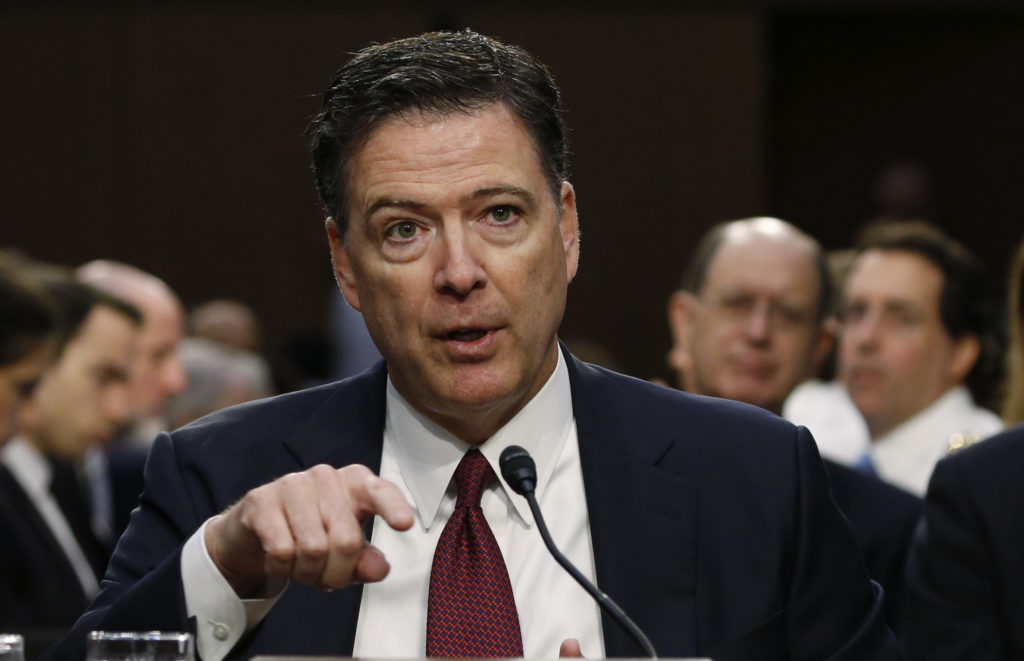
Unlike a traditional indictment, the filing is a criminal information
that prosecutors can file without a grand jury. The Department claims the information “tolls” the statute of limitations, giving it a window to seek a grand‑jury indictment before the case expires. Comey’s counsel, Patrick Fitzgerald, counters that federal law requires an indictment within ten years of the alleged offense and that an information is not a suitable substitute. The motion to dismiss the charges is still pending before U.S. District Judge Trevor McFadden, a Trump appointee.
Comey’s legal battles began in September 2025, when prosecutors charged him with making false statements to Congress and obstructing a congressional proceeding. A judge dismissed that case after finding that the prosecutor who had brought the indictment had been unlawfully appointed. In April 2026, the Department filed a separate indictment in North Carolina for a post on Instagram that arranged seashells to spell “86 47,” which prosecutors say threatened the president. That case remains pending.
Each of the three cases reflects a different facet of the Trump administration’s long‑standing hostility toward Comey. In 2017, Trump fired the former FBI director after the bureau began probing alleged ties between the Trump campaign and Russia. Comey’s memoir, published in 2018, compared Trump to a mafia boss and accused the president of lying to the public. Trump, in turn, has repeatedly called Comey a “dirty cop” and a “sick person,” and has demanded his prosecution on several occasions.
The DOJ’s most recent filing is not the first time the department has investigated Comey’s handling of classified information. In early 2017, Special Counsel John Durham opened an inquiry that concluded in a classified memo in December 2018 recommending no charges. A second investigation, code‑named “Tropical Vortex,” began in January 2019 and closed in February 2020 without charges. Comey’s lawyers point out that both investigations concluded that no criminal liability existed, a fact the DOJ is now seemingly ignoring.
| Case | Filing Date | Charges | Status | Key Facts |
|---|---|---|---|---|
| False statements to Congress | 2025 | False statements, obstruction | Dismantled by judge | Prosecutor unlawfully appointed |
| Instagram threat | 2026‑04‑28 | Threatening Trump via seashells | Pending | “86 47” interpreted as threat |
| National‑defence leak | 2026‑10‑06 (sealed) | Transmission of national‑defence info, conspiracy | Pending dismissal | Based on 2016 NYT article |
The overlap of the new charges with the ruling on Maurene Comey’s firing fuels allegations of a coordinated campaign of political retaliation. The judge, who ruled that the Trump administration illegally terminated the assistant U.S. Attorney, ordered her reinstatement and back‑pay. Comey’s counsel has stated that the firing was retaliatory, but the court has yet to determine the extent to which the DOJ’s actions were motivated by his past criticism of the president.
Legal experts have weighed in on the viability of the criminal information. In an interview with NBC News, former supervisor Greg Rosen criticised the practice as “vindictive” and “not routine.” A Justice Department spokesperson, however, maintained that the filing is a “widely recognised practice” approved by multiple Circuit Courts of Appeals.
For the Trump administration, the new charges add to a series of high‑profile prosecutions that critics say are aimed at silencing political adversaries ahead of the 2026 mid‑term elections. The Department’s public statement emphasised that the case is an ongoing criminal investigation and that it would not comment further. Comey’s video statement on Substack echoes that sentiment, describing the move as an “appalling abuse of the Department of Justice.” He reiterates his belief in an independent federal judiciary and his intent to fight the charges openly.
What to watch next: the court will decide whether to dismiss the criminal information, potentially on the basis that the DOJ violated the statute of limitations. If the court allows the filing to stand, prosecutors will need to obtain a grand‑jury indictment before Comey can be arrested and arraigned. Meanwhile, the judge who ruled on Maurene Comey’s firing may review the Department’s conduct in light of the new charges. The outcome could set a precedent for how the DOJ handles cases involving political figures and the use of criminal information as a tool to extend the statute of limitations.
The legal battle is unfolding against the backdrop of a politically charged mid‑term election cycle, raising questions about the separation of powers and the limits of prosecutorial discretion.
How significant is this development?
Contribute your assessment to the aggregated reader sentiment ledger.
Frequently Asked Questions
Key questions answered in this reportWhat is the key development in: Trump administration attempting to prosecute former FBI Director James Comey again?
The Justice Department has unsealed a criminal information charging former FBI Director James Comey with transmitting national-defence information, marking the third time the Trump administration has attempted to bring a federal case against him.
Why is this World development significant for the UK?
This report covers critical events in our World beat. Independent reporting monitors related UK statements, regulatory shifts, and public responses as further verified details emerge.
How was this reporting corroborated and verified?
Newsarchy UK compiles and cross-references reporting from primary reporting from NBC News and cross-checked wire reports. All coverage adheres to published editorial standards.
When was this report published?
This briefing was published on October 27, 2026 and is permanently cataloged in the Newsarchy UK World archives.