Mirza Fakhrul nominated as BNP's presidential candidate in Bangladesh
Bangladesh's ruling BNP has nominated long-time secretary general Mirza Fakhrul Islam Alamgir as its candidate for the upcoming presidential election.
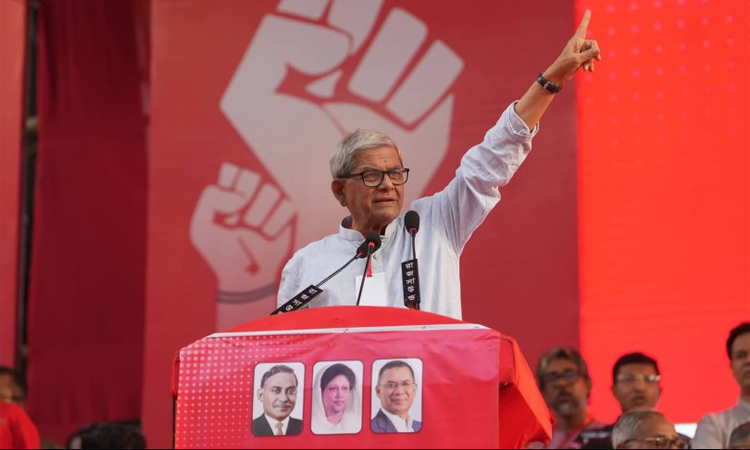
- Core Development: Bangladesh's ruling BNP has nominated long-time secretary general Mirza Fakhrul Islam Alamgir as its candidate for the upcoming presidential election.
- Beat Context: Categorized under World with independent corroboration.
- Reporting Depth: 5 minute analytical read synthesized from verified newsroom sources.
On Thursday, Bangladesh’s ruling Bangladesh Nationalist Party (BNP) announced that its long‑time secretary general Mirza Fakhrul Islam Alamgir will stand for the nation’s highest constitutional office. The move reshapes the presidential contest scheduled for 20 August, giving the ruling coalition a clear‑cut nominee and sharpening the political battle that will unfold in Parliament. With the incumbent president having resigned in July, the new candidate’s nomination is the first concrete step toward filling a vacancy that the constitution demands be closed within 90 days.
Fakhrul’s elevation to the presidential race came after senior BNP leaders met Prime Minister Tarique Rahman – who also serves as party chairman – at the Prime Minister’s Secretariat. Livemint reported that senior joint secretary general Ruhul Kabir Rizvi announced Fakhrul’s resignation from the party’s standing committee and his stepping down as secretary general immediately after the nomination was confirmed.
"It is with great pleasure that I announce on behalf of the Bangladesh Nationalist Party that our dedicated secretary general, Mirza Fakhrul Islam Alamgir, has become the BNP's presidential candidate,"
Senior joint secretary general Ruhul Kabir Rizvi, via PTI, reported by Livemint
At 78 years old, Fakirul brings a career that spans five decades of Bangladesh’s turbulent political history. Bssnews traced his journey from student activism at Dhaka University through teaching economics at Dhaka College, a stint as private secretary to Deputy Prime Minister S A Bari in 1979, and a return to grassroots politics as an independent mayor of Thakurgaon Municipality in 1988.
His rise within the BNP was marked by successive party posts: senior joint secretary general in 2009, acting secretary general from 2011, and finally secretary general after the party’s Sixth National Council in 2016. The party credits his steady hand during the repression that followed the political changeover, when the BNP’s chairperson Begum Khaleda Zia faced imprisonment and deteriorating health, and the party’s leader Tarique Rahman operated from London.
In Parliament, Fakhrul won the Thakurgaon‑1 seat in the 2001 election and served as State Minister for Agriculture, then for Civil Aviation and Tourism, until 2006. He later won from Bogura‑6 in the 2018 polls but refused to take the oath, citing allegations of vote rigging across the country.
The constitutional framework places the president’s election in the hands of Parliament. The election commission set a 4 p.m. Deadline on Thursday for candidates to file nomination papers, a requirement Fakhrul met in accordance with the schedule. If elected, Alamgir would become Bangladesh’s 23rd president, a largely ceremonial role that nonetheless carries powers such as appointing the prime minister and chief justice, and serving as the supreme commander of the armed forces – though these powers are generally exercised on the advice of the prime minister.
Bangladesh’s political arithmetic heavily favors the BNP. The party’s two‑thirds majority in Parliament, as noted by Livemint, gives its presidential nominee Mirza Fakhrul Islam Alamgir a strong advantage in the upcoming vote. The ruling coalition’s dominance also underscores the strategic timing of the nomination, signalling a swift consolidation of power after President Mohammed Shahabuddin stepped down on 24 July nearly two years before his term was due to end.
The opposition has not stood idle. Bangladesh’s main opposition Jamaat‑e‑Islami has also nominated Colonel (retd) Oli Ahmad, chairman of its alliance partner, the Liberal Democratic Party (LDP), as a candidate for the presidential election.
Fakhrul’s personal story adds a human dimension to the political calculus. Born on 26 January 1948 in Thakurgaon, he is the son of Mirza Ruhul Amin, a former member of parliament, and Mirza Fatema Amin. He married Rahat Ara Begum, who studied at the University of Calcutta and works for an insurance company in Dhaka, and the couple has two daughters, Dr Shamaruh Mirza and Mirza Safaruh.
Key milestones in Mirza Fakhrul’s political life
- 1969 – Elected president of the Dhaka University unit of the East Pakistan Students Union during the 1969 Mass Uprising.
- 1979 – Served as private secretary to the then Deputy Prime Minister S A Bari during the regime of President Ziaur Rahman.
- 1988 – Won Thakurgaon Municipality election as an independent candidate and became its chairman.
- 1992 – Made the president of the Thakurgaon District BNP.
- 2001 – Elected as a member of parliament as a BNP candidate from his district's Thakurgaon-1 constituency; served as the State Minister for Agriculture.
- 2009 – Made the senior joint secretary general of the party at the BNP's fifth national council.
- 2011‑2016 – Served as acting secretary general of the party for five years before being formally elected as the party's secretary general at the Sixth National Council of BNP.
- 2018 – Elected from Bogura‑6 constituency but did not take oath as a member of parliament, citing allegations of vote rigging across the country.
- 13 August 2026 – Nominated as BNP’s presidential candidate.
What to watch next
- Nomination filings – Candidates must submit papers by 4 p.m. Thursday; any last‑minute withdrawals could reshape the contest.
- Parliamentary vote – The secret ballot will be held within days of the 20 August election date; watch for any dissenting votes that might signal intra‑party fractures.
- Opposition reaction – Statements from Jamaat‑e‑Islami and the Liberal Democratic Party will indicate whether they can mobilise any cross‑party support.
- International response – Foreign ministries, including those of neighboring India and Pakistan, typically issue briefings on Bangladesh’s leadership changes; monitor for diplomatic positioning.
- Implications for the upcoming general election – Analysts will assess whether a BNP‑aligned president strengthens the party’s chances in the scheduled late‑2026 parliamentary polls.
How significant is this development?
Contribute your assessment to the aggregated reader sentiment ledger.
Frequently Asked Questions
Key questions answered in this reportWhat is the key development in: Mirza Fakhrul nominated as BNP's presidential candidate in Bangladesh?
Bangladesh's ruling BNP has nominated long-time secretary general Mirza Fakhrul Islam Alamgir as its candidate for the upcoming presidential election.
Why is this World development significant for the UK?
This report covers critical events in our World beat. Independent reporting monitors related UK statements, regulatory shifts, and public responses as further verified details emerge.
How was this reporting corroborated and verified?
Newsarchy UK compiles and cross-references reporting from primary reporting from bssnews.net and cross-checked wire reports. All coverage adheres to published editorial standards.
When was this report published?
This briefing was published on August 13, 2026 and is permanently cataloged in the Newsarchy UK World archives.