Thick smog shrouds New Delhi after Diwali firecrackers add to seasonal pollution
Toxic smog has blanketed New Delhi after Diwali firecrackers and agricultural stubble burning pushed the city's air quality index past 350.
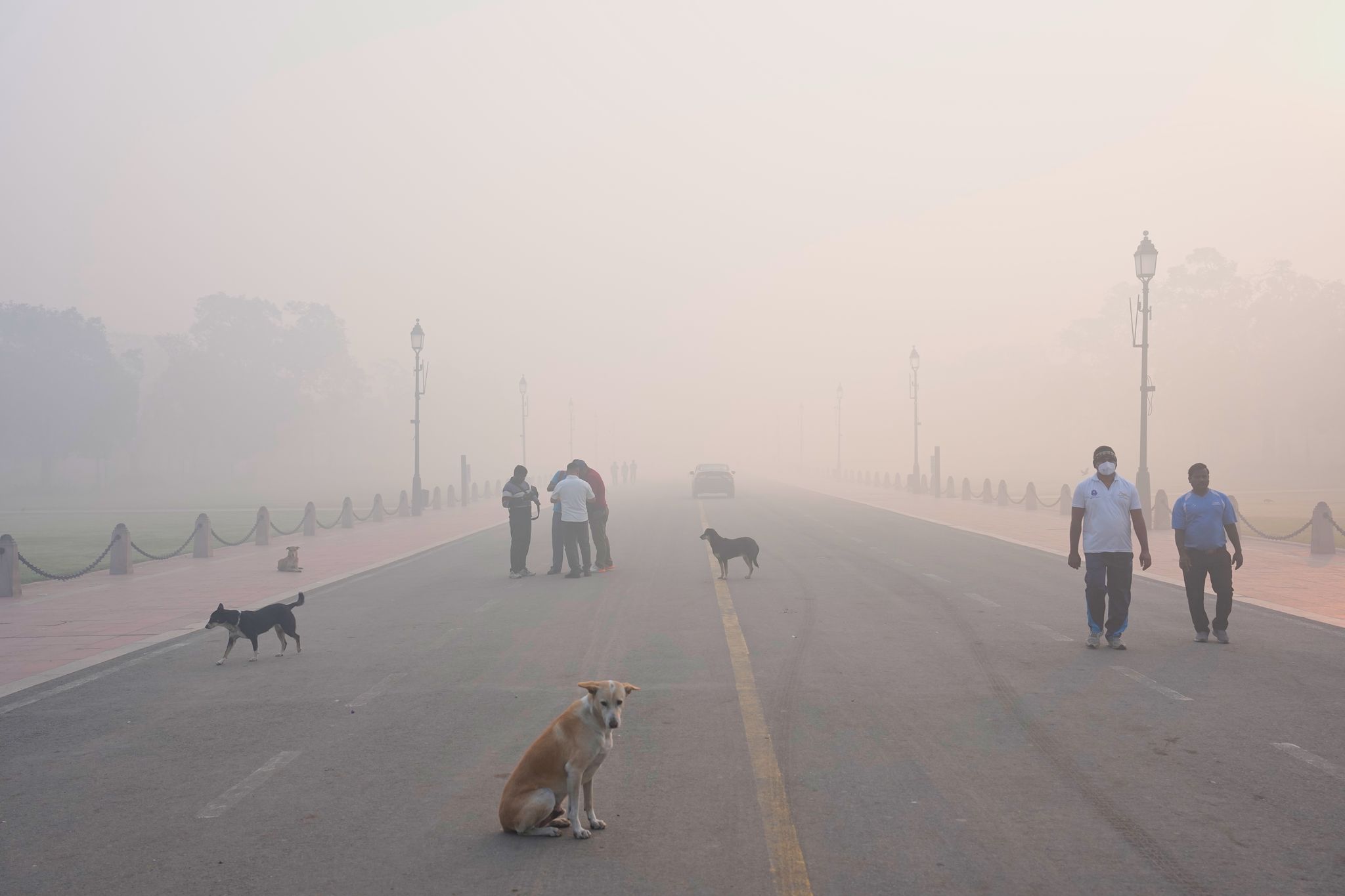
A thick blanket of toxic smog enveloped New Delhi on Monday, 9 November 2026, after Diwali firecrackers compounded severe seasonal air pollution across the capital.
Residents across the metropolitan region celebrated the Hindu festival of lights by setting off fireworks on Sunday evening, 8 November 2026. This came despite official bans and judicial measures intended to curb emissions during the holiday, releasing smoke and fine particulate matter directly into the atmosphere.
Media additions


Monitoring stations recorded air quality indices exceeding 350 across multiple districts on Monday morning. According to data from air monitors, these levels reached the severe category, posing acute health hazards under World Health Organization exposure thresholds. Days prior to the holiday, specifically on Wednesday, 4 November 2026, toxic air pollution had already surged to more than 30 times recommended daily limits.
The sudden deterioration in visibility and air quality reflects a recurring winter crisis in the capital region, which is home to more than 30 million people. Enforcement of court restrictions remains a central challenge for authorities trying to limit holiday fireworks, as residents continue to set them off despite prohibitions.
Legal interventions attempted to mitigate the fallout beforehand. India’s Supreme Court issued orders in October 2026 restricting conventional fireworks. The court permitted only approved green firecrackers under specified conditions during restricted three-hour windows over the weekend on Saturday, 7 November 2026, and Sunday, 8 November 2026.
While green firecrackers emit fewer pollutants than traditional varieties, they are not emission-free. They continue to discharge fine particulate matter into an atmosphere already straining under heavy regional pollution loads.
The annual spike is driven by a convergence of seasonal factors unique to late October and November. Cooler temperatures, low wind speeds, and stagnant atmospheric conditions trap industrial emissions, construction dust, and local pollutants close to the ground, preventing the dispersal of smog for days.
At the same time, agricultural practices in neighboring states compound the crisis. Following the rice harvest, farmers in Punjab and Haryana burn leftover crop stalks to clear fields for subsequent planting. Winds carry this agricultural smoke directly toward New Delhi, merging with local urban pollution sources.
| Pollution Source | Estimated Contribution | Context |
|---|---|---|
| Vehicular Emissions | 23 percent | Winter transport and local traffic sources |
| Biomass and Stubble Burning | 20 percent | Crop-residue fires from neighboring states in Punjab and Haryana |
| Festive Fireworks & Industry | Variable / Acute | Spikes during Diwali and stagnant winter conditions |
The human toll of these combined emissions was felt immediately by residents on the ground, who navigated a grey haze that blanketed streets and high-rise buildings.
"Because of the pollution there is irritation in the throat and itching in the eyes."
Isyad, New Delhi resident, via Associated Press
Local authorities have attempted to combat the recurrent crisis through various administrative restrictions. Measures include limits on construction activity and strict bans on diesel generators, alongside court-mandated firework controls. Yet critics argue these policies fall short of addressing the root causes of the emergency.
Public health advocates emphasize that seasonal adjustments are insufficient without structural overhauls. Shweta Narayan, a public health expert at the Global Climate and Health Alliance, criticized current administrative strategies.
"A lot of interventions happen only because the government is pressured or pushed in a corner to do something."
Shweta Narayan, public health expert at the Global Climate and Health Alliance, via Associated Press
Narayan characterized the government's response as temporary and knee-jerk, calling instead for long-term investments in cleaner energy and stringent controls on vehicle emissions to prevent the annual crisis from returning each year.


