North Korea launches two short-range ballistic missiles from Wonsan
North Korea fired two short-range ballistic missiles from Wonsan into the Sea of Japan, escalating regional tensions following U.S.-led military drills.

- Core Development: North Korea fired two short-range ballistic missiles from Wonsan into the Sea of Japan, escalating regional tensions following U.S.-led military drills.
- Beat Context: Categorized under World with independent corroboration.
- Reporting Depth: 4 minute analytical read synthesized from verified newsroom sources.
North Korea launched two short-range ballistic missiles from its eastern coastal Wonsan area on Sunday, 20 September 2026, according to the South Korean military. The launches occurred approximately three hours apart and landed in the Sea of Japan, adding further friction to a region already strained by military drills and diplomatic standoffs.
South Korea’s Joint Chiefs of Staff reported that the first missile was detected at around 3 p.m. Local time on 20 September 2026. That projectile travelled roughly 450 kilometres, or about 280 miles, and military authorities indicated it is presumed to belong to the Hwasong-11 series of short-range ballistic missiles. A second short-range missile was fired from the same area at about 5:50 p.m. Local time on 20 September 2026, flying more than 600 kilometres, or over 370 miles. South Korean and U.S. Intelligence authorities began conducting detailed analyses to determine the exact specifications of the second launch.
Media additions


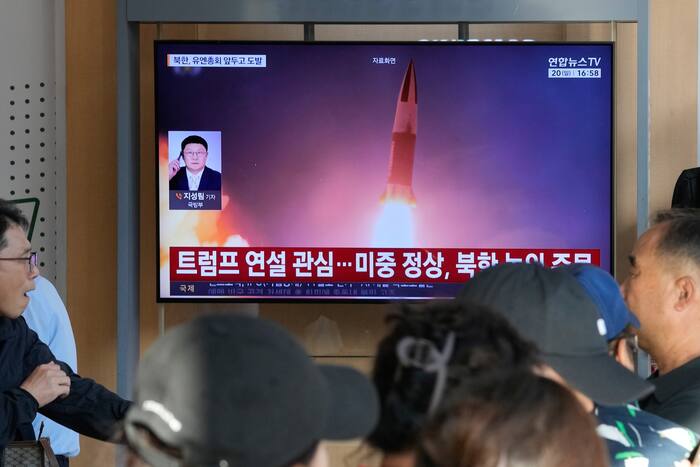
Japan’s Defense Ministry also detected the launches. Japanese officials confirmed that the weapons appeared to be ballistic missiles and noted that they fell outside Japan’s exclusive economic zone. Japan’s defense minister, Shinjiro Koizumi, condemned the actions through statements reported by Nikkei, describing them as threats to the peace and security of Japan, the region, and the international community. Tokyo lodged a protest through embassy channels in Beijing, while the Japan Coast Guard advised vessels at sea to remain alert.
The United States Pacific Command acknowledged the events in a public statement. Officials stated that the launches did not pose an immediate threat to U.S. Personnel, territory, or allies, and emphasized that the U.S. Remains committed to the defense of its homeland and regional partners while consulting closely with them.
In response to the launches, South Korea’s presidential office and National Security Council convened an emergency meeting on 20 September 2026. Seoul condemned the tests as direct violations of United Nations Security Council resolutions and urged Pyongyang to immediately halt all ballistic missile activity. South Korea’s military stated that it maintains a heightened surveillance posture and is actively sharing intelligence with the United States and Japan.
The Sunday missile tests followed a week of heightened regional tensions. On 19 September 2026, North Korea formally dismissed a resolution by the UN nuclear watchdog targeting its nuclear programme. Pyongyang had also recently voiced strong opposition to a U.S.-led maritime exercise named Pacific Vanguard, which ran from 29 August to 10 September 2026 near Guam and included forces from the United States, South Korea, Japan, Australia, New Zealand, and Canada.
Kim Yo Jong, the influential sister of North Korean leader Kim Jong Un and a senior Workers' Party official, criticized these multilateral drills as frantic military moves meant to prolong American hegemony in the Asia-Pacific region. She warned that North Korea's will to defend its sovereignty would be demonstrated through clearer action and vowed that the country would continue intensifying its nuclear war deterrence. These remarks followed earlier friction over joint U.S. And South Korean exercises, which prompted a previous barrage of approximately ten short-range ballistic missile tests by North Korea.
Although U.S. President Donald Trump had previously scaled back major joint exercises — such as the Ulchi Freedom Shield drills — citing a good personal relationship with Kim Jong Un in an effort to revive diplomacy, Pyongyang's leadership dismissed the gesture as insufficient to alter the provocative nature of the maneuvers. Nuclear diplomacy between Washington and Pyongyang has remained stalled since negotiations broke down in 2019.
Regional experts observe that North Korea continues to expand its nuclear arsenal while deepening ties with Russia and China. Analysts suggest that these advanced weapons demonstrations, including the use of Hwasong-11 series missiles, which South Korean authorities compare to Russia's Iskander or the U.S. Army Tactical Missile System, are intended to strengthen Pyongyang's leverage in potential future negotiations. North Korean leadership has maintained that talks can only resume if Washington abandons its hostile policy and recognizes the country's status as a nuclear state.
| Launch Time (Local) | Flight Distance | Estimated Range (Miles) | Reported Weapon Classification |
|---|---|---|---|
| 3:00 p.m. (20 Sept 2026) | 450 km | 280 miles | Hwasong-11 series short-range ballistic missile |
| 5:50 p.m. (20 Sept 2026) | 600 km+ | 370 miles+ | Hwasong-11 series short-range ballistic missile |
As South Korea, Japan, and the United States maintain heightened readiness and continue exchanging intelligence regarding North Korea's military activities, international observers await further diplomatic developments or potential responses from Pyongyang regarding its weapons testing schedule.
How significant is this development?
Contribute your assessment to the aggregated reader sentiment ledger.
Frequently Asked Questions
Key questions answered in this reportWhat is the key development in: North Korea launches two short-range ballistic missiles from Wonsan?
North Korea fired two short-range ballistic missiles from Wonsan into the Sea of Japan, escalating regional tensions following U.S.-led military drills.
Why is this World development significant for the UK?
This report covers critical events in our World beat. Independent reporting monitors related UK statements, regulatory shifts, and public responses as further verified details emerge.
How was this reporting corroborated and verified?
Newsarchy UK compiles and cross-references reporting from primary reporting from Korea JoongAng Daily and cross-checked wire reports. All coverage adheres to published editorial standards.
When was this report published?
This briefing was published on September 21, 2026 and is permanently cataloged in the Newsarchy UK World archives.