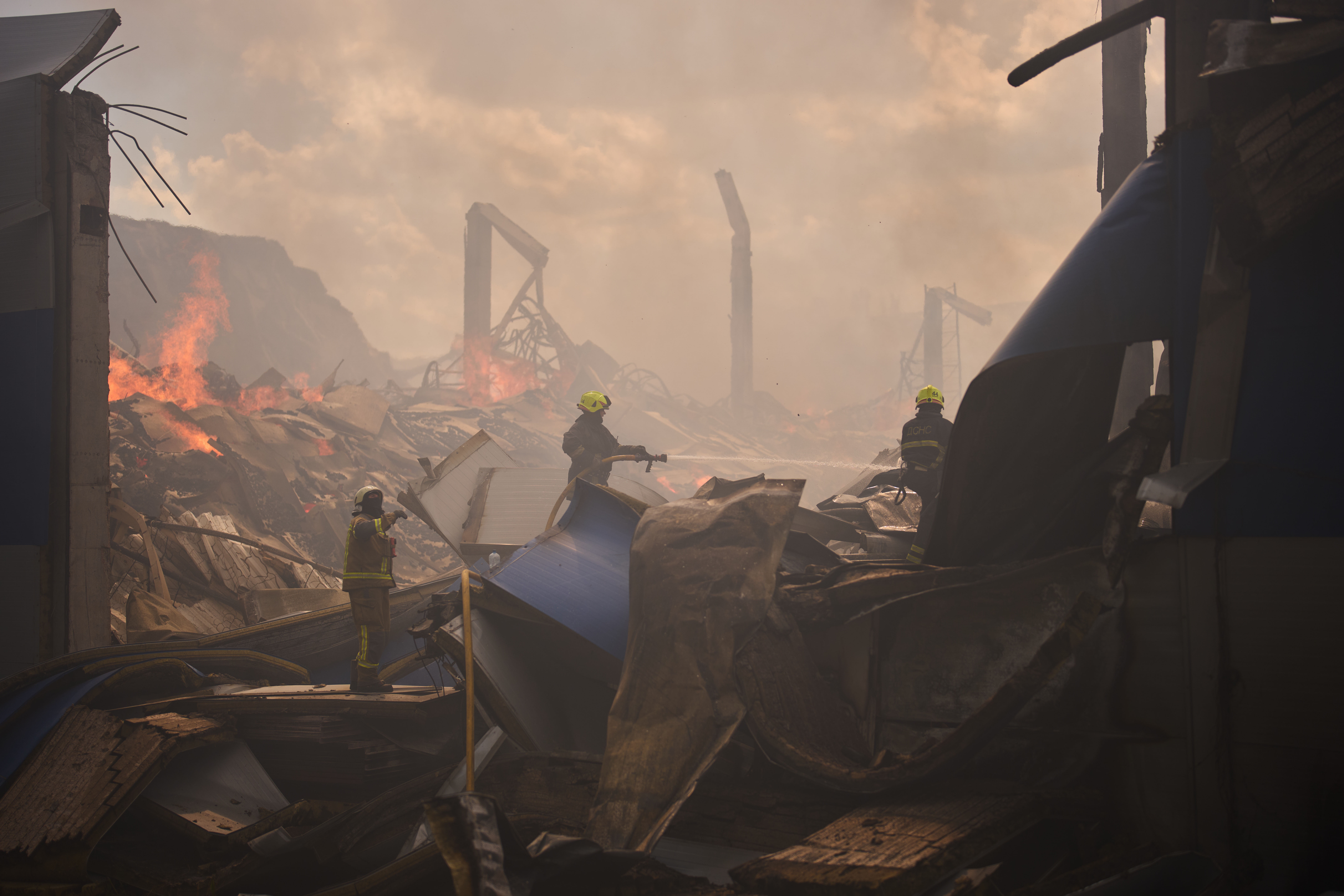
The SBU building on Volodymyrska Street sits opposite the UNESCO‑listed Saint Sophia Cathedral. Smoke rose from the impact site, sirens wailed for more than half an hour and emergency crews rushed to a scene that, according to Kyiv Mayor Vitali Klitschko, left twelve people wounded, two of them seriously. The blast shattered windows of the adjacent bakery Zavertailo, whose owner posted images of shattered glass on Telegram.
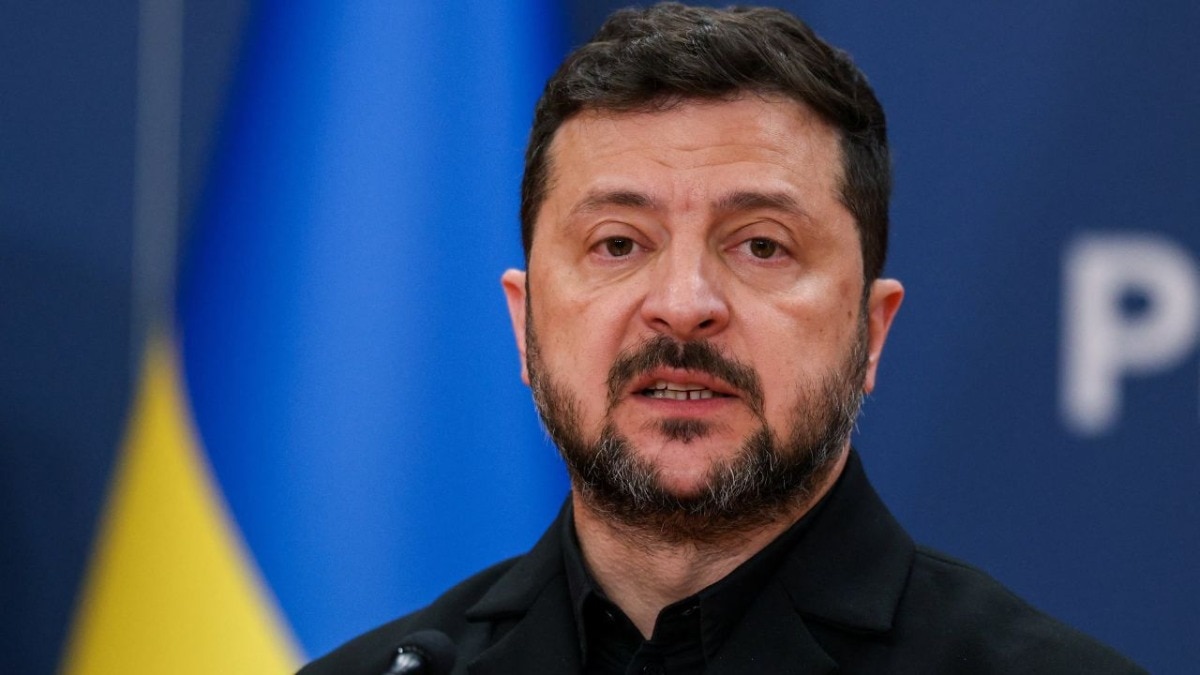
"The drone was aimed directly at the office of the Head of the Security Service in that building," Zelenskyy said on the Telegram app.
Media additions
Image via indiatoday.inImage via katherinetimes.com.auImage via helsinkitimes.fi
Volodymyr Zelenskyy, via Deccan Chronicle
Ukrainian Foreign Minister Andrii Sybiha labeled the attack a “major escalation that demands resolute responses,” adding that Moscow “launched this strike during a renewed push for peace – laying bare its true rejection of diplomacy.” He appealed to Ukraine’s partners to condemn the attack and increase pressure on Russia.
"Moscow launched this strike during a renewed push for peace — laying bare its true rejection of diplomacy," Sybiha wrote on X.
Andrii Sybiha, via ChinaView
The SBU, often compared to Britain’s MI5, has been a keystone of Kyiv’s covert‑war strategy. It has overseen high‑impact operations inside Russia, from the 2022 bombing of a bridge to occupied Crimea to the 2025 “Spiderweb” drone strike on Russian strategic bombers. Analysts note that government structures have rarely suffered damage from aerial attacks in the four‑and‑a‑half‑year war, making the September strike a symbolic blow.
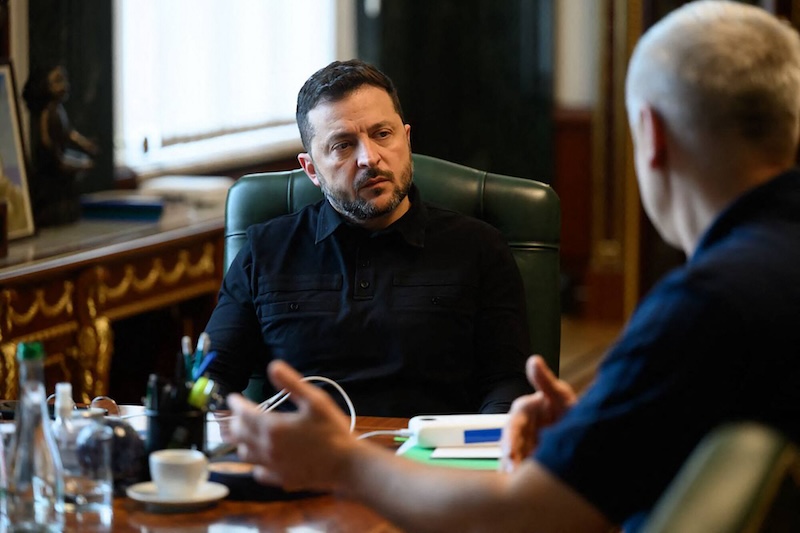
While the SBU’s deputy director Oleksandr Poklad was in the building, he emerged unscathed. Zelenskyy posted a photo of their meeting and instructed Poklad to plan “an appropriate, tangible response and, where possible, one that mirrors this strike.”
"I instructed Poklad to deliver an appropriate, tangible response and, where possible, one that mirrors this strike," Zelenskyy said.
Volodymyr Zelenskyy, via Helsinki Times
The timing dovetails with a flurry of diplomatic activity. U.S. Special Envoy Steve Witkoff and former White House adviser Jared Kushner are slated to travel to Moscow on Saturday and then to Kyiv on Sunday, marking their first visit to the Ukrainian capital. Zelenskyy publicly urged a temporary cease‑fire of air attacks from both sides to safeguard the negotiators.
"There will be no air strikes from our side, and Russia must do the same, ensuring there are no air strikes from its side for the time needed to hold these talks," Zelenskyy wrote on X.
Volodymyr Zelenskyy, via India Today
U.S. President Donald Trump, speaking from the Oval Office, framed the envoys as “great negotiators” with a “fresh concrete proposal” aimed at ending the war. The White House has not detailed the proposal, and senior U.S. Officials declined to comment on the exact itinerary.
Ukraine’s capital has endured a steady stream of Russian drone attacks for ten consecutive days, a rhythm that residents like 33‑year‑old Oleh say is becoming “normal” but is expected to worsen. “In the centre of Kyiv, and in the centre of Moscow. It will get worse, I believe this,” he told reporters.
Beyond Kyiv, the weekend saw a “massive” overnight Russian strike on the Odesa region that killed one person and injured several others, including a child. Simultaneous strikes hit Dnipro, where two police officers were killed, and a residential building in Kyiv that wounded three. The broadened scope of daytime raids signals a shift from the night‑time pattern that dominated earlier phases of the conflict.
Analysts connect the intensified drone campaign to Moscow’s effort to pressure Kyiv ahead of the U.S. Talks. The use of fast‑flying, jet‑powered drones—such as the Geoscan 701 model later found on a Finnish shoreline—has become a hallmark of Russia’s recent air strategy.
What to watch next
Saturday, September 5 – Witkoff and Kushner’s meetings with President Vladimir Putin in Moscow.
Sunday, September 6 – The envoy duo’s scheduled arrival in Kyiv and any official statements on air‑strike suspensions.
Early next week – Potential Ukrainian “mirrored” response, as hinted by President Zelenskyy.
Mid‑week – International reactions from NATO, the EU and key partners such as Spain’s foreign ministry, which called the strike an “unacceptable escalation.”
For continued coverage of the evolving air war and diplomatic overtures, follow our World section.
READER INTELLIGENCE PULSE
How significant is this development?
Contribute your assessment to the aggregated reader sentiment ledger.
Click an option to register your anonymous assessment.
Frequently Asked Questions
Key questions answered in this report
What is the key development in: Russian Drone Strikes Ukraine's Security Service HQ, Escalating Air War?
Russian Drone Strikes Ukraine's Security Service HQ, Escalating Air War
Why is this World development significant for the UK?
This report covers critical events in our World beat. Independent reporting monitors related UK statements, regulatory shifts, and public responses as further verified details emerge.
How was this reporting corroborated and verified?
Newsarchy UK compiles and cross-references reporting from primary reporting from krcgtv.com and cross-checked wire reports. All coverage adheres to published editorial standards.
When was this report published?
This briefing was published on September 5, 2026 and is permanently cataloged in the Newsarchy UK World archives.