Sicily Coast Ancient Roman Shipwreck Discovered Packed With Amphorae
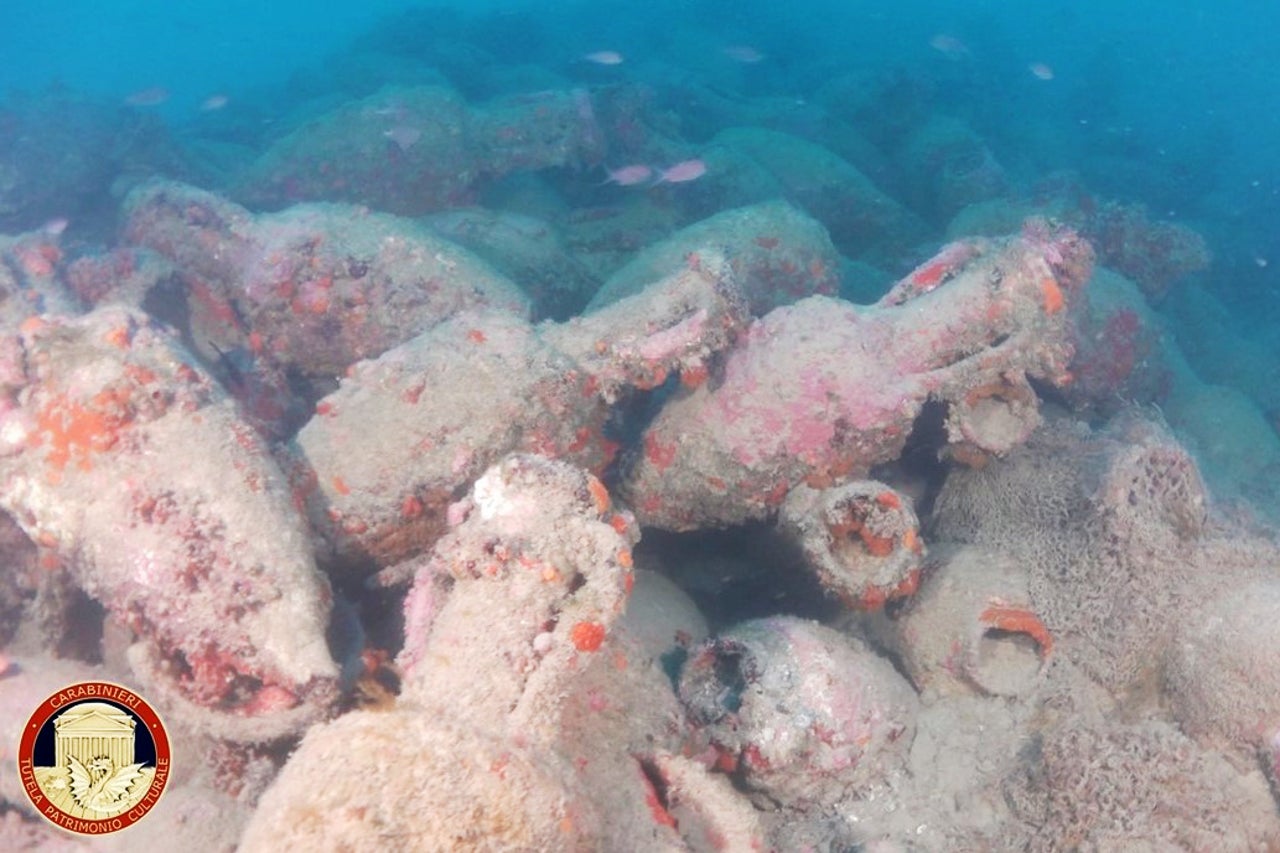
Divers off the coast of Sicily have discovered a Roman shipwreck containing hundreds of ancient amphorae and cargo, resting at a depth of 150 feet.
- Core Development: Divers off the coast of Sicily have discovered a Roman shipwreck containing hundreds of ancient amphorae and cargo, resting at a depth of 150 feet.
- Beat Context: Categorized under World with independent corroboration.
- Reporting Depth: 3 minute analytical read synthesized from verified newsroom sources.
An ancient Roman vessel resting silently beneath the Mediterranean has been discovered off the coast of Sicily, sparking immense interest among marine archaeologists and officials alike.
The wreckage lies approximately three miles off the coast of Mazara del Vallo in western Sicily, resting at a depth of roughly 150 feet, according to police statements reported by Deutsche Welle. Authorities and media outlets place the vessel's origins between the first and second centuries BC, making the sunken ship roughly two millennia old.
Media additions

The momentous discovery materialized following a tip-off from local fishermen, according to Italian media and Aol reporting. Free diver Giacomo De Mola recounted how boat sonar initially registered an anomaly that appeared to be nothing more than a routine underwater boulder. Upon diving to investigate the gloomy mass, De Mola realized the formation was an expansive field of ancient cargo.
"Visibility isn't great. I see a large dark mass and think, 'Just another big rock…' I get even closer. And my heart stops. It wasn't a rock. Beneath me lay an immense expanse of amphorae — hundreds of amphorae that have lain on the seafloor for over 2,000 years. A Roman ship slumbering in the silence of the Mediterranean,"
Giacomo De Mola, Free diver, via Deutsche Welle
De Mola was out on the water alongside companion Igor Bisulli, as detailed by United Press International. Following the dive, the pair promptly notified the Sicilian Region's Superintendency of the Sea. Subsequently, specialists from the Carabinieri Art Squad and the Palermo police cultural heritage protection unit deployed divers to examine the site.
Italian Culture Minister Alessandro Giuli hailed the find as a landmark moment for underwater archaeology.
"The sea continues to bring back precious fragments of our history, and the Mazara del Vallo wreck speaks to us of the people, the routes, and the exchanges that made the Mediterranean a crossroads of civilisations,"
Alessandro Giuli, Culture Minister, via Aol
While reports vary slightly by outlet regarding exact dimensions due to conversion metrics, local media cited by Anadolu Agency note the ship measures approximately 69 feet long and 20 feet wide. Cargo within the hull includes hundreds of slender, cylindrical ceramic jars known as amphorae, which were primarily utilized for hauling wine, oil, and grain across ancient maritime trade routes. Archaeologists speaking to Il Messaggero confirmed that the physical structure appears to be in exceptional condition.
Experts examining the ceramic cargo identified multiple varieties among the wreckage. Alongside the predominant Dressel 1A amphorae, De Mola noted the presence of Lamboglia 2 amphorae originating from North Africa, as well as a distinct Neo-Punic amphora, underlining the vast commercial networks of the ancient world. Divers also recovered two lead anchor stocks alongside an additional structure suspected to be composed of lead.
Beyond its archaeological value, the site has transformed into an artificial reef. De Mola observed that forkbeards, moray eels, and dusky groupers now inhabit the area, creating a thriving marine ecosystem surrounding the ancient artifacts.
The discovery coincides with other Mediterranean climate events exposing historical pieces. Severely low water levels along the Danube river, driven by persistent heatwaves and droughts across Europe, recently exposed foundations of the ancient Constantine Bridge built in AD 328, giving Bulgarian archaeologists a brief window to document the structure.
What Happens Next
Italy's Ministry of Culture confirmed that the Superintendency of the Sea will spearhead ongoing research efforts. Specialists will meticulously document and study the underwater site to establish its precise archaeological context, evaluate marine conditions, and implement formal protective measures to safeguard the vessel from unauthorized interference.
How significant is this development?
Contribute your assessment to the aggregated reader sentiment ledger.
Frequently Asked Questions
Key questions answered in this reportWhat is the key development in: Sicily Coast Ancient Roman Shipwreck Discovered Packed With Amphorae?
Divers off the coast of Sicily have discovered a Roman shipwreck containing hundreds of ancient amphorae and cargo, resting at a depth of 150 feet.
Why is this World development significant for the UK?
This report covers critical events in our World beat. Independent reporting monitors related UK statements, regulatory shifts, and public responses as further verified details emerge.
How was this reporting corroborated and verified?
Newsarchy UK compiles and cross-references reporting from primary reporting from aa.com.tr and cross-checked wire reports. All coverage adheres to published editorial standards.
When was this report published?
This briefing was published on August 10, 2026 and is permanently cataloged in the Newsarchy UK World archives.