Supreme Court rejects Trump administration push to set aside 20,000 California ballots
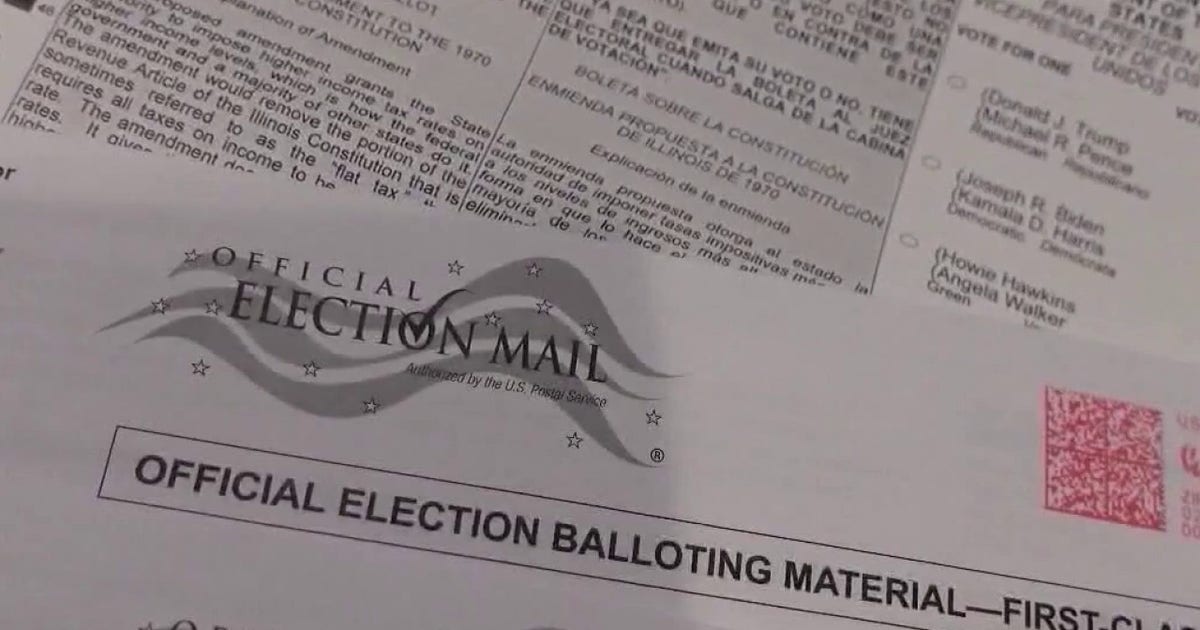
The U.S. Supreme Court on Monday rejected an emergency appeal by the Trump administration, halting a bid to block the counting of about 20,000 California mail‑in ballots that the Justice Department argued may belong to non‑citizens. The decision came just hours before the final day of voting in the midterm elections that will determine control of Congress for the last two years of President Donald Trump’s second term.
The ruling, delivered in a one‑line order, left the state’s election machinery untouched. The order stated,
"The application for injunction pending appeal presented to Justice Kagan and by her referred to the Court is denied,"
Image via freepressjournal.inImage via kltv.comImage via usmuslims.com
U.S. Supreme Court via Associated Press
The case had already been dismissed by a U.S. District judge and a 9th Circuit panel, both of which warned that the DOJ’s demand could cause disenfranchisement and jeopardize the county’s election.
California’s voter rolls list roughly 23 million registered voters, the most of any state. Since early October, more than 6 million mail ballots have already been returned to county offices according to Associated Press elections data and reporting from the California Secretary of State’s office, which confirmed that ballots are actively being counted under state law.
At the heart of the dispute is a DOJ list of 20,000 voters it describes as likely non‑citizens. The administration’s lawyers argued that those ballots should be set aside until citizenship can be verified. But California election officials say the list is riddled with errors.
In a separate case, federal Judge David O. Carter, a Clinton appointee, had already ruled that the DOJ’s request was rife with uncertainty and errors. He also found that the administration’s attempt to compel California to segregate ballots violated the Constitution’s Elections Clause, which reserves authority over election rules to the states and Congress. The 9th Circuit, in a 2‑1 decision, upheld Carter’s order. The dissenting judge, also appointed by Trump, argued in a dissent that California’s unwillingness to separate the ballots encourages the violation of federal law.
Trump’s team has repeatedly claimed that non‑citizen voting is a widespread problem, even though data show it is rare.
Court Level
Decision
Outcome
U.S. District Court (San Francisco)
Rejection of DOJ request
Ballots to be counted
9th Circuit Court of Appeals
Rejection of DOJ request
Ballots to be counted
Supreme Court
Emergency appeal denied
Ballots to be counted
California’s Attorney General Rob Bonta, a Democrat, said the request reeks of desperation and is another attempt to undermine our elections and trample on the rule of law.Foxla and other outlets reported that a district judge warned that segregating ballots would wreak havoc on the midterms and erode public trust in the democratic process.
Meanwhile, the Trump administration’s narrative has been that the list is a necessary safeguard against illegal voting. Bill Essayli, the federal prosecutor running the Justice Department’s Los Angeles office, said at a news conference he was highly confident the people on the list were not entitled to vote, stating, This isn’t speculation. This isn’t a theory, though he later conceded there may be errors on the list. During a separate hearing, Kenneth Kao, a Justice Department attorney, admitted under questioning from U.S. District Judge Trina Thompson that the list carried a high error rate.
In the broader context, the Supreme Court has previously rejected Trump’s push to restrict mail ballots around the country in September, even though the justices have sided with his administration in a series of other emergency docket appeals.
With the Supreme Court’s decision in hand, the administration’s push to interfere in California’s election has stalled. The state will proceed with its established counting procedures, and the high court’s one‑line order underscores that, for now, the power to run elections remains firmly in the hands of the states as the midterm voting concludes.