UK skywatchers witness deepest partial solar eclipse in decades
Skywatchers across the UK and Europe stepped outside on Wednesday, August 12, 2026, to witness the deepest partial solar eclipse in nearly 27 years.

- Core Development: Skywatchers across the UK and Europe stepped outside on Wednesday, August 12, 2026, to witness the deepest partial solar eclipse in nearly 27 years.
- Beat Context: Categorized under World with independent corroboration.
- Reporting Depth: 4 minute analytical read synthesized from verified newsroom sources.
Skywatchers across the United Kingdom and Europe stepped outside on Wednesday, August 12, 2026, to witness the deepest partial solar eclipse seen from British skies in decades. The celestial alignment transformed the evening daylight sky and drew crowds to open spaces, historic observatories, and sporting venues alike, according to Ra2ej.
While the rare astronomical phenomenon was a total solar eclipse globally, totality was confined to a narrow path crossing parts of Greenland, Iceland, Spain, and Portugal, as reported by AOL. Across Britain and Northern Ireland, observers instead experienced an unusually deep partial eclipse. Royal Museums Greenwich noted that the event delivered the largest amount of solar coverage visible from Britain and Ireland in nearly 27 years, making it the most significant such display since the total eclipse of 1999, as highlighted by Sky Sports. Liverpool Echo added that the eclipse will be the country's fullest for the next 54 years, with the next total solar eclipse visible from the UK projected for September 23, 2090.
Media additions
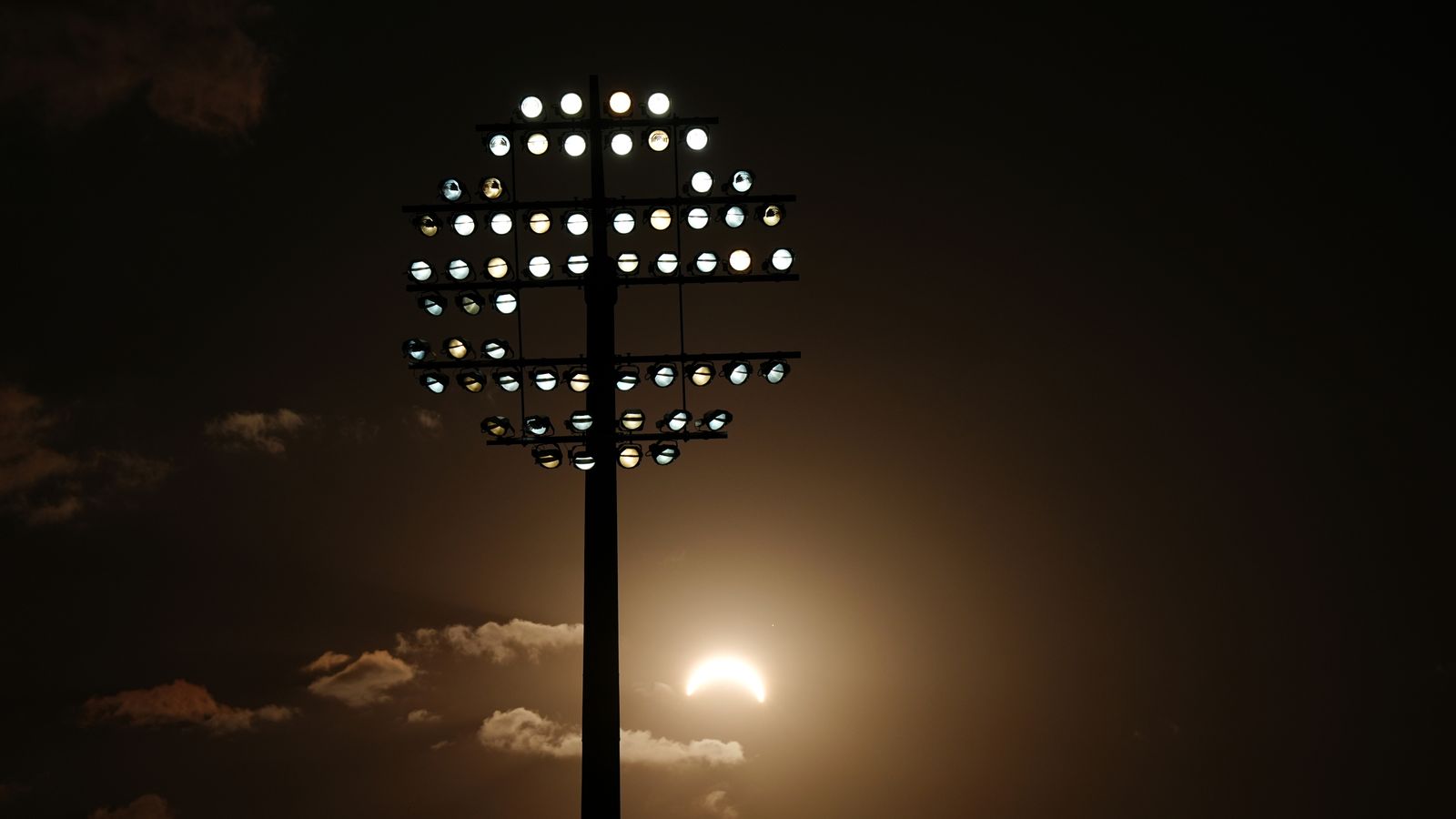
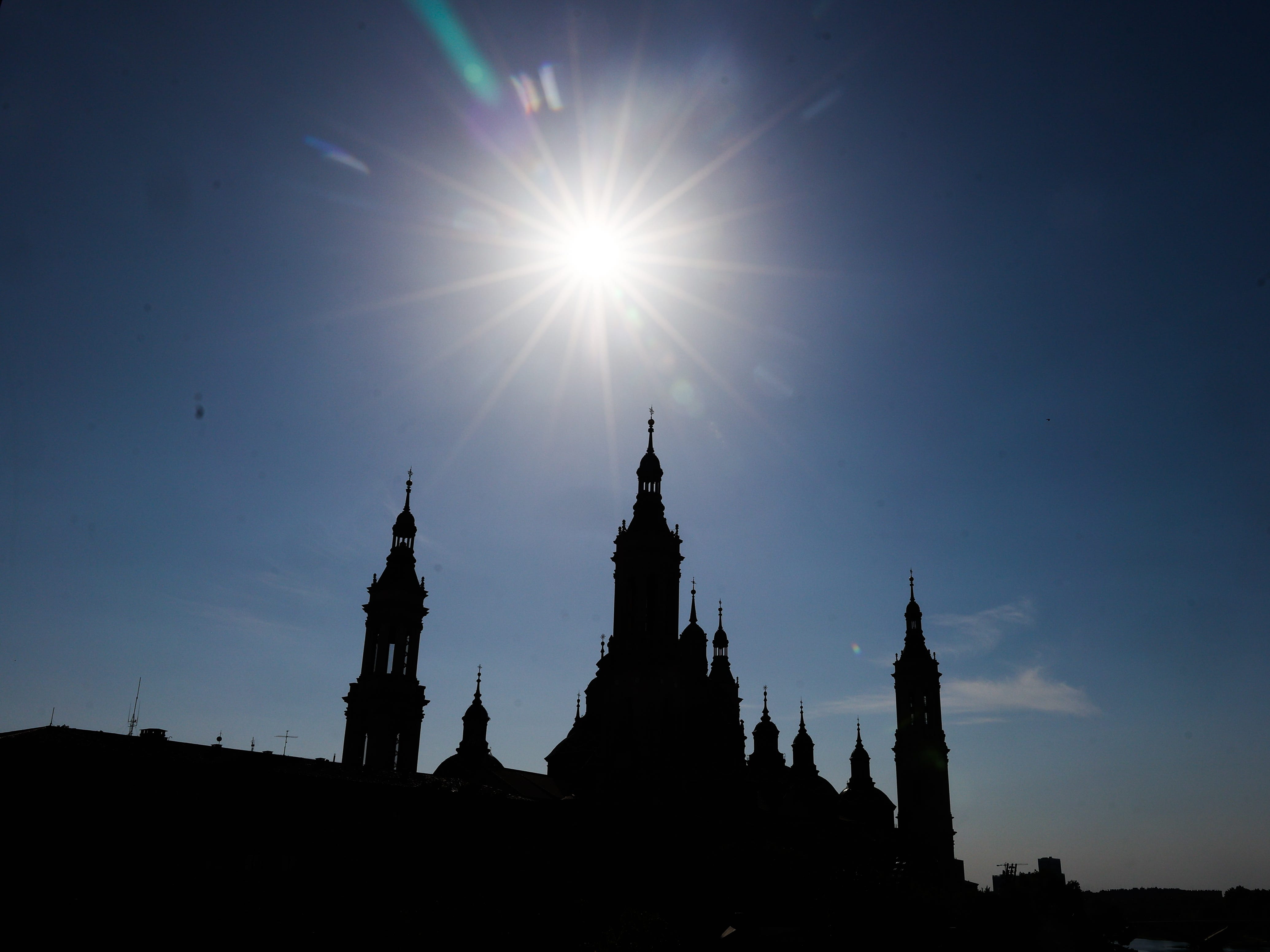

Depending on geographic location, between 90% and 96% of the Sun was obscured across the UK, with the South West experiencing some of the greatest coverage. In Belfast, the Moon covered roughly 93% of the solar disk shortly after 7:00 pm, while observers in London watched the partial eclipse begin at approximately 6:17 pm, peaking near 7:12 pm before the Moon drifted away. Belfast Live reported that people in Northern Ireland expected between 92% and 94% coverage, with Belfast forecast to see 93.09% of the sun covered at 7:08 pm.
Crowds gathered in notable public spaces, including Queen's University in Belfast, the Armagh Observatory, Calton Hill in Edinburgh, and the Royal Observatory Greenwich in London, according to Belfast Live. Liverpool Echo and Belfast Live noted that other spectators gathered at Cardiff Bay barrage, Stonehenge in Wiltshire, Brockwell Park in South London, Morriscastle in Co. Wexford, and Croke Park in Dublin. Many key retail locations exhausted their supplies of specialist viewing glasses ahead of the event, leaving some members of the public scrambling or resorting to homemade alternatives such as cereal boxes, colanders, welding masks, and improvised filters, as noted by Liverpool Echo and Belfast Live. Even wedding parties took a moment to watch, with grooms Jerry Bone and Jamie Bone observing from Alpheton, Suffolk, per Belfast Live photographic coverage.
The unusual twilight atmosphere also framed several major sporting and cultural gatherings across Europe. Spectators at Edgbaston watched the partial eclipse from the stands during cricket fixtures in The Hundred, while floodlights were activated at the European Athletics Championships in Birmingham as skies darkened. Football fans in Salzburg caught the phenomenon ahead of the UEFA Super Cup clash between Aston Villa and Paris Saint-Germain, and racegoers at the MADRING circuit in Madrid took in the view from the venue's grandstands, per Sky Sports. Stewards wearing welding helmets watched from Croke Park ahead of fixtures including a pre-season match between Leeds United and Manchester United, as detailed by Belfast Live.
Health authorities and astronomical bodies issued repeated warnings ahead of the event, stressing that ordinary sunglasses are entirely insufficient for viewing a solar eclipse. Experts cautioned that looking directly at the Sun without approved solar filters, specialist glasses, or safe projection methods risks severe and permanent retinal damage, even when the vast majority of the solar surface is hidden.
The celestial spectacle also delivered a major economic and tourism boost in regions falling directly within the path of totality. Lighthouse data cited by Aol indicated that hotel room rates in Iceland's capital, Reykjavik, surged 212% above average seasonal pricing as international visitors arrived for festivals, cruises, and specialized flights. Some tourists paid upward of $1,000 per night for accommodation, while cruise ship tours in Greenland cost upwards of $10,000 and specialized flights ranged up to $1,200 per seat. Visitors in Iceland attended gatherings such as the Iceland Eclipse science and music festival, which featured figures including artist Imogen Heap, director Darren Aronofsky, and astronaut Sian Proctor, according to AOL.
For stargazers, the solar eclipse was only the opening act of a double feature. The peak of the annual Perseid meteor shower unfolded during the night of August 12 into the early hours of August 13. Astronomers noted that exceptionally favourable dark-sky conditions—bolstered by a New Moon—allowed observers away from urban light pollution to spot between 50 and 100 shooting stars per hour as Earth passed through debris left by Comet 109P/Swift-Tuttle, as detailed by Ibtimes and Belfast Live. Experts recommended viewing from dark-sky locations such as Scotland's Highlands, Northumberland, and Snowdonia, with activity peaking from midnight until dawn.
Celestial Event Timeline
- Wednesday, August 12, 2026 (Evening): Deep partial solar eclipse peaks across the UK, obscuring over 90% of the Sun, with maximum coverage in the UK occurring between 7:05 pm and 7:16 pm.
- Night of August 12–13, 2026: Annual Perseid meteor shower reaches peak activity under New Moon conditions, continuing actively until pre-dawn hours.
- Sunday, August 16, 2026: Remaining fixtures and finals for cricket's The Hundred conclude, as noted by Sky Sports.
- September 23, 2090: Date of the next total solar eclipse projected to be visible from the UK, according to Liverpool Echo.
How significant is this development?
Contribute your assessment to the aggregated reader sentiment ledger.
Frequently Asked Questions
Key questions answered in this reportWhat is the key development in: UK skywatchers witness deepest partial solar eclipse in decades?
Skywatchers across the UK and Europe stepped outside on Wednesday, August 12, 2026, to witness the deepest partial solar eclipse in nearly 27 years.
Why is this World development significant for the UK?
This report covers critical events in our World beat. Independent reporting monitors related UK statements, regulatory shifts, and public responses as further verified details emerge.
How was this reporting corroborated and verified?
Newsarchy UK compiles and cross-references reporting from primary reporting from liverpoolecho.co.uk and cross-checked wire reports. All coverage adheres to published editorial standards.
When was this report published?
This briefing was published on August 13, 2026 and is permanently cataloged in the Newsarchy UK World archives.