US intel warns Kremlin may launch limited NATO strike as autumn approaches
US intelligence agencies warn that the Kremlin could test NATO's collective-defence guarantee with a limited strike as early as this autumn, following a foiled explosive drone incident at a German logistics hub.
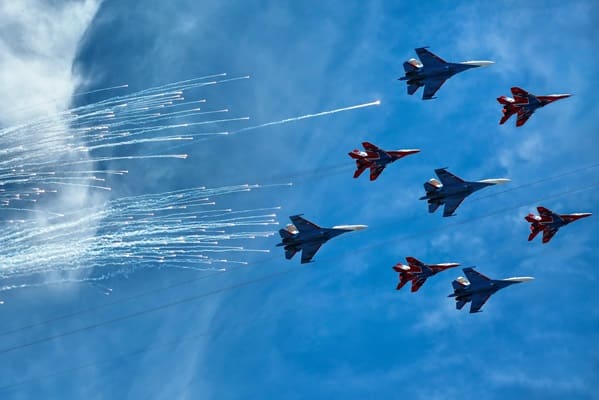
- Core Development: US intelligence agencies warn that the Kremlin could test NATO's collective-defence guarantee with a limited strike as early as this autumn, following a foiled explosive drone incident at a German logistics hub.
- Beat Context: Categorized under World with independent corroboration.
- Reporting Depth: 3 minute analytical read synthesized from verified newsroom sources.
U.S. Intelligence agencies have warned that the Kremlin could test NATO’s collective-defence guarantee with a limited strike as early as this autumn, marking a shift from earlier assessments that Moscow’s war in Ukraine would keep it from opening another front.
From no-front to limited incursion
According to reports from the Wall Street Journal cited in source material, American officials previously judged that the war in Ukraine would prevent Russia from confronting the West on a second front. That calculation has now shifted, and intelligence assessments warn that a hybrid warfare campaign or a limited territorial incursion could occur between later this year and 2029.
Media additions


The warning aligns with broader European unease that Moscow may exploit perceived divisions within the alliance. Germany’s military leadership has warned that Russia could possess the capability to threaten NATO territory in the coming years, while Baltic officials have said the Kremlin may seek a new confrontation to demonstrate strength and create political instability across Europe.
Lithuanian alarm
Lithuania’s defence minister, Robert Kaunas, told LRT Radio that the Kremlin needs a new escalation. He warned that the Baltic region and Poland are the closest targets, adding that limited battlefield progress in Ukraine could be pushing Russian leadership to look for a fresh victory.
Leipzig/Halle Airport: a hybrid-attack flashpoint
An airport employee found the drone in a restricted area shortly before midnight, positioned between two Antonov An-124 cargo aeroplanes. German interior minister Alexander Dobrindt said an apparently ripped detonator had prevented an explosion.
Federal prosecutors took over the investigation, describing the incident as a serious attack on transportation and logistics infrastructure and stating there was sufficient evidence to suggest an explosion was attempted. Police reported that the airport's drone-defence sensor system had not picked up the drone. Separately, police reported that an object collided with a cargo plane on the same night, forcing the aircraft to divert to Hannover after suffering minor damage.
Roderich Kiesewetter, a member of the Bundestag’s intelligence committee, directly blamed Russia, stating that he considered the threat to Germany posed by hybrid attacks orchestrated by Russia to be serious.
Security officials noted that previous sabotage attempts have been linked by Western officials to Russian intelligence, including a 2024 firebomb that ignited at a logistics centre on the airport grounds and a series of incendiary parcels mailed to Leipzig and a UK warehouse. A pan-European investigation into those parcels identified 22 suspects in Lithuania and Poland alleged to have been employed by Russian intelligence.
U.S. Concerns about Western readiness
American officials stress that Russia may view uncertainty, exhaustion, and depleted weapons stocks as an opening for a limited strike. The United States has reported shortages of key air-defence systems and precision weapons amid competing global commitments.
U.S. Analysts argue that such shortages could make a limited test of NATO’s response more tempting for Moscow if Western forces are stretched. The warning comes as Ukrainian president Volodymyr Zelensky has highlighted a sharp drop in air-defence deliveries compared with the previous year, and as recent Russian missile barrages over Kyiv have left ballistic missiles unintercepted.
Implications for NATO and next steps
The convergence of U.S. Intelligence warnings and the Leipzig hybrid-attack episode has sharpened NATO’s focus on the alliance’s eastern flank. NATO planners are weighing whether a limited Russian incursion could force a collective response without triggering full-scale war.
German defence ministry officials have confirmed that regular military transport was not taking place at Leipzig at the time of the incident, though the airport remains a critical node for NATO’s Strategic Airlift International Solution, delivering equipment to battle groups from Finland to Romania.
Russia’s embassy in Berlin has declined to comment on the drone incident.
How significant is this development?
Contribute your assessment to the aggregated reader sentiment ledger.
Frequently Asked Questions
Key questions answered in this reportWhat is the key development in: US intel warns Kremlin may launch limited NATO strike as autumn approaches?
US intelligence agencies warn that the Kremlin could test NATO's collective-defence guarantee with a limited strike as early as this autumn, following a foiled explosive drone incident at a German logistics hub.
Why is this World development significant for the UK?
This report covers critical events in our World beat. Independent reporting monitors related UK statements, regulatory shifts, and public responses as further verified details emerge.
How was this reporting corroborated and verified?
Newsarchy UK compiles and cross-references reporting from primary reporting from abc7news.com and cross-checked wire reports. All coverage adheres to published editorial standards.
When was this report published?
This briefing was published on August 7, 2026 and is permanently cataloged in the Newsarchy UK World archives.