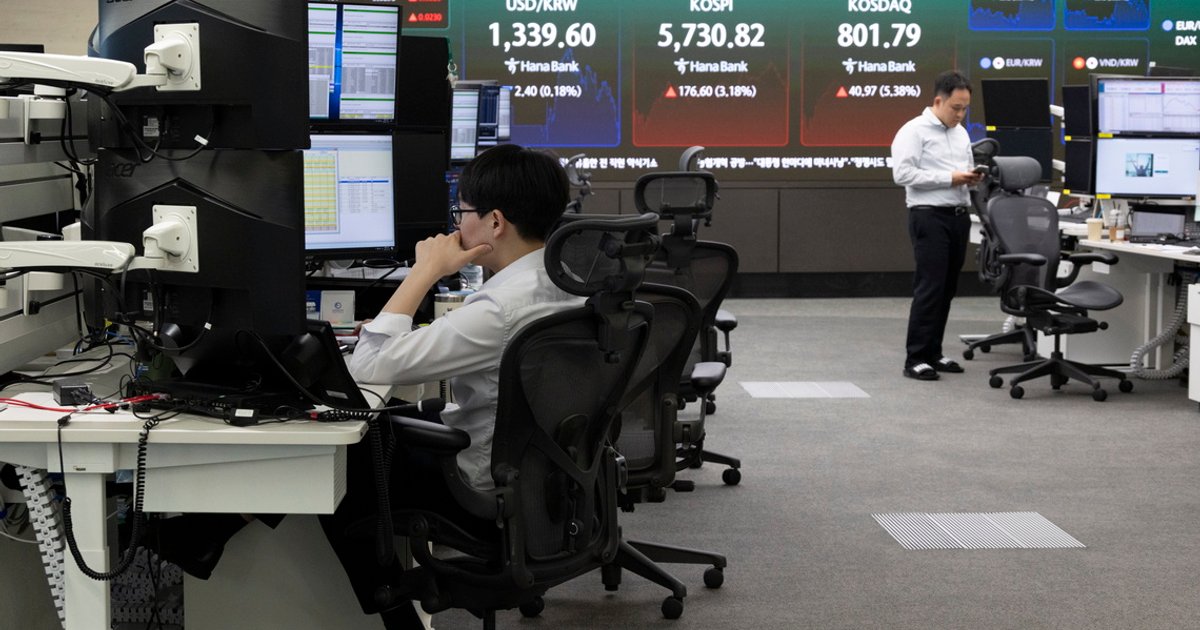
ASX200 drops to 20-day low as market enters historically worst month
The Australian sharemarket has hit a 20-day low as it enters September, statistically the local exchange's worst-performing month of the year.

- Core Development: The Australian sharemarket has hit a 20-day low as it enters September, statistically the local exchange's worst-performing month of the year.
- Beat Context: Categorized under Business with independent corroboration.
- Reporting Depth: 3 minute analytical read synthesized from verified newsroom sources.
The Australian sharemarket has kicked off the month with a sharp downturn, shedding nearly 1 per cent
in a single trading session to hit a 20-day low, according to reporting by Nine. While the market later pared some of those losses to trade flat overall for the month so far, the early turbulence highlights an unwelcome seasonal pattern for local investors navigating a difficult financial landscape.
According to Nine, September has long held a reputation as the weakest period of the year for both domestic and overseas equities. Over the preceding decade, the benchmark ASX index has logged an average loss of $30.66 billion
during the month. In extreme economic environments, such as the pandemic year of 2020
, the total market capitalisation of the Australian sharemarket contracted by $63 billion
. Across a 20-year horizon, the ASX 200 has averaged a monthly decline of roughly 0.47 per cent
, as noted by eToro lead Asia-Pacific analyst Josh Gilbert via Nine.
Historically, the month has coincided with major global shocks. Financial disruptions in past Septembers include the collapse of Lehman Brothers during the Global Financial Crisis on the 15th of the month in 2008
, the 9/11
attacks and dot-com turbulence in 2001
, and surging oil prices following Iraq's invasion of Kuwait in 1990
. More recent Septembers brought corporate debt distress at Chinese real estate giant Evergrande missing crucial payments in 2021
and hotter-than-expected US inflation data a year later that exerted flow-on effects across global markets.
Beyond external shocks, analysts emphasize that structural mechanics drive the red ink. By the time September arrives, corporate earnings season has concluded, guidance has been published, and immediate catalysts are scarce. Fund managers actively reposition portfolios, selling off companies that disappointed during reporting season while the positive news of outperforming stocks is already priced in. Furthermore, a substantial portion of the market trades ex-dividend around this period. As Gilbert explained via Nine, share prices are routinely marked down by the distribution amount, representing routine cash delivery to shareholders rather than fundamental market weakness.
Current macroeconomic conditions echo several historical anxieties. AMP deputy chief economist Diana Mousina highlighted persistent concerns in a note covered by Nine, pointing to the lack of any long-term resolution to the Iran War and hit to global oil supplies, stretched valuations, sticky inflation, political uncertainty associated with Trump and the midterm elections, and worries about the impact of artificial intelligence and whether there is an AI bubble. Simultaneously, bond yields remain near their highest levels since the Global Financial Crisis, while domestic pressures point to rising fears of an additional interest rate hike driven by stronger-than-anticipated inflation and GDP growth.
| Metric / Period | Figure | Context |
|---|---|---|
| ASX 200 20-Year Monthly Average | -0.47% | Average performance across historical Septembers |
| 10-Year Average September Loss | $30.66 billion | Total capitalisation drop calculated across the last decade |
| 2020 Market Capitalisation Fall | $63 billion | Contraction recorded during the pandemic-affected year |
Despite the challenging fundamentals and narrow margins for error following a reporting season where corporate outlooks did more damage than the results, not all market watchers share a pessimistic outlook. IG’s Troy Sycamore suggests the ASX200 might test and potentially surpass the all-time high set in August during the weeks ahead. Similarly, Mousina projects that overall returns over the next 12 months should remain relatively stable, supported by continuing economic growth with recession avoided, robust global profit growth, and anticipated rate cuts in the following year, as reported by Nine.
Market participants will be closely watching macroeconomic data releases and central bank commentary in the coming weeks to determine whether seasonal weakness and current fundamentals will dictate the final quarter's trajectory.
How significant is this development?
Contribute your assessment to the aggregated reader sentiment ledger.
Frequently Asked Questions
Key questions answered in this reportWhat is the key development in: ASX200 drops to 20-day low as market enters historically worst month?
The Australian sharemarket has hit a 20-day low as it enters September, statistically the local exchange's worst-performing month of the year.
Why is this Business development significant for the UK?
This report covers critical events in our Business beat. Independent reporting monitors related UK statements, regulatory shifts, and public responses as further verified details emerge.
How was this reporting corroborated and verified?
Newsarchy UK compiles and cross-references reporting from primary reporting from nine.com.au and cross-checked wire reports. All coverage adheres to published editorial standards.
When was this report published?
This briefing was published on September 6, 2026 and is permanently cataloged in the Newsarchy UK Business archives.