India's lack of AI stocks turns into an advantage as global funds rethink Asia investments
As global investors retreat from heavy technology concentration, India's limited AI exposure has unexpectedly transformed into a competitive advantage, drawing billions in foreign inflows and driving sharp benchmark gains.
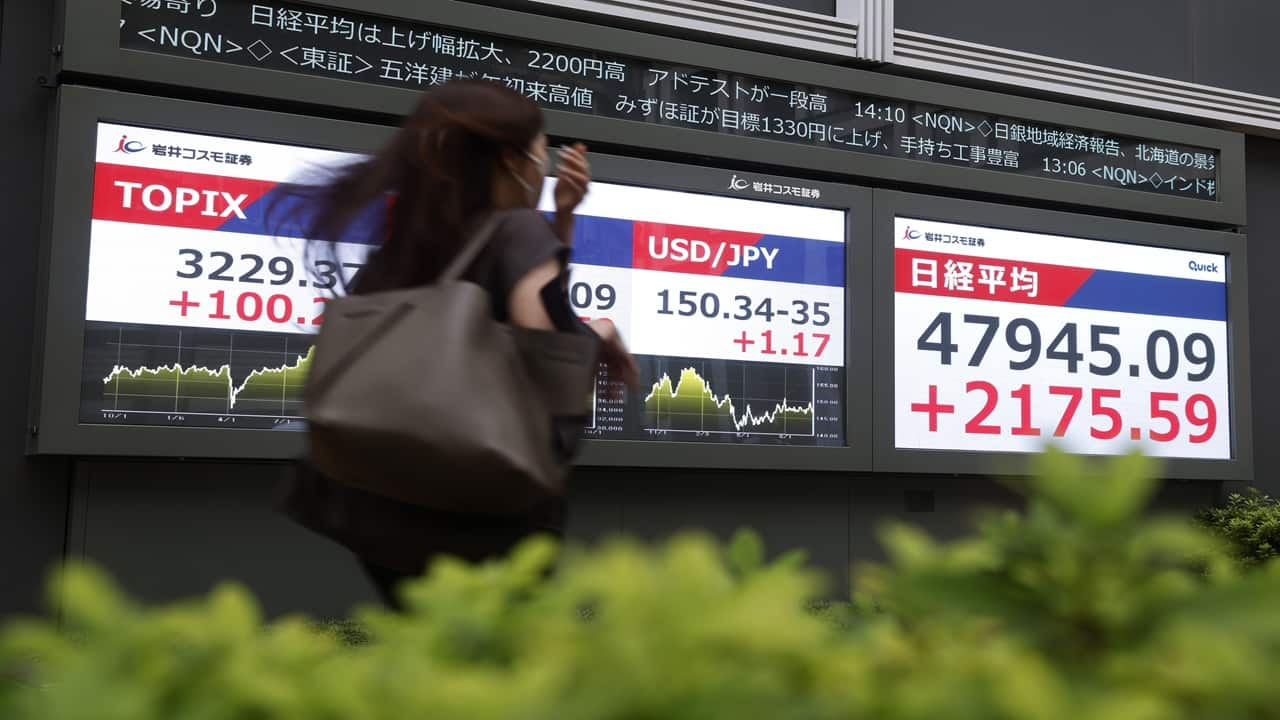
- Core Development: As global investors retreat from heavy technology concentration, India's limited AI exposure has unexpectedly transformed into a competitive advantage, drawing billions in foreign inflows and driving sharp benchmark gains.
- Beat Context: Categorized under Business with independent corroboration.
- Reporting Depth: 3 minute analytical read synthesized from verified newsroom sources.
Global financial markets are undergoing a fundamental repositioning as the unravelling of the artificial intelligence trade forces institutional investors to rethink their regional strategies. For markets across Asia, particularly in emerging economies that historically lagged behind in semiconductor and computing infrastructure exposure, this pivot has transformed a perceived disadvantage into an unexpected competitive edge.
Asia's technology powerhouses — including major South Korean and Taiwanese suppliers vital to the global artificial intelligence build-out — bore the brunt of market volatility following the Democrats' sweep of Congress, as detailed in reporting by Moneycontrol. Investors began questioning whether massive capital expenditures on computing infrastructure would generate sufficient returns, triggering a broader retreat from high-profile chip stocks.
Media additions

This sentiment shift has driven global macro funds to seek out markets where valuations are less demanding and domestic growth drivers take precedence. According to Rajeev De Mello, global macro portfolio manager at Gama Asset Management SA, investors are diversifying more broadly to reduce their concentration in the artificial intelligence trade, providing underlying support for China and other previously out-of-favor regions.
India’s stock market has capitalized directly on this defensive rotation. Foreign funds poured a net $1.9 billion into Indian shares over a three-day period, propelling the benchmark Nifty 50 up by 8.6% in a single week to mark its best weekly performance since 2021. This contrasts sharply with October data from The Economic Times, which recorded a 1.9% gain for the Sensex and a 2.7% rise for the Nifty, alongside a 4% drop in the BSE Midcap 150 and a 6.3% decline in the BSE SmallCap 250.
| Market / Index | Performance Period | Recorded Movement |
|---|---|---|
| Nifty 50 | First week of November 2026 | +8.6% |
| Hang Seng Mainland Gauge | First week of November 2026 | +5.2% |
| Sensex | October 2026 | +1.9% |
| Nifty | October 2026 | +2.7% |
| BSE Midcap 150 | October 2026 | -4.0% |
| BSE SmallCap 250 | October 2026 | -6.3% |
The sudden influx of capital has kept domestic custodians and market participants active. Utkarsh Singh, a Mumbai-based senior manager at SBI-SG Global Securities Pvt., reported fielding an unprecedented volume of inquiries from Singapore-based clients seeking exposure to Indian equities as the rally unfolded.
Beyond India, institutional interest has extended to other markets offering alternative exposures. Hong Kong equity futures and mainland Chinese tech firms have attracted long positions from hedge funds such as Lotus Asset Management, while Allianz Global Investors has turned its focus toward healthcare and consumer staples. A Hong Kong gauge tracking mainland companies gained 5.2%, registering its strongest performance since March 2025. In South Korea, portfolio managers noted a distinct rotation beyond semiconductor heavyweights into domestic consumption-related areas, spanning wellness, entertainment agencies, and the cosmetics industry.
At the same time, the broader economic backdrop has shifted favorably for emerging markets dependent on commodity imports. Expectations of an earlier resolution to geopolitical tensions in the Middle East have pushed oil prices downward, relieving a primary pressure point for the Indian economy, though analysts maintain that energy import dependence remains a structural headwind.
Concurrently, the global insurance and financial services sector is navigating its own structural evolutions and technological integration. Analysis published by Deloitte indicates that property and casualty insurers globally are moving past a prolonged hard cycle into a period of margin pressure and slower premium growth through 2026. While advanced markets in Europe anticipate stronger returns on equity, insurers worldwide are increasingly adopting practical technologies, ranging from machine learning models for fraud detection to agentic artificial intelligence tools, while expanding alternative asset allocations such as private credit.
What happens next depends largely on whether global funds treat this reallocation as a permanent strategic diversification or a temporary tactical hedge. Market observers note that while some institutional investors view the recent technology selloff as a dip-buying opportunity, the lack of artificial intelligence exposure in markets like India positions them to absorb continued foreign portfolio flows if technology sector volatility persists.
How significant is this development?
Contribute your assessment to the aggregated reader sentiment ledger.
Frequently Asked Questions
Key questions answered in this reportWhat is the key development in: India's lack of AI stocks turns into an advantage as global funds rethink Asia investments?
As global investors retreat from heavy technology concentration, India's limited AI exposure has unexpectedly transformed into a competitive advantage, drawing billions in foreign inflows and driving sharp benchmark gains.
Why is this Business development significant for the UK?
This report covers critical events in our Business beat. Independent reporting monitors related UK statements, regulatory shifts, and public responses as further verified details emerge.
How was this reporting corroborated and verified?
Newsarchy UK compiles and cross-references reporting from primary reporting from moneycontrol.com and cross-checked wire reports. All coverage adheres to published editorial standards.
When was this report published?
This briefing was published on November 8, 2026 and is permanently cataloged in the Newsarchy UK Business archives.