Java4Shell RCE Flaw in OpenJDK Base64 Decoder Threatens Enterprise Servers
A critical memory corruption vulnerability in Java's Base64 decoding routine exposes enterprise servers to unauthenticated remote code execution.
A critical memory corruption flaw in Java’s hardware-accelerated Base64 decoding routine exposes enterprise servers to unauthenticated remote code execution, triggering urgent patch cycles across the software industry.
Disclosed on November 17, 2026, the vulnerability is tracked as CVE-2026-114938 and carries the moniker Java4Shell, drawing inevitable comparisons to the historic Log4Shell incident. Security firm Cyberkendra reports that the defect resides in hand-written x86-64 assembly used by the HotSpot Java Virtual Machine to speed up Base64 decoding via AVX-512 VBMI instructions. Because this low-level code sits inside the runtime rather than managed application layers, it bypasses traditional memory-safety checks.
Media additions
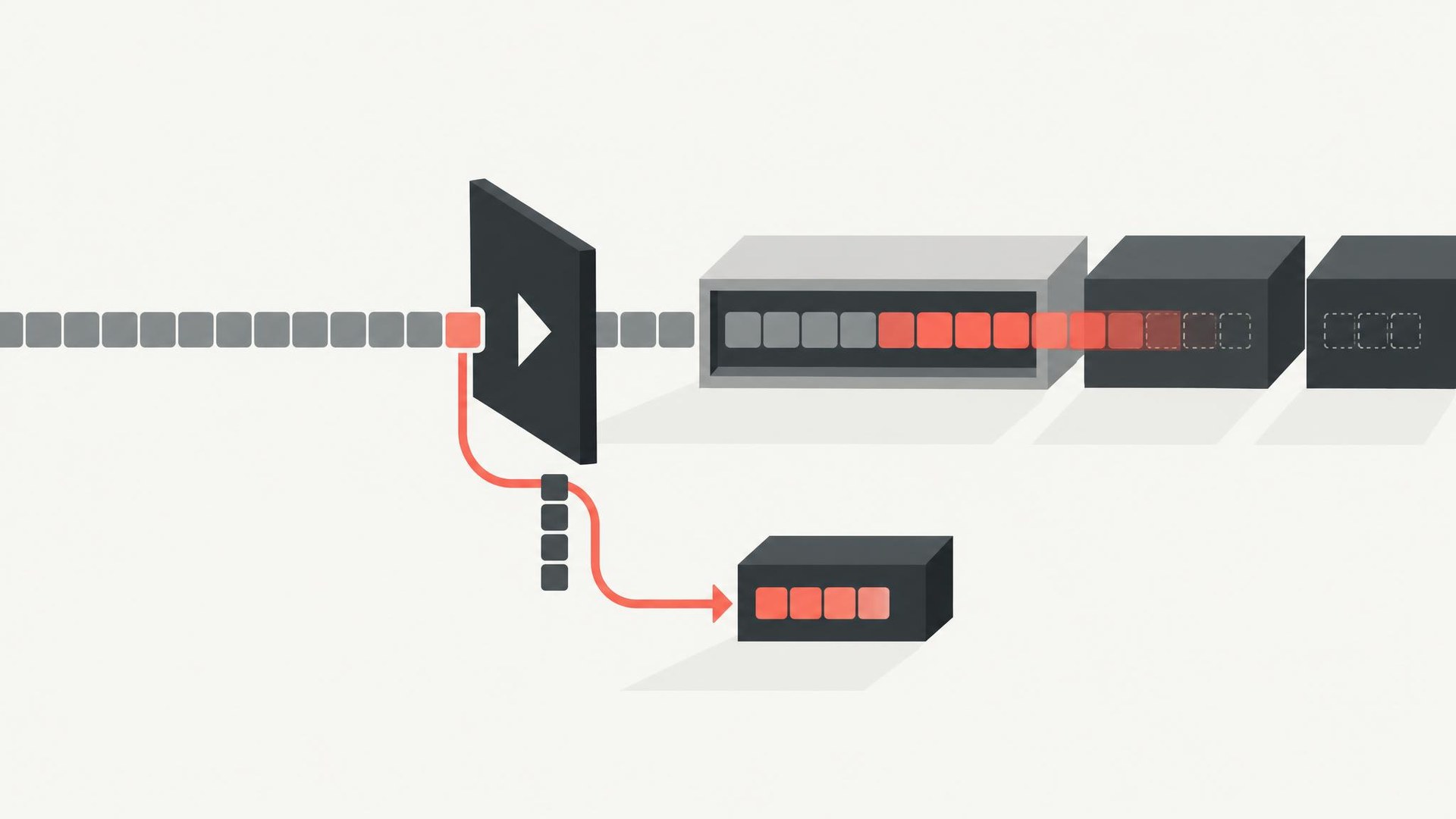

According to Bleepingcomputer, malformed input consisting of 64 letter A characters followed by an equals sign causes an integer underflow that forces the decoder to write past the end of its destination array. Older Java 17 builds require a longer trigger of 128 letters followed by an equals sign, as noted by Unite. By the time Java rejects the invalid input as malformed, the memory corruption has already occurred, damaging neighboring objects on the heap.
Security researchers at Calif utilized OpenAI's Codex coding assistant to discover the vulnerability during an internal audit. Discovering the flaw took roughly one hour, and developing a working exploit required another two hours at a total AI usage cost of under $200. Automated agents subsequently assisted in building application-specific exploitation chains, demonstrating the growing role of artificial intelligence in vulnerability discovery.
The severity ratings assigned to Java4Shell vary depending on the scoring methodology applied by reporting organizations.
| Reporting Organization | Scoring System | Assigned Severity |
|---|---|---|
| Calif | CVSS 4.0 | 9.2 (Critical) |
| OpenJDK Advisory & Oracle | CVSS 3.1 | 8.1 (High) |
The vulnerability impacts OpenJDK version 17.0.6 and later, including Java branches 21, 25, and 27, alongside Oracle’s Java 8 Enterprise Performance Pack. Affected downstream distributions include Amazon Corretto, Eclipse Temurin, Microsoft Build of OpenJDK, Azul Zulu, and Red Hat OpenJDK. The flaw strictly requires x86-64 hardware supporting AVX-512 VBMI instructions, such as Intel Xeon processors from Ice Lake onward and AMD Zen 4 processors or newer. ARM64 architecture servers are entirely unaffected.
Exploitation scenarios vary significantly between targets. Calif demonstrated unauthenticated remote code execution against default configurations of Keycloak, Atlassian Jira, Atlassian Confluence, JFrog Artifactory, Jenkins, and PingFederate. Post-authentication execution was demonstrated against Apache Kafka Broker, Apache Solr, Elasticsearch, Gerrit, and Spinnaker. Furthermore, researcher samczsun contributed a client-side vector where a Java client opening a TLS connection to a malicious server can be compromised without running any active network services.
Enterprise defenders face unique challenges because Java4Shell resides within the JDK runtime instead of an application library. Standard dependency scanners fail to flag the vulnerability, requiring administrators to inspect active runtime binaries, container images, and bundled appliance dependencies. While Oracle shipped official patches in its November 2026 Critical Security Patch Update, various secondary Linux distributions and downstream vendors experienced rollout delays as upstream repositories absorbed the four-line fix identified as JDK-8393212.
Recommended Mitigations and Interim Workarounds
- Apply Vendor Patches: Immediately update Java runtimes to fixed versions published by Oracle, Amazon, or your respective downstream distributor.
- Restart Processes: Fully restart all active Java processes and rebuild container images, as file replacements do not automatically update running JVM instances.
- Disable Intrinsics: Launch the JVM with the temporary mitigation flag -XX:-UseBASE64Intrinsics to turn off hardware-accelerated decoding.
- Disable AVX-512: Use -XX:UseAVX=2 on x86-64 hosts exclusively, avoiding this flag on ARM architectures where the JVM will fail to start.
No in-the-wild exploitation had been reported at the time of disclosure, and CISA has not yet populated its Known Exploited Vulnerabilities catalog with the identifier. However, security firms warn that automated probing and exploitation attempts are imminent now that root-cause mechanics are public. Organizations must audit hardware inventories, prioritize internet-facing enterprise servers, and verify that runtime environments are operating on patched builds.