Kazakhstan, WCO plan to develop modern customs cooperation model
Kazakhstan and the World Customs Organization are partnering to establish a modern regional customs framework to streamline transcontinental trade routes.

- Core Development: Kazakhstan and the World Customs Organization are partnering to establish a modern regional customs framework to streamline transcontinental trade routes.
- Beat Context: Categorized under Business with independent corroboration.
- Reporting Depth: 4 minute analytical read synthesized from verified newsroom sources.
Kazakhstan and the World Customs Organization are moving to establish a contemporary framework for regional customs cooperation, aligning national digitalization drives with international expertise to safeguard transcontinental trade routes. Prime Minister Olzhas Bektenov and WCO Secretary General Ian Saunders convened to advance talks on modernizing customs administration, technology integration, and transport logistics, building upon previous discussions held between President Kassym-Jomart Tokayev and the WCO chief, according to reporting cited by Qazinform.
During the bilateral meeting, Bektenov underscored that securing the uninterrupted flow of transcontinental commerce remains vital for domestic economic vitality. He noted that the core tenets of the WCO Strategic Plan, framed around data-driven customs operations for a connected world, closely mirror ongoing administrative modernization programs inside Kazakhstan. By combining the nation's strategic transit potential with specialized international expertise, officials aim to establish a streamlined regional framework that minimizes unnecessary bureaucratic bottlenecks while preserving rigorous oversight, as detailed by Qazinform.
Media additions

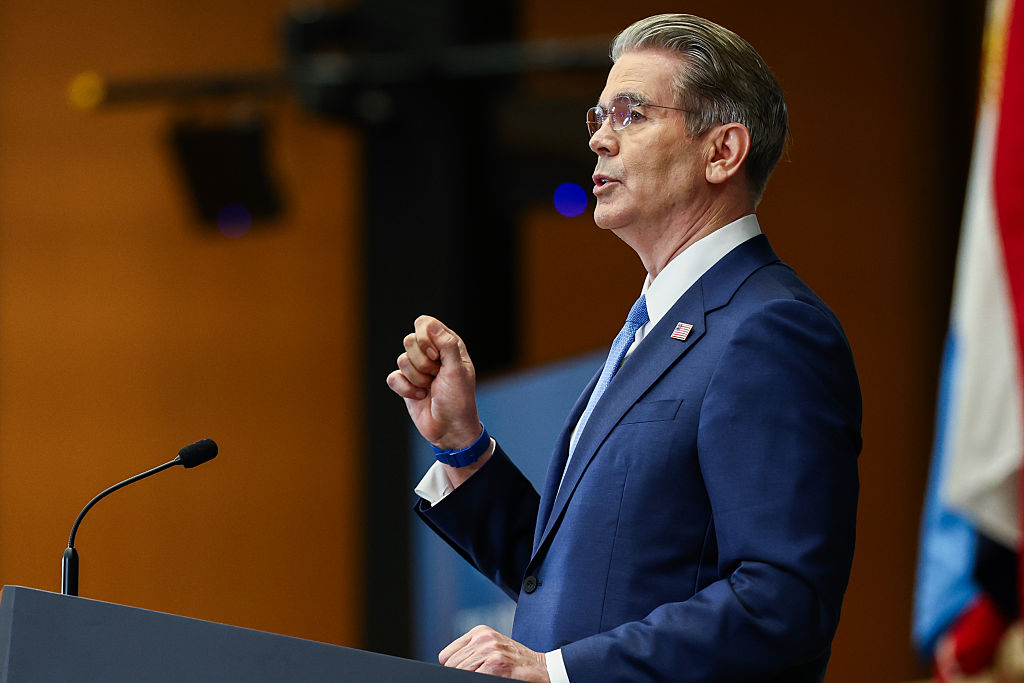

Saunders praised the country's proactive adoption of global best practices in administrative management, recognizing its pivotal position along the Trans-Caspian International Transport Route. Official government figures indicate that cargo volumes moving along this corridor reached substantial levels during the opening months of the year, backed by thousands of participating commercial vehicles and millions of tons in broader transit movement.
To further modernize these logistical arteries amidst its designated Year of Digitalization and Artificial Intelligence, the Kazakh government has rolled out advanced technical architecture. The unified KEDEN platform consolidates declaration processing, transit management, border control, and inter-agency coordination into a single portal. Running alongside it, the Smart Cargo platform integrates commercial freight transportation with official regulatory services, electronic permitting, and real-time tracking instruments.
| Metric / System | Operational Scope | Reported Volume / Context |
|---|---|---|
| TITR Cargo Movement | Trans-Caspian International Transport Route | Approximately 350,000 tons of cargo via roughly 24,000 vehicles during the first seven months of the year |
| Total Transit Cargo | Broader Kazakh transit corridors | 14.6 million tons during the same seven-month period |
| KEDEN System | Unified customs declaration and control | Brings together transit, clearance, and coordination across multiple state bodies |
| Smart Cargo Platform | Transportation and government services | Integrates electronic permits and cargo-tracking tools to eliminate data duplication |
According to executive statements, integrating these digital networks removes the administrative burden on enterprises by eradicating duplicate data submissions, allowing regulatory bodies to monitor information smoothly across the supply chain. The high-level discussions concluded with both sides formalizing their commitment to deepen administrative coordination, following the recent legislative ratification of the OTS Agreement aimed at establishing simplified customs corridors.
Broader global economic shifts continue to influence trade corridors, commodity flows, and capital allocations across emerging markets. Major financial institutions and global advisory groups note that currency values and trade financing are adjusting in response to shifting central bank postures across North America, Europe, and developing regions. For instance, analysts tracking emerging market capital flows observed that shifts in U.S. Treasury repurchase operations have altered short-term yield dynamics, prompting capital to seek high-yielding destinations across Latin America and other regions, as reported by International Business Times.
Simultaneously, inflationary pressures and commodity price volatility continue to dominate monetary policy deliberations globally. Central banks from Europe to South America are carefully balancing growth objectives against lingering supply chain shocks. In Poland, policymakers have maintained steady reference rates while monitoring local agricultural and energy price developments, mirroring cautious stances observed across other jurisdictions dealing with energy market fluctuations, as analyzed by ING Think and Briefs.
International economic overviews emphasize that regulatory harmonization and infrastructure investments remain paramount as governments navigate geopolitical trade shifts. As outlined in comprehensive global assessments, nations investing heavily in resource extraction, transport networks, and digital logistics hubs are positioning themselves to capture long-term capital inflows, according to findings published in Deloitte's global economic outlook.
What to Watch Next
- Further bilateral implementation steps between Kazakh authorities and the WCO regarding joint digital customs initiatives.
- Operational performance data for the KEDEN and Smart Cargo platforms as freight volumes scale along the Trans-Caspian corridor.
- Upcoming legislative and administrative reviews concerning regional transport integration across Central Asian trade partner states.
How significant is this development?
Contribute your assessment to the aggregated reader sentiment ledger.
Frequently Asked Questions
Key questions answered in this reportWhat is the key development in: Kazakhstan, WCO plan to develop modern customs cooperation model?
Kazakhstan and the World Customs Organization are partnering to establish a modern regional customs framework to streamline transcontinental trade routes.
Why is this Business development significant for the UK?
This report covers critical events in our Business beat. Independent reporting monitors related UK statements, regulatory shifts, and public responses as further verified details emerge.
How was this reporting corroborated and verified?
Newsarchy UK compiles and cross-references reporting from primary reporting from BBC and cross-checked wire reports. All coverage adheres to published editorial standards.
When was this report published?
This briefing was published on September 9, 2026 and is permanently cataloged in the Newsarchy UK Business archives.