Beans Lead UK’s Plant-Based Food Growth As Shoppers Shun Meat & Vegan Alternatives
New UK industry data reveals that shoppers are turning away from conventional meat and processed vegan alternatives in favor of whole-food plant proteins.
- Core Development: New UK industry data reveals that shoppers are turning away from conventional meat and processed vegan alternatives in favor of whole-food plant proteins.
- Beat Context: Categorized under Business with independent corroboration.
- Reporting Depth: 3 minute analytical read synthesized from verified newsroom sources.
Shoppers across the United Kingdom are decisively reshaping the aisles of supermarkets by turning away from both conventional meat products and ultra-processed vegan alternatives in favour of whole-food plant proteins, according to new industry data. As climbing food prices squeeze household budgets and nutrition consciousness rises, traditional plant staples have emerged as the primary engines of growth within the grocery sector, while heavily manufactured meat substitutes experience a notable downward slide.
According to an analysis of NielsenIQ data by the food transition group Greenqueen, unit sales of beans, pulses, tofu, and tempeh grew while value sales climbed over a comparative period. Traditional plant protein categories experienced surging demand, with retailers selling substantially more units of dried beans, peas, and lentils alongside robust increases for canned and jarred items. Tofu and tempeh sales likewise expanded, contrasting sharply with textured vegetable proteins made from soy, wheat, or pea, which experienced a reduction in unit sales.
Media additions


At the same time, plant-based meat alternatives continued a downward trend, registering declines in both units and value. Industry analysts attribute the shift away from processed meat analogues to the growing association of such products with the "ultra-processed" tag, alongside rising food inflation that has widened the price gap with animal proteins. Conventional meat products also dipped during the period, according to Euromonitor International figures reviewed by Madre Brava. Despite the broader struggles of the alternative meat market, exceptions appeared within mycoprotein, which saw an increase in unit sales, and vegetable-led analogues such as sausages and pies, which grew from a small base.
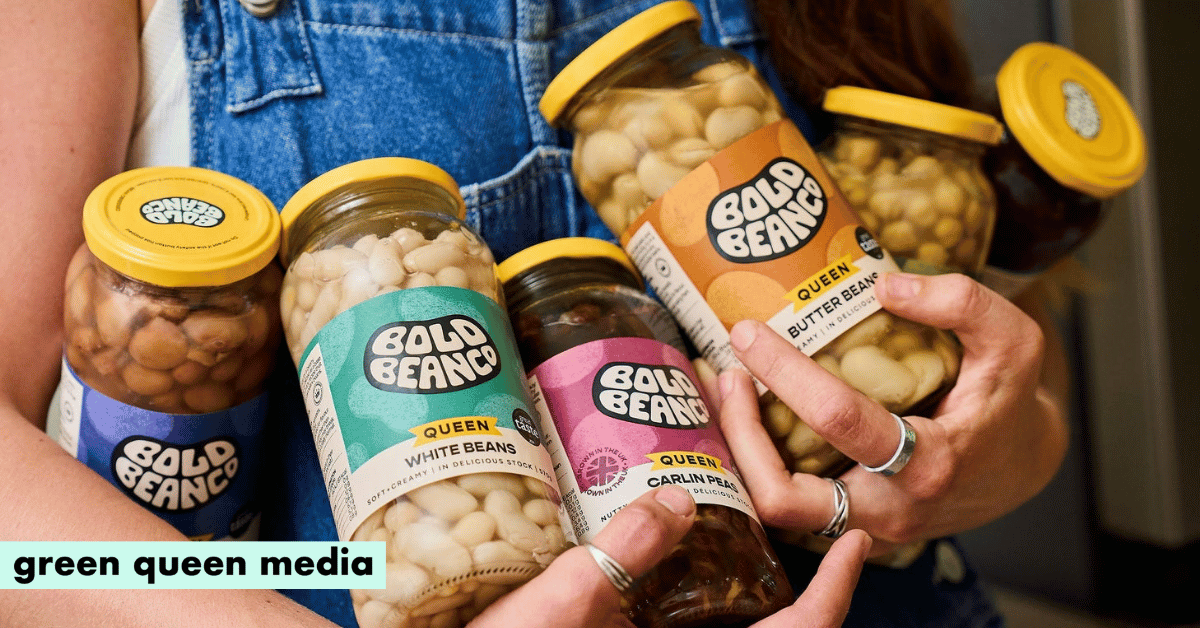
The transformation is perhaps most visible in the historically overlooked pulse aisle. Consumer appetite for premium legumes has been heavily influenced by the rise of independent brands like London-based Bold Bean Co, whose social media presence has reframed beans as a meal centerpiece rather than a mere commodity. Retailers have responded by introducing their own-label jarred equivalents. Beth Latham, head of category and strategic projects at Bold Bean Co, noted that the canned pulses category was previously a dusty, highly commoditised aisle that lacked innovation, but has since been reshaped by the premium end of the market. Chloe Mackean, food business transformation manager at the UK’s Food Foundation — whose initiative aims to double national legume intake — described beans as a triple win for health, sustainability, and household budgets.
| Plant-Based Category | Unit Sales Performance | Value Sales Performance |
|---|---|---|
| Beans, pulses, tofu & tempeh | Up 7.3% | Up 10.1% |
| Plant-based meat alternatives | Down 4.3% | Down 2.7% |
| Mycoprotein | Up 2.7% | Not reported |
| Conventional meat products | Down 1.8% (Euromonitor) | Not reported |
Supermarkets are actively pivoting to capture the fibremaxxing trend that has engulfed the food industry. Sainsbury’s has introduced dedicated labelling to highlight high-fibre products including fruits, vegetables, and plant proteins. Meanwhile, discount supermarket Lidl surpassed its internal targets for alternative meat and dairy sales, and Tesco reported that its vegan options were back in growth, led by increases in vegan mince and whole-food proteins. Sara Ayech, UK director at Madre Brava, emphasised that the bounce back in plant-based sales shows consumers choosing foods that win on health, budgets, and taste.
As supermarkets and advocacy groups continue to push toward long-term targets, including proposals for plant proteins to make up a significant portion of total protein sales by the end of the decade, attention turns to how retailers will adapt their product ranges. Stakeholders will monitor upcoming quarterly retail reports and supermarket compliance with voluntary sustainability metrics to determine whether the whole-food protein boom represents a permanent structural shift in British diets.
How significant is this development?
Contribute your assessment to the aggregated reader sentiment ledger.
Frequently Asked Questions
Key questions answered in this reportWhat is the key development in: Beans Lead UK’s Plant-Based Food Growth As Shoppers Shun Meat & Vegan Alternatives?
New UK industry data reveals that shoppers are turning away from conventional meat and processed vegan alternatives in favor of whole-food plant proteins.
Why is this Business development significant for the UK?
This report covers critical events in our Business beat. Independent reporting monitors related UK statements, regulatory shifts, and public responses as further verified details emerge.
How was this reporting corroborated and verified?
Newsarchy UK compiles and cross-references reporting from primary reporting from ttownmedia.com and cross-checked wire reports. All coverage adheres to published editorial standards.
When was this report published?
This briefing was published on September 7, 2026 and is permanently cataloged in the Newsarchy UK Business archives.