US stocks fall for 3rd straight day as bond yields, oil weigh
Wall Street extended its recent losses as surging global borrowing costs, geopolitical tensions, and rising oil prices weighed heavily on equity investors.
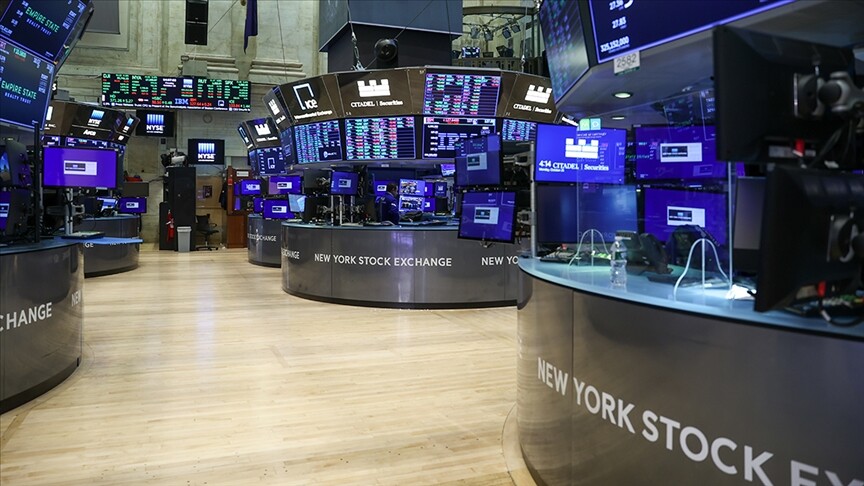
- Core Development: Wall Street extended its recent losses as surging global borrowing costs, geopolitical tensions, and rising oil prices weighed heavily on equity investors.
- Beat Context: Categorized under Business with independent corroboration.
- Reporting Depth: 3 minute analytical read synthesized from verified newsroom sources.
Wall Street extended its recent losses on Tuesday, 18 August 2026, marking a third consecutive declining session as surging global borrowing costs and mounting geopolitical tensions rattled equity investors. According to reports from Anadolu Agency, major US indices closed lower across the board, led by sharp sell-offs in technology and semiconductor shares.
The Dow Jones Industrial Average dropped 116.38 points, or 0.22%, to finish Tuesday at 53,343.40. The S&P 500 declined 53.30 points, or 0.69%, to close at 7,691.76, while the technology-heavy Nasdaq Composite suffered the steepest losses, tumbling 355.20 points, or 1.33%, to end at 26,289.71. Meanwhile, market volatility spiked, pushing the VIX fear index up 4.28% to 15.84.
Media additions

The downturn was driven heavily by a dramatic worldwide spike in government bond yields. According to Seoul Economic Daily, citing figures reported by The Wall Street Journal, the yield on the US 30-year Treasury note jumped to 5.337% during the session, reaching its highest level since 2007. The benchmark 10-year US Treasury yield finished the day around 4.708%. Yields also surged internationally, with Germany's 10-year bond yield hitting 3.255%—its highest mark since May 2011—and France's rising to 4.118%, the highest since November 2008, as reported by Investing.com. Debt-laden nations including Spain and Italy also experienced sharp yield increases.
Analysts point to a convergence of pressures behind the bond market surge. Persistent energy costs, relentless government fiscal spending, and intensifying competition for capital from Big Tech firms issuing corporate bonds to fund artificial intelligence infrastructure have forced investors to demand higher returns for holding government debt. Additional upward pressure stemmed from geopolitical uncertainty surrounding the foreign policy approach of US President Donald Trump. Bill Fitzpatrick, portfolio manager at Logan Capital Management, warned in remarks cited via Seoul Economic Daily that markets had previously overlooked these fixed-income warnings while focusing entirely on earnings and AI advances.
"the market is overlooking the challenges on the bond yield front and focusing only on solid earnings and advances in AI technology"
Bill Fitzpatrick, portfolio manager at Logan Capital Management, via Seoul Economic Daily
Fitzpatrick added that the factors driving bond yields higher don't look likely to ease tomorrow.
Geopolitical instability in the Middle East exacerbated economic anxieties. A memorandum of understanding between the United States and Iran to end hostilities expired on the 17th, and oil prices advanced as hopes for a renewal vanished. US President Donald Trump stated on Truth Social that Washington was not engaged in any talks or conversations with Iran and that no negotiations were scheduled, emphasizing that the US naval blockade remained in full force. On the energy markets, West Texas Intermediate (WTI) crude for September delivery settled higher at $84.95 a barrel on the New York Mercantile Exchange, while Brent crude for October delivery climbed on the ICE Futures exchange to reach its highest level since July 24, closing at $91.02.
The combination of elevated energy prices and climbing borrowing costs fed renewed inflation fears, punishing growth-oriented equities. Semiconductor and data-storage stocks bore the brunt of the technology sector's decline. The Philadelphia Semiconductor Index tumbled 4.98%, while individual chipmakers saw steep drops. SanDisk shares fell around 9% (specifically plunging 9.01%), Western Digital dropped approximately 7.4% (or 7.43%), Micron slid 6.94%, and SK hynix American depositary receipts plummeted 9.19%. Further losses hit Marvell Technology, which dropped about 7.8%.
European stock exchanges mirrored the gloomy sentiment, closing mostly lower due to higher borrowing costs and Middle East uncertainty. The pan-European STOXX Europe 600 fell 0.69% to 651.9 points, its lowest closing level in more than two weeks. Germany's DAX declined 0.8% to 26,128.36, France's CAC 40 dropped 0.82% to 8,509.36, and Italy's FTSE MIB recorded the steepest decline among major European markets, falling 1.06% to 53,017.84. Spain's IBEX 35 lost 0.24% to end at 19,934.9. Bucking the broader regional trend, the UK's FTSE 100 edged up 0.07% to 10,728.04, propped up by gains in energy shares that tracked rising oil prices.
Market Impact Summary
- Dow Jones Industrial Average: Down 116.38 points (-0.22%) to 53,343.40
- S&P 500: Down 53.30 points (-0.69%) to 7,691.76
- Nasdaq Composite: Down 355.20 points (-1.33%) to 26,289.71
- VIX Volatility Index: Up 4.28% to 15.84
As equity markets navigate these headwinds, investors will monitor upcoming economic data releases and central bank commentary to gauge whether interest rates and bond yields will remain elevated for an extended period.
How significant is this development?
Contribute your assessment to the aggregated reader sentiment ledger.
Frequently Asked Questions
Key questions answered in this reportWhat is the key development in: US stocks fall for 3rd straight day as bond yields, oil weigh?
Wall Street extended its recent losses as surging global borrowing costs, geopolitical tensions, and rising oil prices weighed heavily on equity investors.
Why is this Business development significant for the UK?
This report covers critical events in our Business beat. Independent reporting monitors related UK statements, regulatory shifts, and public responses as further verified details emerge.
How was this reporting corroborated and verified?
Newsarchy UK compiles and cross-references reporting from primary reporting from aa.com.tr and cross-checked wire reports. All coverage adheres to published editorial standards.
When was this report published?
This briefing was published on August 18, 2026 and is permanently cataloged in the Newsarchy UK Business archives.