Wall Street hits record highs as weak jobs data eases rate-hike fears
Wall Street major indexes advanced toward strong weekly gains after a surprise drop in US nonfarm payrolls cooled concerns over potential Fed rate hikes.
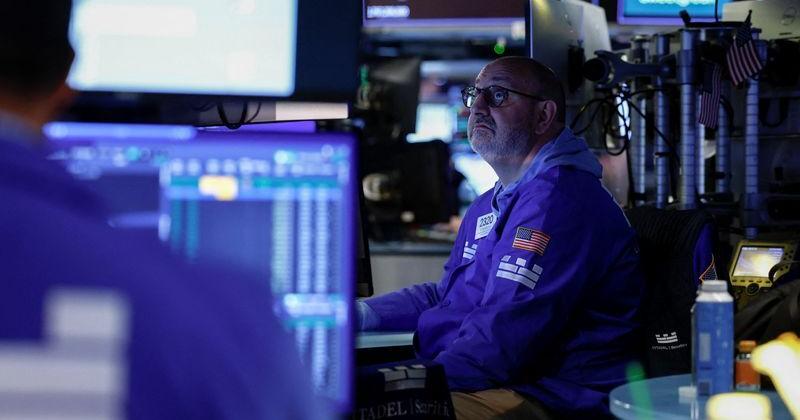
- Core Development: Wall Street major indexes advanced toward strong weekly gains after a surprise drop in US nonfarm payrolls cooled concerns over potential Fed rate hikes.
- Beat Context: Categorized under Business with independent corroboration.
- Reporting Depth: 4 minute analytical read synthesized from verified newsroom sources.
Wall Street advanced to cap off a strong week of gains for the major indexes according to Reuters reporting. U.S. Stocks were poised to close out the week on an upbeat note on Friday, August 7, 2026, after data showed the U.S. Economy unexpectedly shed jobs last month. The S&P 500 closed at a record high, capping a week that put each of the three major indexes on track for their biggest weekly percentage gains since mid-April.
That weak job market data cooled rate-hike fears that had gripped financial markets earlier in the week as covered by The Economic Times. Several Federal Reserve officials had previously made the case for lifting rates to tackle stubborn inflation, driving strong expectations that the U.S. Central bank would raise rates at its upcoming meeting.
The Labor Department reported that nonfarm payrolls decreased by 23,000 jobs last month, falling well below the estimate of economists polled by Reuters, who had called for an increase of 80,000 jobs. Previously reported job gains for the prior two months were revised sharply lower as well. Meanwhile, the unemployment rate ticked down to 4.1% last month from 4.2% in June because workers left the labor force.
Market expectations for a rate hike from the central bank at its next meeting dropped significantly. CME FedWatch data showed expectations sliding to 44.1%, down from 55% in the prior session and 67% a week ago. Futures markets flipped the odds of a rate hike at the upcoming Federal Open Market Committee meeting from likelier-than-not to a worse-than-even chance. Traders remain split on where the Fed will end up by year's end.
The Federal Reserve’s limited forward guidance under new Chair Kevin Warsh has increased the importance of economic data and policymakers’ remarks. Short-term Treasury yields hovered above 4% as crude prices inched up above $83 a barrel, adding to inflation concerns. Signs of progress for a potential peace deal in the Iran war have helped cool oil prices and, in turn, eased inflation worries that could prompt a Fed rate hike, pushing Treasury yields lower.
A strong earnings season has tempered concerns about massive spending by artificial intelligence-related companies. Each of the three major indexes is on track for their biggest weekly percentage gains since mid-April, with the Dow and S&P hitting record highs earlier in the week. By Friday afternoon, the Dow Jones Industrial Average rose 72.70 points, or 0.13%, to 53,957.80, the S&P 500 gained 34.08 points, or 0.44%, to 7,744.09, and the Nasdaq Composite gained 254.48 points, or 0.97%, to 26,602.84.
Of the 436 companies in the S&P 500 that had reported results through Friday morning, 85.1% have topped analyst expectations according to LSEG data, soaring well above the 68% average since 1994. Upbeat forecasts from companies like Microchip Technology and Atlassian further supported market sentiment.
Individual stock movements reflected the strong corporate earnings environment and specific corporate events. Elon Musk's SpaceX surged 11.9% a day after the expiry of the first of several share lockup restrictions following its record public offering in June. Collaboration software maker Atlassian shot up 37.4% and chip company Microchip Tech jumped 15.2% after both forecast quarterly revenue above estimates. Vacation rental company Airbnb rose 15.7% as the best performer on the S&P 500 after beating second-quarter revenue estimates. In contrast, Trade Desk plummeted 21.3% as the worst performer on the benchmark index after the ad-tech firm forecast third-quarter revenue below expectations.
Market breadth remained positive. Advancing issues outnumbered decliners by a 2.5-to-1 ratio on the New York Stock Exchange and by a 1.96-to-1 ratio on the Nasdaq. The S&P 500 posted seven new 52-week highs and one new low, while the Nasdaq Composite recorded 111 new highs and 65 new lows.
"You probably have to lower rates to kind of stimulate job growth, but if you lower rates, you're going to also stimulate inflation. So you're kind of in a pickle at this point, and yet the market's just taken off because earnings have been stellar,"
Tom Siomades, chief market economist at AE Wealth Management in Topeka, Kansas, via Reuters
"The market should be reacting to weak job numbers and higher inflation and the possibility of a slow-growth economy that may need to have rates raised rather than cut, and yet it's not. We're setting records, so go figure."
Tom Siomades, chief market economist at AE Wealth Management in Topeka, Kansas, via Reuters
What to watch next:
- The upcoming Federal Open Market Committee meeting scheduled for September 15 to September 16, where policymakers will decide whether to adjust interest rates.
- Further economic reports and commentary from Fed officials under Chair Kevin Warsh, which remain vital for shaping monetary policy outlooks given the current lack of official forward guidance.
- The final stretch of corporate earnings reports as companies conclude their reporting periods.
How significant is this development?
Contribute your assessment to the aggregated reader sentiment ledger.
Frequently Asked Questions
Key questions answered in this reportWhat is the key development in: Wall Street hits record highs as weak jobs data eases rate-hike fears?
Wall Street major indexes advanced toward strong weekly gains after a surprise drop in US nonfarm payrolls cooled concerns over potential Fed rate hikes.
Why is this Business development significant for the UK?
This report covers critical events in our Business beat. Independent reporting monitors related UK statements, regulatory shifts, and public responses as further verified details emerge.
How was this reporting corroborated and verified?
Newsarchy UK compiles and cross-references reporting from primary reporting from lufkindailynews.com and cross-checked wire reports. All coverage adheres to published editorial standards.
When was this report published?
This briefing was published on August 8, 2026 and is permanently cataloged in the Newsarchy UK Business archives.