Bloomberg warns Russian attacks may soon cause European civilian casualties
Bloomberg warns Russian attacks may soon cause European civilian casualties

- Core Development: Bloomberg warns Russian attacks may soon cause European civilian casualties
- Beat Context: Categorized under Transport with independent corroboration.
- Reporting Depth: 5 minute analytical read synthesized from verified newsroom sources.
European transport networks are increasingly seen as a front line in Russia’s expanding war against Ukraine, a trend that Bloomberg has warned will soon spill over into civilian casualties across the continent.
The warning comes after a string of drone strikes, sabotage and cyberattacks has pushed the conflict beyond the eastern border and into the heart of EU infrastructure, raising the spectre of a wider, more lethal theatre that could leave ordinary citizens caught in the crossfire.
Media additions

Bloomberg’s piece, published in late August, catalogues a series of incidents that have unfolded across the summer. In Romania, military divers destroyed two drones off the coast of a €4 billion energy platform, only nine days later when Bucharest scrambled two F‑16 fighter jets to shoot down a maritime drone near the same site. German police seized an armed UAV at Leipzig Airport, and NATO fighter jets shot down a drone that intruded into Lithuanian airspace from Belarus. Each event, Bloomberg notes, was attributed to the Kremlin and highlighted an “increasingly brazen” Russian willingness to target European infrastructure.
Transport‑focused attacks have also been recorded in Poland, where cyberattacks on water utilities, energy facilities and hospitals have been followed by damage to the railway line between Warsaw and the Ukrainian border. The country’s rail network, a vital artery for the flow of aid to Kyiv, has become a target for sabotage. The most recent Polish rail incident, reported by the transport coverage page, involved a blast that destroyed a section of line and halted freight traffic for days.
| Date | Country | Target | Type of Attack | Result |
|---|---|---|---|---|
| 11 Aug | Romania | Energy platform offshore | Drone destruction | No casualties, critical infrastructure intact |
| 20 Aug | Romania | Maritime drone near gas platform | Airstrike | No casualties, platform safe |
| Early Aug | Germany | Leipzig Airport | UAV seized | No damage reported |
| Early Aug | Lithuania | Airspace | Drone shoot‑down | No damage |
| Late Aug | Poland | Rail line to Ukraine | Sabotage explosion | Freight halted, repair needed |
The Royal United Services Institute (RUSI) has framed these incidents as part of a broader “grey‑zone” strategy, wherein Russia tests NATO’s commitment to collective defence without crossing the threshold of open war. RUSI argues that the Kremlin’s increased aggression – from drone strikes to cyber sabotage – is designed to destabilise the West and gain an asymmetric advantage. The commentary points out that the failure to deter grey‑zone activities has been starkly illustrated in past conflicts, citing Crimea’s annexation and the Syrian civil war as precedents where Russia’s covert operations sowed confusion and delayed unified responses.
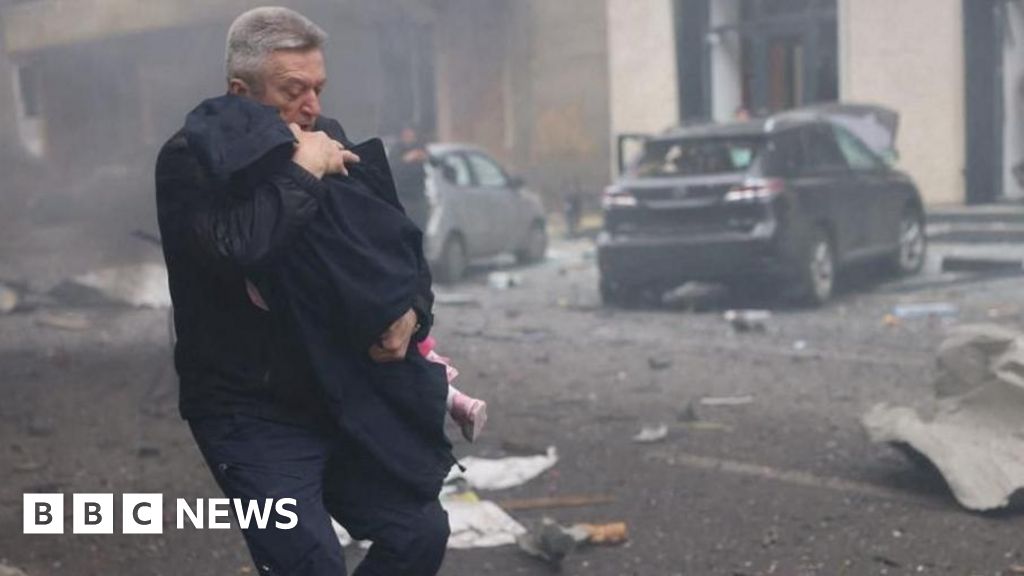
While transport infrastructure has been a focus, civilian casualties are a growing concern. The BBC’s on‑ground report of a Russian drone strike on a kindergarten in Kharkiv on 6 August underscores the human cost of these attacks. The incident, involving a Shahed‑designated drone that hit the Honey Academy building, left 48 children trapped in a shelter and one adult killed, with several others wounded. The attack was described as a “direct hit” and was seen by Ukrainian officials as deliberate, a stark reminder that Russia’s new strategy increasingly targets civilian infrastructure.
Russia’s expansion into civilian targets is part of a pattern that RUSI identifies as a shift to “grey‑zone” aggression that “will test NATO’s commitment to collective defence.” The RUSI analysis suggests that even if fighting in Ukraine were to cease, grey‑zone operations would likely intensify, destabilising the West and potentially leading to kinetic actions against smaller NATO members in the Baltics. The commentary stresses the need for a coordinated deterrence strategy, combining societal preparedness, strategic communication and robust countermeasures, to deny Moscow the freedom to act without consequence.
Within the United Kingdom, the threat has been highlighted by GCHQ’s chief, Anne Keast‑Butler, who warned at Bletchley Park that Russia is scaling up its daily hybrid activity. Keast‑Butler emphasised that the risk of miscalculation is higher than ever, and that the UK is working to degrade and reduce the Russian threat. She pointed to Russia’s relentless targeting of critical infrastructure, democratic processes, supply chains and public trust, and urged the tech industry and national security community to stay ahead of the curve. Her remarks, delivered to a mixed audience of media, experts and government officials, underscored the urgency of countering cyber‑and physical attacks on the UK’s infrastructure, including transport systems.
These warnings are not abstract. In the weeks following the Kharkiv incident, Russian forces carried out a “double‑tap” strike that killed a firefighter and wounded five colleagues in a village near Kharkiv.
European states have, to date, not developed a joint strategy to respond to Russia’s grey‑zone aggression.
The RUSI commentary calls for enhanced cooperation and knowledge sharing, urging NATO members to develop a resilient framework that combines societal preparedness, strategic communication and ethical countermeasures.
In the UK, GCHQ will continue to host its annual lecture series, with a focus on counter‑ing Russian covert operations that threaten national security and public trust.
Bloomberg’s warning that European civilian casualties are “only a matter of time” is a stark reminder that the conflict’s reach has already extended beyond the eastern front and that it will continue to threaten the safety of ordinary citizens and the integrity of transport networks across the continent.
How significant is this development?
Contribute your assessment to the aggregated reader sentiment ledger.
Frequently Asked Questions
Key questions answered in this reportWhat is the key development in: Bloomberg warns Russian attacks may soon cause European civilian casualties?
Bloomberg warns Russian attacks may soon cause European civilian casualties
Why is this Transport development significant for the UK?
This report covers critical events in our Transport beat. Independent reporting monitors related UK statements, regulatory shifts, and public responses as further verified details emerge.
How was this reporting corroborated and verified?
Newsarchy UK compiles and cross-references reporting from primary reporting from Royal United Services Institute (RUSI) and cross-checked wire reports. All coverage adheres to published editorial standards.
When was this report published?
This briefing was published on September 22, 2026 and is permanently cataloged in the Newsarchy UK Transport archives.