Australian living costs rise across all household types in September quarter
Living costs increased universally across all Australian household types during the September quarter, driven primarily by transport, housing, and financial services.
- Core Development: Living costs increased universally across all Australian household types during the September quarter, driven primarily by transport, housing, and financial services.
- Beat Context: Categorized under Cost of Living with independent corroboration.
- Reporting Depth: 3 minute analytical read synthesized from verified newsroom sources.
Living costs for households across Australia increased universally during the September quarter, driven primarily by upward pressures in transport, housing, and financial services, according to official figures. The Australian Bureau of Statistics reported that quarterly growth in living expenses was higher across all tracked household types compared with the preceding period, reflecting ongoing economic strain for consumers navigating fluctuating interest rates and everyday expenses.
The latest data highlights a divergence in how inflation and out-of-pocket expenses impact different demographics. While employee households felt the heaviest pinch, other groups experienced more moderate adjustments based on their specific spending habits and reliance on welfare safeguards.
Media additions

Employee Households Bear the Heaviest Burden
Employee households recorded the largest quarterly rise in living costs, jumping 1.9% for the period. According to IndexBox analysis of Abs data, this surge was primarily fueled by a 5.7% increase in mortgage interest charges, following an even sharper 8.2% jump in the June quarter. Mortgage interest charges make up a significantly higher proportion of expenditure for employee households compared to other segments. Analysts note that this increase reflects the lingering impact of banks passing on previous central bank cash rate adjustments to both fixed and variable home loans. The subsequent cash rate change will materialise in the December quarter due to the usual transmission lag.
Annual figures further illustrate the pressure on working families. In the twelve months leading to the September quarter, annual rises across all Selected Living Cost Indexes ranged between 3.8% and 5.1%, up from the previous range recorded in June. Employee households shouldered the highest annual increase at 5.1%.
Pensioners See Milder Increases
In contrast, age pensioner households recorded the smallest quarterly rise in living costs at 1.1%. This more modest increase was largely attributed to a fall in pharmaceutical product prices, which account for a greater share of pensioner spending. Pensioners benefit from concession pricing on the Pharmaceutical Benefits Scheme, and the drop in costs stemmed from a higher proportion of these households reaching the safety net threshold during the quarter. Furthermore, age pensioner households maintain a much lower proportion of expenditure dedicated to mortgage interest.
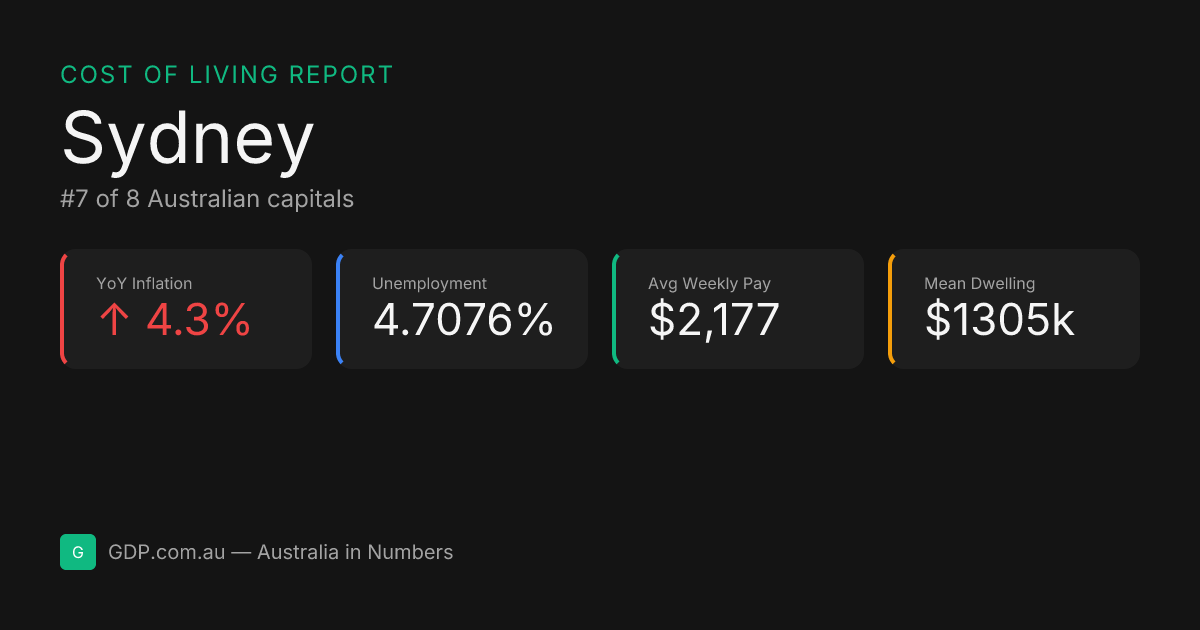
Providing broader geographic context, Gdp data noted that consumer prices in Sydney rose 4.3% in the year to September, aligning with the national all-groups index and ranking as the seventh fastest rise among eight capital cities.
| Household Type | Quarterly Living Cost Increase | Annual Living Cost Increase | Primary Cost Driver |
|---|---|---|---|
| Employee Households | 1.9% | 5.1% | Mortgage interest charges |
| Age Pensioner Households | 1.1% | Not specified | Pharmaceutical price drops (offsetting housing/transport) |
| All Households (National CPI comparison) | Not specified | 3.8% to 5.1% (range) | Transport, housing, insurance and financial services |
Common Drivers Across Demographics
Despite the variance in magnitude, certain economic categories pushed expenses higher for every household type. Transport costs climbed due to higher automotive fuel prices. Meanwhile, the housing sector saw widespread increases driven by higher water and sewerage charges, rising rents, and property rates. Insurance and financial services were pushed upward predominantly by mortgage interest charges.
Understanding these out-of-pocket expenses requires distinguishing between standard consumer price tracking and specific living cost indexes. As outlined by Housing Data, Selected Living Cost Indexes measure the out-of-pocket expenses required to purchase a fixed basket of goods, factoring in changes in mortgage interest payments. This differs from the broader Consumer Price Index, which measures overall household sector inflation and includes the net purchase of housing and renovations while excluding mortgage interest.
What to Watch Next
As households adjust to these financial pressures, attention turns to upcoming monetary policy decisions and data releases. The residual impact of the September cash rate increase is expected to flow through to household indexes in the final quarter of the year.
How significant is this development?
Contribute your assessment to the aggregated reader sentiment ledger.
Frequently Asked Questions
Key questions answered in this reportWhat is the key development in: Australian living costs rise across all household types in September quarter?
Living costs increased universally across all Australian household types during the September quarter, driven primarily by transport, housing, and financial services.
Why is this Cost of Living development significant for the UK?
This report covers critical events in our Cost of Living beat. Independent reporting monitors related UK statements, regulatory shifts, and public responses as further verified details emerge.
How was this reporting corroborated and verified?
Newsarchy UK compiles and cross-references reporting from primary reporting from abs.gov.au and cross-checked wire reports. All coverage adheres to published editorial standards.
When was this report published?
This briefing was published on November 4, 2026 and is permanently cataloged in the Newsarchy UK Cost of Living archives.