EU Council approves Italy fiscal flexibility for defense and energy spending
The EU Economic and Financial Affairs Council has approved Italy's application of the National Escape Clause, providing fiscal flexibility for defense and energy spending.
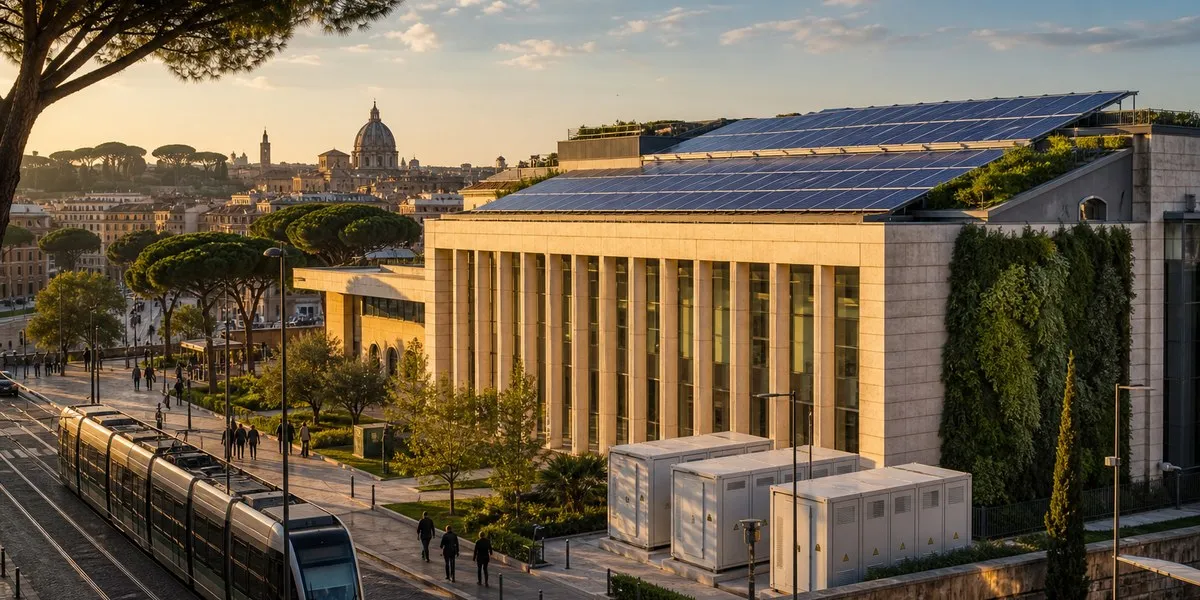
The EU Economic and Financial Affairs Council has approved Italy's application of the National Escape Clause, granting Rome vital fiscal flexibility to increase public spending on defence and energy security.
The decision, reported by ANSA English and INSIGHT EU MONITORING, stems from discussions involving Italian Economy Minister Giancarlo Giorgetti. According to the reporting, the framework allows member states facing exceptional circumstances outside their control to deviate from endorsed net expenditure paths. For Italy, the flexibility covers a designated four-year period, providing up to a specified maximum percentage of GDP in fiscal leeway.
Italian authorities negotiated the expansion to include energy security measures following market impacts originating from the conflict in Iran, as noted in the Insight EU Monitoring coverage. Italian officials discussed specific resilience plans with the European Commission, aiming to fund renewable energy production, storage infrastructure, public building energy efficiency in schools and hospitals, and sustainable mobility projects like local transport and railways.
"The decision will enable the country to strengthen its defense capabilities and energy security while complying with the recommended net expenditure path and maintaining the sustainability of public finances."
Giancarlo Giorgetti, Italian Economy Minister, via ANSA English
Minister Giorgetti highlighted that the inclusion of energy within the National Escape Clause framework originated from an Italian initiative, suggesting the instrument could serve other European nations facing similar pressures.
Under the approved terms, the flexibility for energy security is capped per year between specific timeframes, running alongside defence expenditure allocations mapped out in national fiscal projections. As detailed in Il Sole 24 ORE, the national budget process must account for these European-level approvals as domestic legislation moves through parliamentary scrutiny.
| Spending Category | Allocation / Limit | Timeframe |
|---|---|---|
| Defence Expenditure Flexibility | Up to 0.3% of GDP per year | 2027 and 2028 |
| Energy Security Measures | Up to 0.3% of GDP per year (max 0.6% total) | 2026 to 2028 |
| Total Clause Flexibility Cap | Maximum 1.5% of GDP overall path | Four-year activation period |
While the ECOFIN meeting delivered agreement on Italy's fiscal flexibility, alongside updates on e-commerce value-added tax collection reforms aligned with customs systems, divisions persisted elsewhere. Finance ministers failed to reach a final consensus on revising the EU tobacco taxation framework, which has remained unchanged since 2011
according to Insight EU Monitoring. While most member states supported the presidency compromise text aimed at protecting public health and aligning novel products like e-cigarette liquids and nicotine pouches under harmonised minimum excise duties, one member state blocked final adoption.
Ministers also addressed the Recovery and Resilience Facility, noting that disbursements have reached significant milestones. Member states faced deadlines to fulfil targets by the end of August and submit final payment requests by the end of September, with the European Commission mandated to complete disbursements by the end of December. Austria, France, and Sweden already joined Denmark in successfully closing the facility, with Latvia, Germany, Czechia, and Finland preparing to follow.
Budget Timeline and What to Watch Next
- The European Commission must assess the actual implementation costs of each Italian measure, with Italy submitting compliance updates every six months.
- Domestically in Italy, Parliament must complete its scrutiny and formally approve the Budget Bill by the absolute deadline of 31 December to avoid provisional budgeting, as outlined by Il Sole 24 ORE.